Have you ever seen someone reply “yay” or “nay” to a question and wondered which one to use—or what they really mean? You’re not alone. Many people search for “yay or nay” because they hear it often in daily talk, online polls, social media, emails, and even news headlines.
The phrase is short, catchy, and powerful, but it can also be confusing if English isn’t your first language or if you’re unsure whether it’s formal or casual.
At its core, “yay or nay” is about making a clear choice: yes or no, agree or disagree, approve or reject. People search for this keyword to understand its meaning, spelling, origin, and proper usage in modern English. They also want to know if it changes between British and American English, and whether it’s safe to use in professional writing.
This article solves all that confusion in one place. You’ll get a quick answer, simple explanations, real-life examples, common mistakes to avoid, and clear advice on when and where to use “yay or nay.” By the end, you’ll know exactly how to use it with confidence.
Yay or Nay – Quick Answer
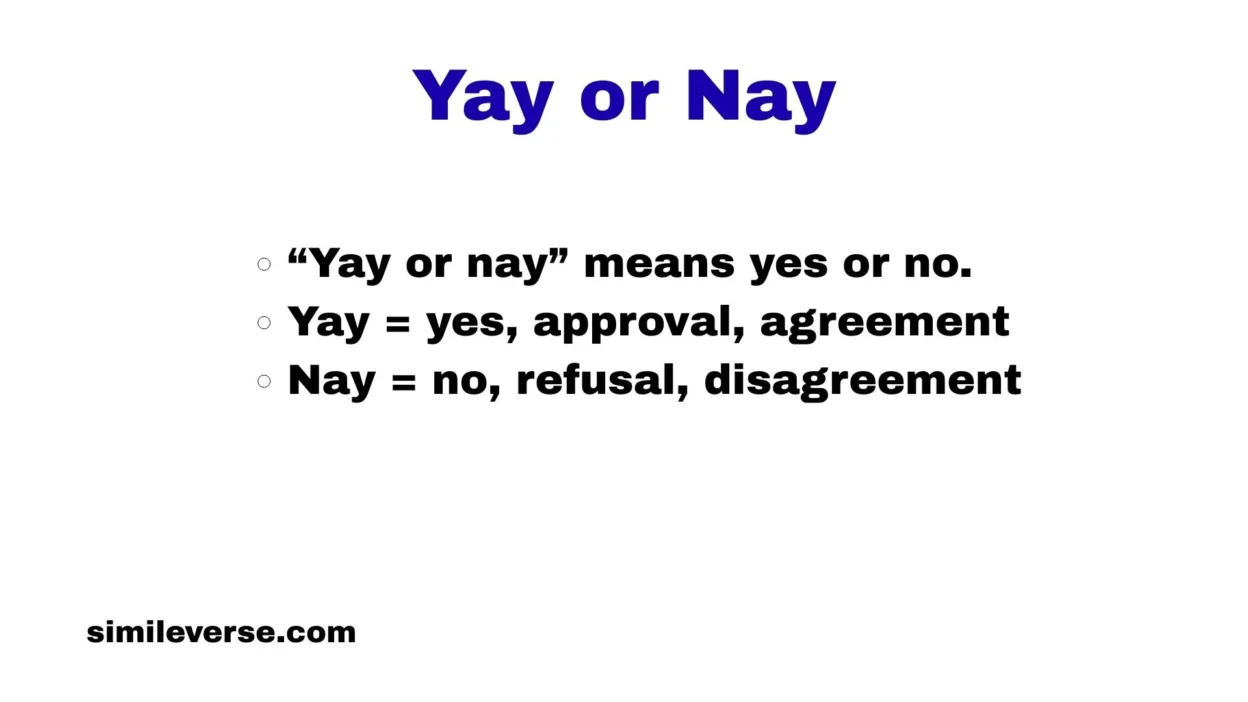
“Yay or nay” means yes or no.
- Yay = yes, approval, agreement
- Nay = no, refusal, disagreement
Simple examples:
- Is this plan a yay or a nay?
- The team voted yay or nay on the new rule.
It is often used when asking for an opinion or a decision.
The Origin of Yay or Nay
The word “yay” comes from Old English gea, meaning yes. Over time, it changed in sound and spelling, becoming “yea” and later “yay” in casual speech.
The word “nay” comes from Old Norse nei, also meaning no. It entered English many centuries ago and was commonly used in voting and debates.
The phrase “yay or nay” became popular because it clearly shows two choices. There are no spelling differences in the phrase itself, but people sometimes confuse “yay” with “yea.”
British English vs American English Spelling
There is no spelling difference between British and American English for “yay or nay.” Both use the same form.
However, formal British writing may prefer “yea or nay” in voting contexts.
Comparison Table
| Context | American English | British English |
|---|---|---|
| Casual speech | yay or nay | yay or nay |
| Online polls | yay or nay | yay or nay |
| Formal voting | yea or nay | yea or nay |
Which Spelling Should You Use?
Your choice depends on your audience.
- US audience: Use “yay or nay” in casual or online content
- UK/Commonwealth: “yay or nay” is fine informally; “yea or nay” suits formal votes
- Global audience: “yay or nay” is the clearest and most common
If you are unsure, “yay or nay” is safe and widely understood.
Common Mistakes with Yay or Nay
Here are errors people often make:
❌ Yea or neigh (neigh is a horse sound)
❌ Yeah or nay (yeah is informal and uneven)
❌ Yay and nay (should be or, not and)
✔ Correct: yay or nay
Yay or Nay in Everyday Examples
Emails
- Please reply with a yay or nay by Friday.
News
- Lawmakers gave a final yay or nay on the bill.
Social Media
- New logo design—yay or nay?
Formal Writing
- Members cast a yay or nay vote on the proposal.
Yay or Nay – Google Trends & Usage Data
The phrase “yay or nay” is popular worldwide, especially in:
- United States
- United Kingdom
- Canada
- Australia
It is most used in:
- Online polls
- Social media captions
- Opinion questions
- Informal voting
Search interest spikes during elections, product launches, and trend debates.
Comparison Table: Keyword Variations
| Phrase | Meaning | Usage Level |
|---|---|---|
| yay or nay | yes or no | casual to semi-formal |
| yea or nay | yes or no | formal voting |
| yes or no | yes or no | universal |
FAQs About Yay or Nay
1. What does yay or nay mean?
It means yes or no.
2. Is yay or nay formal?
It is mostly casual, but acceptable in semi-formal contexts.
3. Is yay or nay correct English?
Yes, it is correct and widely used.
4. Can I use yay or nay in emails?
Yes, especially in friendly or work emails.
5. Is there a difference between yay and yea?
Yes. Yea is more formal; yay is casual.
6. Is yay or nay used in British English?
Yes, it is commonly used.
7. Can yay or nay be used in headlines?
Yes, it is very popular in headlines.
Conclusion
The phrase “yay or nay” is a simple and powerful way to ask for a clear decision. It means yes or no and works well in casual speech, online content, emails, and even some formal settings. There is no difference between British and American English usage, which makes it ideal for global audiences.
Understanding its origin helps explain why it sounds playful yet firm. Knowing the common mistakes helps you avoid errors like confusing “yay” with “yea” or “neigh.” When used correctly, “yay or nay” saves time and makes communication clear.
If your goal is clarity, friendliness, and quick responses, “yay or nay” is the right choice. Use it wisely, match it to your audience, and you’ll never second-guess your wording again.