Many people search for “whether or wether” because these two words look almost the same but mean very different things. One is a common English word used every day. The other is a real word too—but with a completely different meaning that often surprises people. This small spelling confusion causes big problems in school work, emails, blogs, and even professional writing.
If you have ever stopped mid-sentence and wondered, “Is it whether or wether?”, you are not alone. Spellcheck does not always help, and both words appear “correct” at first glance. That is why this keyword is searched so often.
This article solves that confusion once and for all. You will get a quick answer, clear explanations, simple examples, and practical advice on which spelling to use and when. By the end, you will confidently know the difference between whether and wether, avoid common mistakes, and use the right word every time—without stress.
Whether or Wether – Quick Answer
Whether is the correct word in almost all writing.
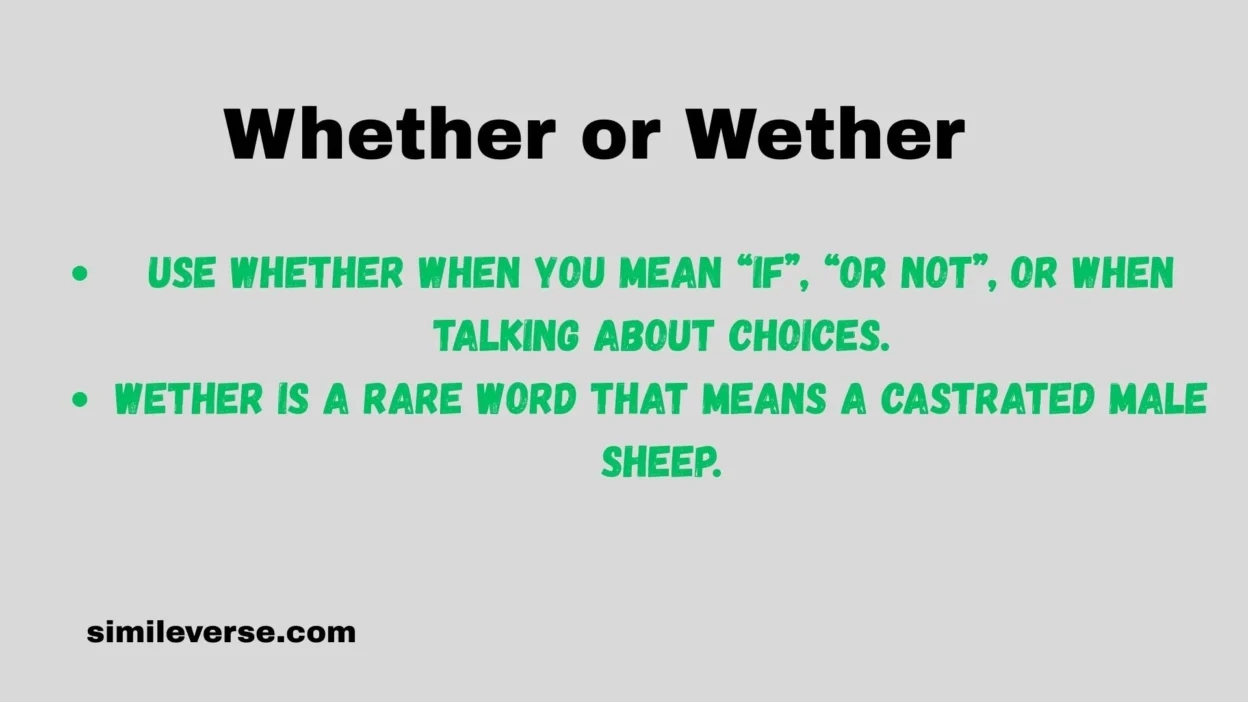
- Use whether when you mean “if”, “or not”, or when talking about choices.
- Wether is a rare word that means a castrated male sheep.
Examples:
- ✅ I don’t know whether it will rain today.
- ❌ I don’t know wether it will rain today. (wrong)
- ✅ The farmer sold a wether at the market. (correct but rare)
👉 Quick rule:
If you are not talking about sheep, use whether.
The Origin of Whether or Wether
Origin of Whether
The word whether comes from Old English hwæther, meaning “which of two”. Over time, it became the word we use today to show choice, doubt, or alternatives.
It has been part of English for over 1,000 years, which is why it appears so often in both spoken and written language.
Origin of Wether
The word wether also comes from Old English, weþer, meaning a male sheep that has been castrated. This word stayed mostly in farming and agriculture.
Why the Confusion Exists
- Both words sound similar when spoken.
- Both are real English words.
- Spellcheck does not always flag the wrong one.
That is why people mix them up so often.
British English vs American English Spelling
This is not a British vs American spelling difference.
Both British English and American English use whether in the same way.
Important Truth
- 🇺🇸 American English → whether
- 🇬🇧 British English → whether
- 🌍 Global English → whether
Wether is not an alternative spelling. It is a different word with a different meaning.
Comparison Table
| Word | Meaning | Used in US | Used in UK |
|---|---|---|---|
| whether | if / choice / or not | ✅ Yes | ✅ Yes |
| wether | castrated male sheep | ✅ Rare | ✅ Rare |
Which Spelling Should You Use?
Use whether if:
- You are writing emails
- You are posting on social media
- You are writing articles or blogs
- You are doing school or office work
- You mean if or or not
Use wether only if:
- You are writing about farming
- You are talking about sheep
- You are using agricultural terms
Audience-Based Advice
- US audience: Always use whether
- UK/Commonwealth audience: Always use whether
- Global audience: Use whether for clarity
👉 Professional advice:
In 99.9% of cases, whether is the correct choice.
Common Mistakes with Whether or Wether
Mistake 1: Using wether instead of whether
❌ I’m not sure wether he will come.
✅ I’m not sure whether he will come.
Mistake 2: Thinking wether is British spelling
❌ Wether is used in UK English.
✅ Whether is used everywhere.
Mistake 3: Trusting spellcheck blindly
Spellcheck may allow wether because it is a real word—but it may still be wrong.
Easy Fix
Ask yourself:
“Am I talking about sheep?”
If not, choose whether.
Whether or Wether in Everyday Examples
Emails
- Please confirm whether the meeting is today.
- Let me know whether you agree.
News
- The report questions whether the policy will succeed.
Social Media
- Can’t decide whether to travel or stay home.
Formal Writing
- The study examines whether exercise improves focus.
Farming Context (Rare)
- The wether was separated from the lambs.
Whether or Wether – Google Trends & Usage Data
Search data shows that “whether or wether” is typed by:
- Students
- Non-native English speakers
- Bloggers and writers
- Professionals checking accuracy
Usage Trends
- Whether is used millions of times daily worldwide.
- Wether is searched mostly in:
- Farming contexts
- Vocabulary checks
- Spelling confusion queries
Popular Regions Searching This Term
- United States
- United Kingdom
- India
- Pakistan
- Australia
Most searches come from people trying to avoid spelling mistakes, not from people talking about sheep.
Comparison Table: Whether vs Wether
| Feature | Whether | Wether |
|---|---|---|
| Part of speech | Conjunction | Noun |
| Meaning | If / choice / or not | Castrated male sheep |
| Common use | Very common | Very rare |
| Writing use | Daily writing | Farming only |
| Correct for confusion? | ✅ Yes | ❌ No |
FAQs About Whether or Wether
1. Is wether ever correct?
Yes, but only when talking about a male sheep.
2. Can I use wether instead of whether?
No. That is a spelling mistake.
3. Is whether British or American?
Both. It is standard English everywhere.
4. Why does spellcheck allow wether?
Because it is a real word, just rarely used.
5. How can I remember the difference?
Whether = choice
Wether = sheep
6. Is whether or not always correct?
Yes. Whether works perfectly with or not.
7. Do native speakers confuse these words?
Yes, especially in fast typing.
Conclusion
The confusion between whether or wether is common, but the solution is simple. Whether is the word you need for choices, questions, and uncertainty. It works in emails, exams, articles, social media, and professional writing. Wether, on the other hand, is a real word—but it belongs almost entirely to farming and agriculture.
If you remember just one rule, remember this:
👉 If you are not writing about sheep, use whether.
Understanding this difference helps you write with confidence, avoid embarrassing mistakes, and sound more professional. Clear spelling builds trust with readers, teachers, and clients. Now that you know the difference, you can use whether correctly every time—without second guessing.