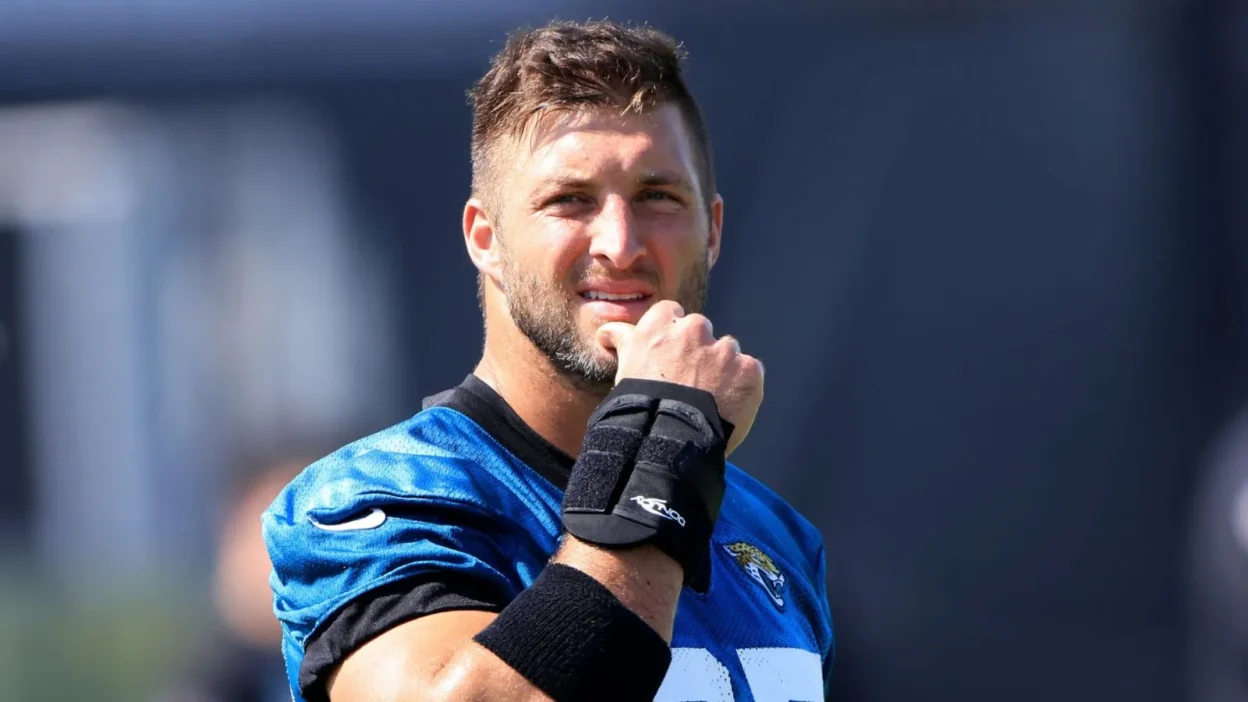
Tim Tebow’s football career is one of the most talked-about journeys in modern sports, blending remarkable athletic talent with a larger-than-life personality.
From his early days as a high school standout in Florida to becoming a college football legend at the University of Florida, Tebow captivated fans with his leadership, determination, and game-changing performances.
His college success, highlighted by a Heisman Trophy and multiple national championships, propelled him into the NFL, where he faced both challenges and moments of triumph.
Despite criticism over his unconventional playing style, Tebow’s impact on football culture known as “Tebowmania” remains undeniable. Fans and analysts alike continue to debate his legacy, stats, and influence, making him a fascinating subject for any football enthusiast.
This article explores Tim Tebow’s football career in detail, covering his early life, college glory, NFL journey, achievements, playing style, and lasting legacy.
Early Life and High School Football
Tim Tebow was born on August 14, 1987, in Makati, Philippines, to American missionary parents, Bob and Pam Tebow. Growing up in a faith-centered family, Tebow was instilled with discipline, leadership values, and a strong work ethic from an early age. After moving to Florida, he quickly developed a passion for sports, excelling in baseball, basketball, and football. However, it was football where Tebow truly began to stand out.
Attending Allen D. Nease High School in Ponte Vedra, Florida, Tebow became a dominant quarterback known for his strong arm, athleticism, and leadership on the field. His high school career was filled with impressive statistics, including thousands of passing yards and an impressive number of touchdowns. Tebow’s dual-threat ability—combining passing precision with exceptional rushing skills—made him a nightmare for opposing defenses.
His performance earned him numerous accolades, including Florida’s Mr. Football award and recognition as one of the top quarterback recruits in the nation. College scouts took notice, and Tebow was heavily recruited, ultimately committing to the University of Florida. His high school success laid the foundation for the legendary college and professional football career that would follow, setting the stage for his rise as one of the most recognizable athletes in football history.
College Football Career at the University of Florida
Tim Tebow’s college football career at the University of Florida (2006–2009) cemented his status as one of the most electrifying quarterbacks in NCAA history. Joining the Florida Gators under coach Urban Meyer, Tebow quickly became known for his leadership, work ethic, and unique dual-threat ability—excelling both as a passer and a rusher. In his freshman year, he made an immediate impact as a backup quarterback, demonstrating poise beyond his years and a knack for clutch plays.
By 2007, Tebow had become the starting quarterback and led the Gators to a national championship. His remarkable performances that season earned him the prestigious Heisman Trophy, making him one of the youngest winners in history. Tebow’s college career was filled with memorable moments, including dramatic game-winning drives against rivals and record-breaking games that showcased his athleticism and football IQ.
Over his four years at Florida, Tebow set multiple school records, including passing touchdowns, rushing yards for a quarterback, and total touchdowns accounted for. He also earned multiple awards such as the Maxwell Award and SEC Player of the Year. Beyond statistics, Tebow became a cultural phenomenon—“Tebowmania”—drawing fans nationwide for his fearless leadership, dedication, and on-field heroics. His college success laid a strong foundation for his professional career and remains a benchmark for dual-threat quarterbacks in football history.
NFL Draft and Professional Career
After a legendary college career, Tim Tebow entered the 2010 NFL Draft amid widespread media attention and high expectations. He was selected by the Denver Broncos in the first round as the 25th overall pick. Tebow’s entry into the NFL sparked excitement and controversy, as analysts debated whether his unique playing style—a combination of strong rushing ability but inconsistent passing accuracy—would succeed at the professional level.
Tebow’s rookie season with the Broncos showed flashes of his potential. In 2011, he led Denver to several dramatic victories, including multiple comeback wins in the final minutes, earning him national attention and energizing fans. His playoff performance was highlighted by a memorable overtime win against the Pittsburgh Steelers, showcasing his leadership and clutch mentality. However, Tebow struggled with consistency, completing passes at a lower percentage than many NFL quarterbacks, which eventually led to him being replaced as the starter.
Following his time with Denver, Tebow had brief stints with the New York Jets in 2012 and the New England Patriots in 2013 but failed to secure a lasting starting role. He later returned to Denver in 2015 as a backup quarterback but ultimately left the NFL without a long-term position. Despite his NFL challenges, Tebow’s career remained remarkable for his ability to inspire fans, deliver unforgettable moments, and leave a cultural impact that went beyond statistics.
Playing Style and Skills
Tim Tebow’s playing style was unique, making him one of the most memorable quarterbacks of his generation. Known primarily as a dual-threat quarterback, Tebow combined a strong arm for passing with exceptional mobility, allowing him to run effectively when passing options were limited. This made him particularly dangerous in college, where his ability to improvise in the pocket and execute designed quarterback runs consistently put defenses on edge.
One of Tebow’s greatest strengths was his leadership and mental toughness. He had a reputation for inspiring teammates with his work ethic, positive attitude, and unwavering confidence during high-pressure situations. His clutch performances, including multiple game-winning drives in both college and the NFL, highlighted his ability to remain calm under pressure and rally his team.
Despite these strengths, Tebow faced notable weaknesses at the professional level. His passing mechanics and accuracy often fell short in the NFL, particularly in high-speed defensive schemes. NFL defenses exploited his tendency to rely on running plays and short passes, which limited his effectiveness compared to elite pro quarterbacks. Additionally, his unconventional throwing motion drew criticism from coaches and analysts, though it did not diminish his competitive edge or athletic impact.
Tebow’s style also made him a media phenomenon. “Tebowmania” captured the imagination of fans who admired his determination, versatility, and ability to deliver unforgettable moments. While some critics questioned his long-term viability as an NFL quarterback, his playing style left a lasting mark on both college and professional football, influencing how dual-threat quarterbacks are evaluated today.
Challenges, Criticism, and Controversy
While Tim Tebow’s football career was celebrated for its highs, it was also marked by significant challenges and criticism, especially at the professional level. One of the main obstacles Tebow faced in the NFL was adapting to the league’s complex offensive systems. His college success relied heavily on a spread-option attack that allowed him to use his athleticism, but in the NFL, defenders were faster, schemes were more intricate, and his unconventional throwing mechanics made accurate passing more difficult.
Critics often highlighted his passing accuracy and completion percentage as weaknesses. Despite his remarkable leadership and mobility, Tebow struggled with consistency, particularly on long-range throws and complex passing plays. Analysts debated whether his success in college could translate to sustained NFL performance, fueling a polarized media narrative.
Off the field, Tebow faced scrutiny for his high-profile persona and “Tebowmania.” His strong Christian faith, charitable work, and outspoken personality drew both admiration and criticism, sometimes overshadowing his actual performance on the field. Media coverage often focused as much on his cultural impact as on his football abilities, creating a divide among fans and analysts.
Injuries also played a role in limiting his NFL career. Tebow dealt with physical setbacks, including a shoulder injury, which affected his playing time and ability to secure a long-term starting position.
Despite these challenges, Tebow maintained a loyal fanbase and became an inspirational figure for perseverance and determination. His career highlights the difficulties of transitioning from a college legend to a professional athlete while managing public expectations, media scrutiny, and physical demands.
Post NFL Career and Media Presence
After leaving the NFL, Tim Tebow successfully transitioned into a multifaceted career that extended beyond football. One of his first major ventures was sports broadcasting, where he worked as a college football analyst for ESPN. Tebow’s deep knowledge of the game, combined with his on-field experience, allowed him to provide insightful commentary, breaking down plays and quarterback strategies for fans and viewers. His presence on television helped maintain his visibility in the football world even after his playing career ended.
In addition to broadcasting, Tebow pursued a brief professional baseball career. In 2016, he signed a minor league contract with the New York Mets organization and played in their farm system. While he did not reach Major League Baseball, Tebow’s attempt highlighted his competitive spirit and willingness to embrace new challenges, demonstrating his athletic versatility.
Off the field, Tebow became widely known for his philanthropy and charitable work. Through the Tim Tebow Foundation, he has supported children with life-threatening illnesses, built hospitals overseas, and funded programs promoting education and faith-based initiatives. His public speaking engagements and motivational appearances also reinforced his reputation as an inspirational figure.
Social media further amplified Tebow’s influence. With millions of followers, he continues to engage fans by sharing personal insights, faith-based messages, and highlights of his charitable projects.
Tebow’s post-NFL career shows that his impact extends well beyond professional football. While his playing days brought fame, his work in media, sports, philanthropy, and public speaking has solidified his status as a cultural icon, inspiring millions with his dedication, resilience, and leadership.
Legacy and Impact on Football
Tim Tebow’s football career left a lasting impact on both college and professional football, making him one of the most memorable athletes of his generation. In college, Tebow’s leadership, determination, and dual-threat abilities revolutionized the quarterback position, inspiring a new wave of mobile quarterbacks who could both pass and run effectively. His tenure at the University of Florida set numerous records, including passing touchdowns, rushing yards for a quarterback, and total touchdowns, cementing his status as a college football legend.
Beyond statistics, Tebow’s influence extended to the culture of the sport. “Tebowmania” became a nationwide phenomenon, highlighting his ability to inspire fans, rally teammates, and energize stadiums. His faith, discipline, and work ethic made him a role model for athletes and non-athletes alike, showing that football success could coexist with strong personal values.
In the NFL, while Tebow faced challenges and limited success on the field, his presence still left a mark. He demonstrated that leadership, perseverance, and mental toughness could sometimes matter as much as raw statistics. His memorable comebacks and playoff victory for the Denver Broncos remain iconic moments in NFL history, often cited as examples of heart and determination over conventional expectations.
Tebow’s legacy is also off the field. Through his foundation, motivational speaking, and media work, he continues to influence young athletes and fans worldwide. Ultimately, Tim Tebow’s football career represents more than wins and losses—it symbolizes inspiration, leadership, and the enduring power of determination in sports.
Career Statistics and Records
Tim Tebow’s football career is defined not only by his leadership and memorable moments but also by his impressive statistics, particularly during his college years. At the University of Florida, Tebow finished with over 9,000 passing yards and 88 passing touchdowns, alongside more than 2,900 rushing yards and 57 rushing touchdowns—an extraordinary accomplishment for a quarterback. He set multiple school and SEC records, including most rushing touchdowns by a quarterback and most total touchdowns in a season, highlighting his dual-threat capabilities.
Tebow’s professional statistics in the NFL were more modest, reflecting the challenges of transitioning to the pro game. During his tenure with the Denver Broncos, he threw for 2,422 passing yards, 17 passing touchdowns, and 9 interceptions, while also rushing for 1,119 yards and 12 rushing touchdowns. Despite lower passing completion rates, Tebow’s ability to lead game-winning drives and deliver clutch performances, such as his playoff victory over the Pittsburgh Steelers, earned him lasting recognition.
Throughout his career, Tebow also received numerous awards and honors. These include the Heisman Trophy, multiple All-SEC selections, and the Maxwell Award, which celebrates the best college player in the country. He was instrumental in the 2006 and 2008 national championship runs, leaving an indelible mark on college football history.
While his NFL numbers may not match his collegiate dominance, Tebow’s statistics demonstrate versatility, resilience, and a rare combination of passing and rushing skills. They provide tangible evidence of his impact on the game and why he remains a prominent figure in football discussions today.
FAQs:
1. Did Tim Tebow win an NFL playoff game?
Tebow led the Denver Broncos to a memorable playoff victory in January 2012, defeating the Pittsburgh Steelers in overtime. This win highlighted his clutch performance and leadership under pressure.
2. How many teams did Tim Tebow play for in the NFL?
Tebow played for three NFL teams: the Denver Broncos, New York Jets, and New England Patriots. He also had a second stint with the Broncos as a backup quarterback.
3. What awards did Tim Tebow win in college?
Tebow’s collegiate accolades include the Heisman Trophy, the Maxwell Award, multiple All-SEC honors, and two national championships with the University of Florida.
4. Why did Tim Tebow leave the NFL?
Tebow struggled with consistency in passing accuracy, faced challenges adapting to NFL-style offenses, and dealt with injuries. These factors, combined with team decisions, led to his early exit from the league.
5. What is “Tebowmania”?
Tebowmania” refers to the intense media attention and fan enthusiasm surrounding Tebow during his college and early NFL years. It highlighted his leadership, faith-driven persona, and inspirational moments on the field.
6. Did Tebow pursue other sports after the NFL?
Yes, he attempted a professional baseball career with the New York Mets minor league system and remained active in sports media.
Conclusion
Tim Tebow’s football career is a remarkable story of talent, perseverance, and impact that extends far beyond statistics and wins.
From his early days as a standout high school athlete in Florida to his legendary college career at the University of Florida, Tebow demonstrated leadership, determination, and a unique dual-threat ability that redefined the quarterback position.
His collegiate accomplishments, including the Heisman Trophy and two national championships, cemented his status as one of the greatest college players of his generation.
While Tebow faced challenges in the NFL, including criticism over passing accuracy and adapting to professional offensive systems, his career still produced memorable moments, such as his playoff victory with the Denver Broncos.
Beyond the field, Tebow became a cultural icon “Tebowmania” symbolizing faith, resilience, and inspiration. His work in broadcasting, minor league baseball, philanthropy, and motivational speaking further solidified his influence on and off the field.
Ultimately, Tim Tebow’s football journey shows that success is not measured solely by statistics or professional accolades.
His legacy lies in the combination of athletic skill, leadership, perseverance, and the ability to inspire millions of fans. Tebow’s story continues to motivate aspiring athletes, demonstrating that hard