If you have ever stopped mid-sentence wondering whether to write there or their, you are not alone. This is one of the most searched grammar questions in English. Students, professionals, bloggers, and even native speakers confuse these words every day. They sound exactly the same, but their meanings are very different. One small mistake can change the meaning of a sentence or make your writing look careless.
People search for “there or their” because both words are common, short, and used in daily writing. Emails, schoolwork, social media posts, and job applications all use them. Spellcheck tools do not always catch the error because both words are spelled correctly—just used incorrectly. That is where the confusion begins.
This guide solves that problem once and for all. You will learn the clear difference between there and their, how each word started, when to use which one, and how to avoid common mistakes. Everything is explained in very simple language, with easy examples you can remember. By the end, you will never mix up there or their again.
There or Their – Quick Answer
There talks about a place or position.
Their shows ownership or possession.
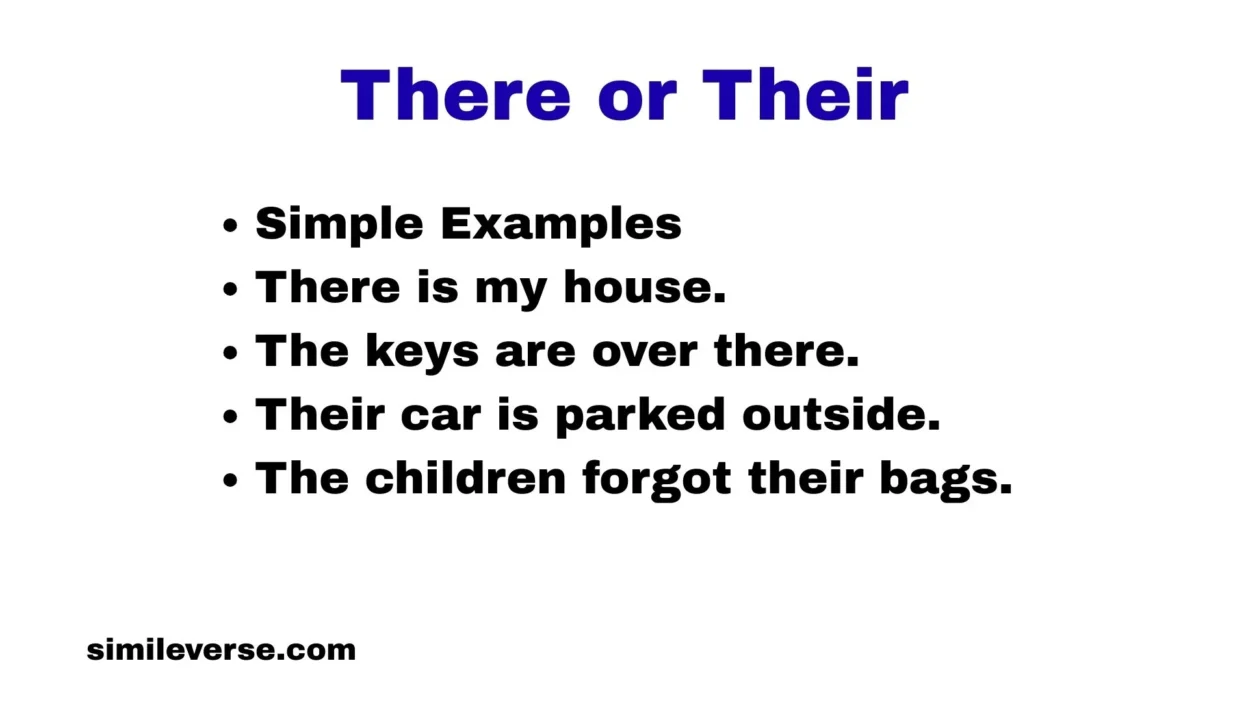
Simple Examples
- There is my house.
- The keys are over there.
- Their car is parked outside.
- The children forgot their bags.
Easy Tip to Remember
- If it shows place, use there.
- If it shows ownership, use their.
The Origin of There or Their
The confusion between there and their exists because both words come from Old English and sound the same when spoken.
Origin of There
- Comes from Old English þǣr
- Meaning: “in that place”
- It has always pointed to a location or position
Origin of Their
- Comes from Old Norse þeira
- Meaning: “belonging to them”
- It replaced older English forms over time
Why the Spelling Is Different
English grew by borrowing words from many languages. Even though there and their sound alike, they kept different spellings because they came from different roots and served different purposes.
British English vs American English Spelling
Good news: there and their are spelled the same in both British and American English.
There is no spelling difference between UK and US usage. The rules are identical.
Comparison Table
| Word | British English | American English | Meaning |
|---|---|---|---|
| There | there | there | Refers to place or existence |
| Their | their | their | Shows ownership |
The confusion is not regional—it is grammatical.
Which Spelling Should You Use?
The correct choice depends on meaning, not location.
Use There When:
- Talking about a place
- Talking about existence
Example:
- There is a problem.
- Put the book there.
Use Their When:
- Something belongs to people
Example:
- Their house is big.
- Students finished their work.
Audience-Based Advice
- US audience: Follow the same rules
- UK/Commonwealth audience: Same rules apply
- Global writing: Focus on meaning, not spelling style
Common Mistakes with There or Their
Here are the most common errors people make:
Mistake 1
❌ Their is a problem with the system.
✅ There is a problem with the system.
Mistake 2
❌ The team forgot there uniforms.
✅ The team forgot their uniforms.
Mistake 3
❌ There dog is very friendly.
✅ Their dog is very friendly.
Simple Fix
Ask yourself one question:
Is this about a place or ownership?
There or Their in Everyday Examples
Emails
- There will be a meeting tomorrow.
- Please bring their documents.
News Writing
- There was heavy rain last night.
- The players celebrated their victory.
Social Media
- There goes my weekend plans.
- Love their new photos!
Formal Writing
- There are several reasons for this change.
- Their responsibilities are clearly defined.
There or Their – Google Trends & Usage Data
Search data shows that “there or their” is most searched in:
- United States
- United Kingdom
- India
- Canada
- Australia
Why People Search It
- Students learning English
- ESL learners
- Professionals writing emails
- Content creators and bloggers
The phrase spikes during:
- Exam seasons
- Job application periods
- School terms
This shows the confusion is global and ongoing.
Comparison Table: There vs Their
| Feature | There | Their |
|---|---|---|
| Part of Speech | Adverb / Pronoun | Possessive Adjective |
| Meaning | Place or existence | Ownership |
| Example | There is a cat | Their cat is cute |
| Refers To | Location | Belonging |
FAQs About There or Their
1. Is “there” ever used to show ownership?
No. There never shows ownership.
2. Can “their” refer to one person?
Yes. It is often used as a gender-neutral word.
3. Are “there” and “their” interchangeable?
No. They have completely different meanings.
4. Why does spellcheck not catch this mistake?
Because both words are spelled correctly.
5. Is this mistake common in exams?
Yes. It is one of the most common grammar errors.
6. Does pronunciation help?
No. They sound the same, so context matters.
7. Is “there” always about a place?
Mostly, but it can also show existence (There is hope).
Conclusion
Understanding the difference between there and their is easier than it looks. The confusion comes from pronunciation, not meaning. Once you focus on what the sentence is saying, the correct word becomes clear. Use there when talking about a place or existence. Use their when something belongs to people. That single rule solves most mistakes instantly.
These words appear in everyday writing, from casual messages to formal documents. Using the wrong one can confuse readers or make your writing feel unpolished. Taking a moment to check meaning before choosing the word can improve clarity and confidence. With practice, this choice will become automatic. Keep the simple rules in mind, and you will never second-guess there or their again.