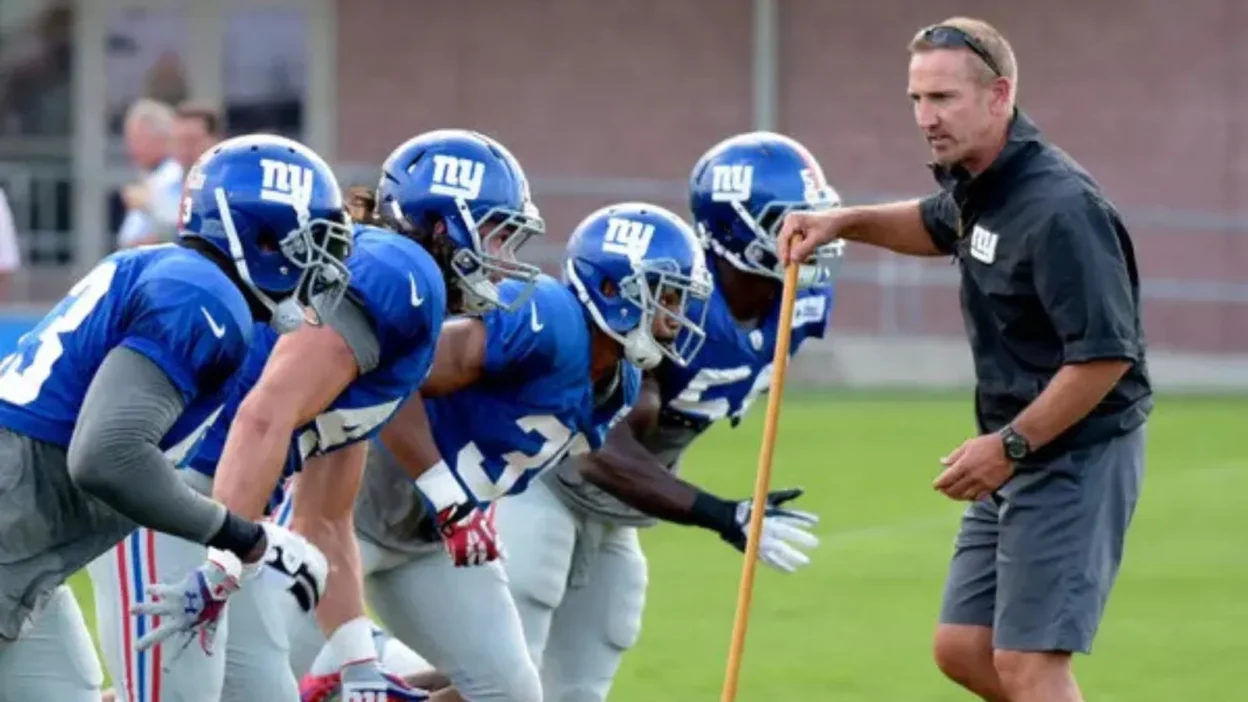
Steve Spagnuolo is widely regarded as one of the most influential defensive minds in modern American football.
Over the course of his long and evolving career, he has built a reputation for designing aggressive, intelligent, and adaptable defensive systems that consistently perform at the highest level of the NFL.
From his early days in coaching to his championship-winning success as a defensive coordinator, Spagnuolo’s journey reflects persistence, innovation, and a deep understanding of the game.
Best known for orchestrating some of the most iconic Super Bowl defenses in league history, Steve Spagnuolo has played a crucial role in shaping championship teams, particularly with the New York Giants and the Kansas City Chiefs.
His ability to adjust schemes, maximize player strengths, and deliver under pressure has made him a respected figure among coaches and players alike.
This article explores the sports career of Steve Spagnuolo, highlighting his professional journey, major achievements, coaching philosophy, and lasting impact on the NFL.
Early Life and Football Roots
Steve Spagnuolo’s journey in football began long before the bright lights of the NFL, rooted in a strong foundation of discipline, hard work, and a deep love for the game. Born on December 21, 1959, Spagnuolo grew up in an environment where sports played an important role in shaping character and competitive spirit. From an early age, he showed a keen interest in football, not just as a physical contest but as a strategic and intellectual challenge.
During his formative years, Spagnuolo was exposed to the fundamentals of teamwork, accountability, and preparation—values that would later define his coaching philosophy. He played high school football with determination and focus, gaining firsthand experience of the game’s demands and complexities. While he may not have been a nationally recognized star as a player, his understanding of positioning, discipline, and effort set him apart.
Spagnuolo continued his football journey at the collegiate level, where his exposure to structured systems and advanced playbooks deepened his appreciation for defensive football. These early playing experiences helped him see the game from a broader perspective, allowing him to analyze offenses, recognize patterns, and value preparation over raw talent. More importantly, they planted the seeds for his eventual transition into coaching.
His early life and football roots laid the groundwork for a career built on intelligence, adaptability, and relentless effort. The lessons he learned as a young player would later influence how he taught, motivated, and developed athletes at the highest level of professional football.
College Football Experience
Steve Spagnuolo’s college football experience played a crucial role in shaping his long-term understanding of the game and his future as a coach. He attended Ithaca College, where he played football and developed a deeper appreciation for the technical and strategic aspects of the sport. While his time as a college athlete did not bring national fame, it provided him with invaluable exposure to structured football systems and disciplined preparation.
At Ithaca, Spagnuolo learned the importance of film study, game planning, and executing assignments with precision. Competing at the collegiate level required mental toughness, adaptability, and a strong work ethic—qualities that would later define his coaching style. He gained firsthand experience in reading offensive formations, understanding defensive responsibilities, and recognizing how small adjustments could significantly impact game outcomes.
More importantly, his college years helped him understand the player’s perspective. He experienced the challenges of balancing academics with athletics, handling pressure, and responding to coaching criticism. This perspective later allowed him to connect with players on a personal level, making him not just a strategist but also an effective mentor and teacher.
Spagnuolo’s exposure to coaching methods at the college level sparked his interest in pursuing a career on the sidelines. Observing how coaches prepared game plans and motivated players gave him insight into leadership and communication. By the time his playing days ended, Spagnuolo had already begun laying the foundation for his transition into coaching, armed with a strong football IQ and a passion for defensive strategy that would guide the next phase of his career.
Transition from Player to Coach
After concluding his playing career, Steve Spagnuolo made a decisive transition from the field to the sidelines, a move that would ultimately define his legacy in football. Unlike many former players who take time to discover their next path, Spagnuolo was drawn almost immediately to coaching, motivated by his deep understanding of the game and a desire to teach and lead. His shift from player to coach was driven less by personal recognition and more by a passion for strategy, preparation, and player development.
Spagnuolo began his coaching journey at the college level, taking on assistant roles that allowed him to learn the profession from the ground up. These early positions required long hours, detailed film study, and constant adaptation, but they also gave him the freedom to refine his football philosophy. He focused heavily on defensive fundamentals, emphasizing discipline, communication, and situational awareness—principles that would later become hallmarks of his defenses.
The transition was not without challenges. Moving from being coached to coaching others required a shift in mindset, particularly in leadership and accountability. Spagnuolo had to earn trust, develop authority, and learn how to communicate complex concepts in simple, effective ways. His background as a former player helped him relate to athletes, understand their struggles, and motivate them to improve.
These formative coaching years were critical in shaping Spagnuolo’s identity as a defensive specialist. He steadily built a reputation for preparation and football intelligence, laying the groundwork for future opportunities. This successful transition marked the beginning of a coaching career that would eventually reach the highest levels of professional football.
College Coaching Career
Steve Spagnuolo’s college coaching career served as the foundation upon which his professional success was built. After transitioning from player to coach, he took on various assistant coaching roles at the collegiate level, where he was able to develop his teaching methods and defensive philosophy. These early years were marked by hard work, limited resources, and a strong emphasis on fundamentals, all of which helped shape his disciplined approach to coaching.
During his time in college football, Spagnuolo worked closely with defensive units, focusing on technique, positioning, and situational awareness. He became known for his attention to detail, spending countless hours breaking down film and designing practice plans tailored to his players’ strengths. This hands-on approach allowed him to gain valuable experience in player development and game preparation, two skills that would prove essential at the professional level.
College coaching also gave Spagnuolo the opportunity to refine his communication skills. Teaching young athletes required patience and clarity, especially when introducing complex defensive concepts. He learned how to simplify schemes without sacrificing effectiveness, ensuring players understood not just their assignments but the reasoning behind them. This ability to educate rather than simply instruct became one of his defining traits as a coach.
Equally important, his college coaching years exposed him to different offensive systems and coaching styles, broadening his football knowledge. By the time he began to attract attention from NFL organizations, Spagnuolo had already established himself as a thoughtful, hardworking defensive coach. His success at the college level set the stage for his eventual entry into the NFL and the next major chapter of his coaching career.
Entry into the NFL
Steve Spagnuolo’s entry into the NFL marked a significant turning point in his coaching career, as he moved from the developmental environment of college football to the highly competitive professional level. His opportunity came when he joined the NFL as an assistant coach, a role that required him to quickly adapt to faster game speed, more complex schemes, and elite-level athletes. The transition demanded precision, flexibility, and an even greater emphasis on preparation.
At the professional level, Spagnuolo was exposed to advanced offensive systems and highly detailed game plans, which further sharpened his defensive insight. Working alongside experienced NFL coaches allowed him to absorb new ideas while refining his own philosophy. He learned how to tailor defensive schemes to individual player strengths, an approach that became central to his coaching success. Rather than forcing players into rigid systems, Spagnuolo focused on maximizing their natural abilities.
The NFL environment also tested his communication skills. Coaching veteran players required respect, clarity, and confidence. Spagnuolo earned credibility by demonstrating a strong football IQ and a tireless work ethic. His attention to detail and ability to break down opponents’ tendencies helped defenses perform more efficiently, even against high-powered offenses.
These early NFL roles played a crucial role in shaping Spagnuolo’s professional identity. He steadily gained recognition as a coach who could diagnose offensive weaknesses and design aggressive, adaptable defensive game plans. His success during this period laid the groundwork for greater responsibilities and eventually propelled him toward prominent roles as a defensive coordinator, where his impact on the game would become widely recognized.
Rise as a Defensive Coordinator
Steve Spagnuolo’s rise to prominence as an NFL defensive coordinator marked the stage where his reputation as a defensive mastermind truly took shape. After proving his ability to analyze offenses and develop disciplined, aggressive schemes, he earned his first major coordinator role, giving him full control over the defensive unit. This position allowed him to implement his philosophies on a larger scale and showcase his strategic acumen.
As a defensive coordinator, Spagnuolo became known for his aggressive, high-pressure approach. He specialized in creating complex blitz packages designed to confuse quarterbacks and disrupt offensive rhythm. His schemes emphasized adaptability, allowing defenses to adjust mid-game based on opponents’ tendencies. This flexibility made his units particularly effective in high-stakes matchups, earning him a reputation as a coach who could outsmart even the most talented offensive teams.
Beyond strategy, Spagnuolo excelled at player development. He had a keen eye for talent, understanding how to position players to maximize their impact. Linebackers, defensive linemen, and secondary players thrived under his guidance, often achieving career-best performances. His ability to motivate and educate players simultaneously made him a respected figure in locker rooms.
Statistical results reinforced his growing reputation. Teams under Spagnuolo’s direction frequently ranked among the league leaders in sacks, turnovers, and defensive efficiency. His success caught the attention of top NFL organizations and set the stage for his eventual championship achievements. By the time he reached his first Super Bowl opportunity, Spagnuolo had established himself as one of the league’s most innovative and effective defensive coordinators, blending strategy, leadership, and adaptability into a winning formula.
Super Bowl XLII Defining Moment
Steve Spagnuolo’s defensive brilliance reached its peak during Super Bowl XLII, a defining moment that cemented his status as one of the NFL’s elite defensive minds. Serving as the defensive coordinator for the New York Giants, Spagnuolo faced the formidable New England Patriots, who had completed a perfect 16-0 regular season and were heavy favorites to win the Super Bowl. The challenge was immense: stopping one of the most potent offenses in NFL history.
Spagnuolo meticulously crafted a game plan centered on aggressive pressure and strategic unpredictability. He implemented a mix of complex blitz packages, disguised coverages, and relentless pass rushes designed to confuse quarterback Tom Brady. By varying pre-snap alignments and disguising defensive intentions, he forced the Patriots into mistakes while protecting key zones in coverage. His ability to anticipate offensive tendencies allowed the Giants to control the pace of the game, even against a record-setting offense.
The results were historic. The Giants’ defense executed the plan flawlessly, sacking Brady five times and limiting the Patriots’ scoring opportunities. Spagnuolo’s strategic adjustments at critical moments, such as double-teaming star receivers and shifting linebackers, played a pivotal role in the Giants’ 17-14 upset victory. His leadership and preparation under pressure demonstrated the true impact a defensive coordinator can have on championship success.
Super Bowl XLII not only showcased Spagnuolo’s tactical genius but also transformed his career. It highlighted his ability to design defenses capable of neutralizing elite offenses and earned him league-wide recognition. This game became a benchmark of his coaching career, proving that preparation, intelligence, and adaptability could triumph over even the most dominant opponents.
Head Coaching Experience (St. Louis Rams)
Following his Super Bowl success with the New York Giants, Steve Spagnuolo earned his first opportunity as an NFL head coach when he was hired by the St. Louis Rams in 2009. This marked a significant milestone in his career, as he transitioned from a specialized defensive role to overseeing an entire team. The move presented both exciting possibilities and formidable challenges, testing his leadership, strategic thinking, and adaptability on a much larger scale.
As head coach, Spagnuolo sought to instill the same discipline, preparation, and intensity that had defined his defensive units. He emphasized fundamentals, situational awareness, and accountability, attempting to build a team culture grounded in effort and cohesion. However, managing an entire roster—offense, defense, and special teams—required balancing multiple priorities, and the demands of head coaching differed greatly from his experience as a defensive coordinator.
Despite his best efforts, Spagnuolo faced significant challenges. The Rams were in a period of transition, with a roster lacking depth and experience. Injuries, inconsistent performances, and the pressure of leading a struggling franchise made it difficult to achieve immediate success. While his defensive strategies remained strong, other aspects of the team’s performance, particularly on offense, struggled to meet expectations.
Although his tenure as head coach lasted just one season, the experience offered valuable lessons. Spagnuolo gained insight into overall team management, leadership under pressure, and the complexities of NFL operations. These lessons later strengthened his effectiveness when he returned to defensive coordination, allowing him to approach the role with a broader perspective and a deeper understanding of team dynamics.
Return to Defensive Coordination
After his challenging tenure as head coach of the St. Louis Rams, Steve Spagnuolo returned to his true area of expertise: defensive coordination. This move allowed him to focus on what he excelled at—designing aggressive, adaptable defenses and developing players—without the broader pressures of managing an entire team. His return marked a career renaissance, as he quickly reestablished himself as one of the NFL’s premier defensive minds.
Spagnuolo rejoined the New York Giants as defensive coordinator, bringing with him the lessons learned from his head coaching experience. This time, he was able to combine his tactical brilliance with a stronger understanding of team management and leadership. He emphasized preparation, versatility, and situational awareness, tailoring schemes to the strengths of his personnel. His defenses became known for their unpredictability, combining pressure, coverage disguises, and strategic adjustments to neutralize opposing offenses.
Under his guidance, the Giants’ defense improved in both performance and consistency. Spagnuolo’s ability to develop players—especially defensive linemen and linebackers—was instrumental in producing standout performances during critical games. His leadership in the locker room also strengthened team cohesion, earning him respect from players and peers alike.
This period solidified Spagnuolo’s reputation as a defensive specialist who could deliver results in high-pressure situations. By focusing on defensive coordination, he demonstrated that his expertise in strategy, preparation, and player development was unparalleled. His return to this role paved the way for later success with other teams, most notably the Kansas City Chiefs, where he would contribute to multiple Super Bowl victories and further cement his legacy as one of the NFL’s most innovative defensive coaches.
Kansas City Chiefs Era
Steve Spagnuolo’s tenure with the Kansas City Chiefs represents one of the most successful and influential periods of his coaching career. Joining the organization as defensive coordinator, he became an integral part of the coaching staff, working alongside head coach Andy Reid to build a team capable of consistent championship contention. This era highlighted Spagnuolo’s ability to adapt his defensive philosophy to a roster full of elite talent while maintaining his aggressive, high-pressure approach.
With the Chiefs, Spagnuolo focused on creating a defense that could complement the team’s explosive offense. He implemented a flexible scheme designed to confuse opposing quarterbacks, maximize player strengths, and generate turnovers. His strategies often included complex blitz packages, disguised coverages, and aggressive line play, allowing the defense to create game-changing plays at critical moments. This approach became a defining feature of the Chiefs’ overall team identity, blending innovation with discipline.
Beyond strategy, Spagnuolo excelled in player development, mentoring key defensive stars and helping them reach their full potential. Under his guidance, several players achieved career-best performances, and the defense became known for its resilience and adaptability. His ability to motivate athletes and earn their trust created a strong locker room culture that emphasized preparation, accountability, and execution.
During this era, Spagnuolo’s impact was immediately visible in the Chiefs’ defensive statistics, which consistently ranked among the league’s best in sacks, turnovers, and overall efficiency. His contributions were a critical factor in the team’s success, including multiple playoff runs and Super Bowl victories, solidifying his reputation as one of the NFL’s most innovative and effective defensive coordinators.
Super Bowl Success with the Chiefs
Steve Spagnuolo’s defensive expertise played a pivotal role in the Kansas City Chiefs’ Super Bowl triumphs, further cementing his reputation as one of the NFL’s elite coordinators. Tasked with building a defense that could match the league’s top offenses, Spagnuolo designed aggressive, adaptable schemes that disrupted opponents at crucial moments, particularly during the playoffs and championship games. His approach combined strategic pressure, versatile coverage, and meticulous game planning, allowing the Chiefs to maximize both defensive and offensive potential.
In Super Bowl LIV, Spagnuolo’s unit executed its game plan with precision, applying relentless pressure on the San Francisco 49ers’ quarterback while maintaining strong coverage in key areas. Strategic blitzes and timely adjustments forced turnovers and stalled drives, providing the Chiefs’ high-powered offense the opportunity to secure a comeback victory. This performance highlighted Spagnuolo’s ability to perform under extreme pressure, a skill he had honed throughout his career.
Spagnuolo continued his championship success with the Chiefs in Subsequent Super Bowls, demonstrating consistent defensive excellence. He emphasized situational awareness, ensuring players knew when to apply pressure, cover zones, or adjust to offensive formations. His schemes not only contained opponents but also created opportunities for game-changing plays, earning him praise from both players and analysts.
These Super Bowl victories with the Chiefs underscored the importance of a strong, intelligent defense in achieving championship success. Spagnuolo’s leadership, preparation, and adaptability were key factors, proving that a well-coordinated defense can be just as decisive as a prolific offense. His work with the Chiefs solidified his legacy as one of the NFL’s most innovative and accomplished defensive coordinators.
Coaching Philosophy and Defensive Strategy
Steve Spagnuolo’s coaching philosophy is defined by aggressiveness, adaptability, and preparation, which have consistently made his defenses among the most formidable in the NFL. At the core of his strategy is the belief that a defense should not only react to offenses but also dictate the flow of the game. He emphasizes versatility, ensuring that players can adjust to different situations and that schemes remain unpredictable to opposing quarterbacks.
A hallmark of Spagnuolo’s defensive strategy is his complex blitzing system. He frequently uses pre-snap disguises, shifting linebackers and defensive backs to confuse the offense, creating pressure while maintaining coverage integrity. By keeping quarterbacks uncertain about where the pressure will come from, Spagnuolo forces hurried decisions, turnovers, and mistakes. This approach was evident in his Super Bowl successes with both the Giants and the Chiefs, where well-timed pressure played a pivotal role in neutralizing elite offenses.
Beyond tactical innovation, Spagnuolo prioritizes player development and communication. He adapts schemes to maximize each player’s strengths, rather than forcing them into rigid roles. He ensures that players understand not just what to do, but why, fostering confidence and situational awareness on the field. His preparation is exhaustive, with extensive film study and detailed game plans that anticipate multiple offensive scenarios.
Discipline, accountability, and adaptability define his philosophy. Whether coordinating a defense for a struggling team or a championship contender, Spagnuolo’s methods consistently produce results. His defensive schemes blend intellectual strategy with physical execution, reflecting a balance between innovation and fundamentals that has made him one of the NFL’s most respected and influential coaches.
Leadership Style and Player Relationships
Steve Spagnuolo’s success as a coach is not only defined by his strategic brilliance but also by his leadership style and ability to connect with players. Known for his professionalism, attention to detail, and calm demeanor, Spagnuolo earns respect in the locker room through both preparation and personal engagement. He fosters an environment where accountability and effort are non-negotiable, but where players also feel supported and understood.
A key aspect of his leadership is communication. Spagnuolo has the rare ability to explain complex defensive schemes in ways that players at all levels can understand and execute. He emphasizes the “why” behind every assignment, helping players grasp the bigger picture of the game. This clarity builds trust, confidence, and a sense of purpose within the defensive unit, which translates to disciplined execution on the field.
Spagnuolo is also highly regarded for mentoring and developing talent. He invests in his players’ growth, both technically and mentally, encouraging them to embrace challenges and expand their understanding of the game. Young athletes benefit from his guidance, often reaching new levels of performance under his coaching. Veterans, meanwhile, appreciate his strategic insight and ability to position them for success within the team’s defensive framework.
Even during high-pressure situations like playoff runs or Super Bowls, Spagnuolo’s composed leadership inspires focus and resilience. His ability to combine tactical intelligence with strong interpersonal skills ensures that his teams not only understand their roles but are motivated to perform at their best. This balance of strategy and mentorship has been a defining factor in his enduring influence and respect in the NFL.
Challenges, Criticism, and Comebacks
Despite his remarkable achievements, Steve Spagnuolo’s career has not been without challenges and criticism. Like many coaches, he has faced periods of scrutiny, particularly during his tenure as head coach of the St. Louis Rams, where the team struggled to find success. Critics questioned his ability to manage an entire roster and translate his defensive genius into overall team victories. These setbacks tested his resilience and forced him to reflect on his approach to leadership and strategy.
Spagnuolo’s response to challenges demonstrates a core strength: adaptability and perseverance. Rather than being discouraged by criticism, he used it as an opportunity to grow. Returning to the role of defensive coordinator allowed him to focus on his strengths—game planning, player development, and tactical innovation—while gaining a deeper understanding of team dynamics from his head coaching experience. This period marked a professional comeback, proving his ability to rebound and excel even after setbacks.
Throughout his career, Spagnuolo has faced other obstacles as well, including injuries to key players, roster limitations, and high-pressure playoff situations. Each challenge required creativity, problem-solving, and a commitment to fundamentals. He consistently adapted his schemes to fit the available personnel and exploited opponents’ weaknesses, demonstrating that setbacks could be turned into opportunities for success.
These experiences of criticism, challenge, and comeback have shaped Spagnuolo’s identity as a coach. They highlight his resilience, intelligence, and unwavering dedication to the game. His ability to learn from adversity and return stronger has not only enhanced his career but also serves as an inspiration to players, peers, and aspiring coaches alike.
Influence on Modern NFL Defenses
Steve Spagnuolo’s impact on the NFL extends far beyond individual games or Super Bowl victories—he has fundamentally influenced modern defensive strategies. Known for his aggressive, versatile, and high-pressure schemes, Spagnuolo has inspired a generation of coaches to adopt innovative approaches to defensive football. His philosophy emphasizes unpredictability, situational awareness, and maximizing player strengths, setting a standard for elite defensive coordination.
One of his key contributions is the widespread use of disguised blitzes and complex pre-snap movements. By shifting linebackers, safeties, and defensive linemen in creative ways, Spagnuolo forces offenses into mistakes, pressures quarterbacks into poor decisions, and creates turnover opportunities. These tactics have influenced defensive coordinators across the league, with many adapting his principles to fit their teams’ strengths.
Spagnuolo’s work has also impacted player development and usage. He emphasizes versatility, often teaching players multiple positions or roles to create strategic flexibility. This approach allows defenses to adjust mid-game, counter diverse offensive schemes, and maintain effectiveness against both traditional and high-powered offenses. Teams under his guidance consistently demonstrate adaptability, a quality that has become essential in modern NFL defense.
Beyond tactics, Spagnuolo’s influence is cultural. He has shown that meticulous preparation, clear communication, and disciplined execution can elevate a defensive unit to championship level, even against elite opponents. His methods have become a blueprint for defensive coordinators aiming to balance aggression with strategic precision. In this way, Steve Spagnuolo’s contributions continue to shape the evolution of NFL defenses, leaving a lasting legacy on the game.
Awards, Recognition, and Career Milestones
Steve Spagnuolo’s coaching career is decorated with numerous awards, recognitions, and milestones, reflecting his impact on the NFL and his status as one of the league’s premier defensive minds. Perhaps most notably, he has been an integral part of Super Bowl-winning teams, including the New York Giants in Super Bowl XLII and multiple victories with the Kansas City Chiefs. These championships underscore his ability to design defenses capable of performing at the highest level under immense pressure.
Beyond championships, Spagnuolo has earned widespread respect for his innovative defensive schemes and ability to develop players. His units frequently rank among the NFL leaders in sacks, turnovers, and defensive efficiency, achievements that highlight both his strategic acumen and leadership capabilities. Analysts and peers often praise his ability to adapt defenses to counter elite offenses, demonstrating creativity and a deep understanding of the game.
Spagnuolo’s career milestones also include his first head coaching role with the St. Louis Rams, a position that, despite its challenges, provided invaluable experience and broadened his perspective on team management. His return to defensive coordination after this period reinforced his reputation as a specialist capable of elevating defenses regardless of the team’s circumstances.
In addition to professional accolades, Spagnuolo’s influence extends to mentorship and player development, with many athletes crediting him for helping them reach peak performance. Collectively, these accomplishments and milestones cement his legacy as one of the most respected defensive coaches in NFL history. They reflect a career defined not just by victories, but by innovation, adaptability, and a lasting impact on the sport.
Personal Life and Character
While Steve Spagnuolo is best known for his accomplishments on the football field, his personal life and character have played a significant role in shaping his coaching philosophy and career. Known for his professionalism, integrity, and disciplined approach, Spagnuolo carries the same values into both his personal and professional life. These traits have contributed to his ability to lead, mentor, and inspire players and colleagues throughout his long career.
Spagnuolo is a family-oriented individual who values balance between his demanding career and his personal life. Despite the pressures of coaching at the highest level, he has consistently emphasized commitment, responsibility, and ethical behavior—both on and off the field. These qualities have not only shaped his coaching style but also influenced how players perceive and respect him as a mentor.
His character is also defined by resilience and work ethic. From his early coaching days in college football to the heights of Super Bowl victories, Spagnuolo has demonstrated patience, dedication, and a willingness to adapt in the face of challenges. This persistence reflects his belief in preparation, continuous learning, and leading by example, principles that permeate both his personal and professional endeavors.
Beyond football, Spagnuolo is known for humility and professionalism, rarely seeking the spotlight despite his achievements. His grounded nature allows him to focus on what matters most: team success, player development, and the integrity of the game. These personal qualities have contributed significantly to his enduring reputation, making him not only a respected coach but also a role model for aspiring coaches and players alike.
Legacy and Long Term Impact
Steve Spagnuolo’s legacy in the NFL extends far beyond wins and losses, reflecting a career that has shaped defensive football and influenced generations of players and coaches. Widely recognized as one of the most innovative defensive coordinators in league history, Spagnuolo has left a lasting mark through his aggressive, adaptable, and strategic approach to defense. His schemes have not only disrupted elite offenses but also set new standards for how modern NFL defenses operate.
A cornerstone of his legacy is his role in Super Bowl victories with the New York Giants and Kansas City Chiefs. In both cases, his meticulous preparation, strategic ingenuity, and ability to motivate players were crucial to success. These accomplishments cemented his reputation as a coach capable of delivering results under the highest pressure, demonstrating that defensive strategy can decisively shape championship outcomes.
Beyond the field, Spagnuolo’s influence is evident in player development and mentorship. Many athletes credit him with improving their understanding of the game, refining their skills, and maximizing their potential. Similarly, younger coaches have studied his methods, adopting elements of his schemes, preparation techniques, and leadership style. This ripple effect ensures that his impact on the NFL will continue for years to come.
His career also underscores the importance of resilience and adaptability. From challenges as a head coach to reinvention as a defensive specialist, Spagnuolo has demonstrated that setbacks can strengthen professional growth. Ultimately, his legacy combines tactical brilliance, leadership, and the ability to inspire those around him, securing his place as one of the most influential figures in modern NFL history.
FAQs:
1. How many Super Bowls has Steve Spagnuolo won?
Steve Spagnuolo has been part of multiple Super Bowl-winning teams. He won Super Bowl XLII with the New York Giants and contributed to championship victories with the Kansas City Chiefs, including Super Bowl LIV. His defensive strategies were pivotal in these wins.
2. What teams has Steve Spagnuolo coached in the NFL?
Spagnuolo has coached several NFL teams. He served as defensive coordinator for the New York Giants and Kansas City Chiefs and was head coach of the St. Louis Rams. He also held assistant coaching roles with other NFL franchises, building a reputation as a defensive specialist.
3. What is Steve Spagnuolo known for in coaching?
Spagnuolo is renowned for his aggressive and adaptable defensive schemes, including complex blitzes, pre-snap disguises, and flexible player roles. He is widely regarded as a defensive mastermind, capable of neutralizing elite offenses and developing top-performing defensive players.
4. Did Steve Spagnuolo play football professionally?
No, Spagnuolo did not play in the NFL. He played college football at Ithaca College, which gave him the foundational knowledge and perspective that later shaped his coaching philosophy.
5. What is Steve Spagnuolo’s coaching philosophy?
His philosophy emphasizes preparation, adaptability, discipline, and player development. He believes defenses should control the game by being unpredictable, pressuring opponents, and maximizing each player’s strengths.
6. Is Steve Spagnuolo considered for the Hall of Fame?
While he is highly respected in the NFL and has multiple Super Bowl victories, his Hall of Fame candidacy is debated. Many analysts consider his influence on modern defensive strategy and championship successes as strong points in his favor.
7. How has Steve Spagnuolo influenced modern NFL defenses?
Spagnuolo’s use of disguised blitzes, aggressive pressure, and player versatility has influenced numerous NFL coordinators. His strategies have become a blueprint for high-performing, adaptable defenses across the league.
Conclusion
Steve Spagnuolo’s sports career stands as a testament to innovation, resilience, and excellence in football coaching.
From his early days as a college player to his rise as one of the NFL’s most respected defensive coordinators, Spagnuolo has consistently demonstrated a deep understanding of the game and an ability to adapt to any challenge.
His journey reflects the combination of intelligence, preparation, and leadership that is required to succeed at the highest level of professional football.
Throughout his career, Spagnuolo has left an indelible mark on multiple teams, most notably the New York Giants and Kansas City Chiefs, helping them achieve Super Bowl victories through meticulously planned and aggressively executed defensive strategies.
His schemes, emphasizing versatility, unpredictability, and player maximization, have influenced not only the outcomes of individual games but also the evolution of modern NFL defenses.
Beyond tactics, Spagnuolo’s legacy is defined by his leadership, mentorship, and professionalism.
He has earned the respect of players, coaches, and analysts alike, building units that excel through discipline, accountability, and execution.
Even when faced with challenges, such as his head coaching stint with the St. Louis Rams, he demonstrated resilience and used every experience as an opportunity for growth, returning stronger and more effective in his specialized defensive role.
Ultimately, Steve Spagnuolo’s career illustrates the impact a dedicated and strategic coach can have on the game of football.
His influence continues to resonate in the NFL, shaping defensive philosophies, inspiring players and coaches, and cementing his reputation as one of the league’s most innovative and accomplished figures.
His story is a blueprint for success, blending intellect, adaptability, and unwavering commitment to excellence.