Have you ever stopped to wonder whether it’s “spelt” or “spelled”? Many English learners (and sometimes native speakers too!) get confused about this simple past tense form of the verb spell.
The reason is that both words are used, yet their usage depends on where you’re writing or speaking English. Some people see “spelt” and think it refers to ancient grain — and they’re right, it can refer to wheat too.
But in the context of language, these words mean the same thing: the past tense of spell — to list letters in the correct order.
People search for spelt or spelled when they’re not sure which version is “right,” especially if they’re writing essays, emails, or formal pieces.
This topic solves that confusion by showing when to use each form, where each version is popular, and how you can choose the correct one based on your audience. By the end of this article, you’ll know exactly when to write spelt or spelled — with confidence!
Spelt or Spelled – Quick Answer
Quick answer:
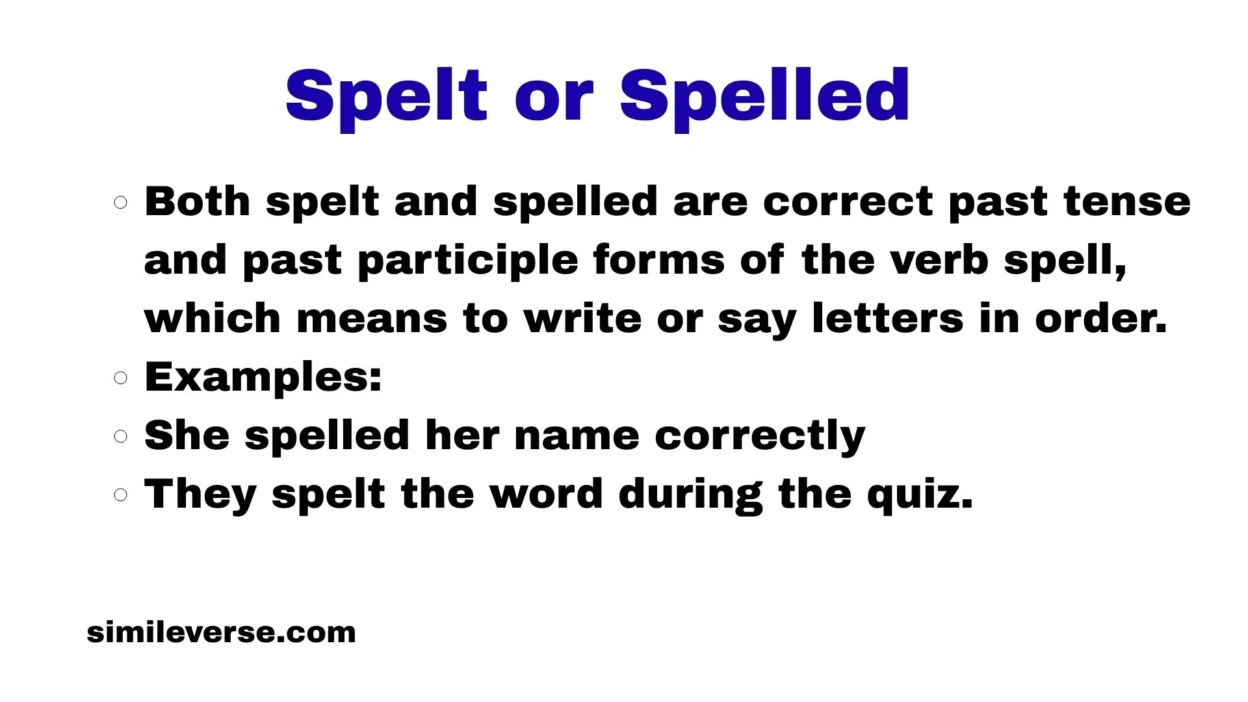
Both spelt and spelled are correct past tense and past participle forms of the verb spell, which means to write or say letters in order.
Examples:
- She spelled her name correctly.
- They spelt the word during the quiz.
Use
- spelled in American English
- spelt in British English (and other places)
The Origin of Spelt or Spelled
The difference between spelt and spelled comes from the history of English. Both forms come from the verb spell. Historically, English used many verb forms that ended in -t in the past (like dreamt, learnt, burnt).
Over time, American English simplified many past tense forms to end in -ed, which is why spelled became standard in the U.S. British English kept both spelled and the older spelt version, so writers there often use whichever fits their style.
Interestingly, spelt is also a noun that refers to a type of wheat grain — but that’s not related to the grammar question here.
British English vs American English Spelling
| Form | British English | American English |
|---|---|---|
| spelled | ✔ Common | ✔ Standard |
| spelt | ✔ Common | ✘ Rare/Not standard |
Comparison Examples:
- British: Her name was spelt wrongly in the book.
- American: Her name was spelled wrongly in the book.
The key difference is regional preference. British English speakers accept both forms, but American English primarily uses spelled.
Which Spelling Should You Use?
If you write for Americans:
Use spelled — it’s standard and expected in the U.S. and Canada.
If you write for British/Commonwealth readers:
You can use spelled or spelt — both are accepted. Many Brits still favour spelt in informal writing.
If you write for a global audience:
Using spelled is usually safe because it’s widely understood everywhere. But if you’re going for British style or tradition, spelt works too.
Common Mistakes with Spelt or Spelled
Mistake 1: Using spelt in American English academic writing.
→ Correction: Use spelled.
2: Thinking spelt is wrong everywhere.
→ Spelt is correct in British English.
Mistake 3: Confusing spelt with the wheat grain in writing.
→ Use context clues — grammar vs food topic.
Spelt or Spelled in Everyday Examples
Email:
- I spelled the client’s name correctly. (US)
- I spelt the client’s name correctly. (UK)
News & Formal Writing:
- The report spelled out the new policy. (US)
- The report spelt out the new policy. (UK)
Social Media:
- US users will naturally type spelled.
- British users might use spelt.
Spelt or Spelled – Google Trends & Usage Data
Globally, spelled shows higher search and writing frequency, especially in the United States. British and Commonwealth countries still show significant use of spelt due to historical language patterns and local preference. Both forms remain widely understood in writing and conversation.
Comparison Table — Keyword Variations Side by Side
| Keyword Variation | Meaning | Region |
|---|---|---|
| spelled | Past tense of spell | US, global |
| spelt | Past tense of spell | UK, Commonwealth |
| Spelt (grain) | Type of wheat | Food topic worldwide |
FAQs
1. Is spelt correct English?
Yes — especially in British English as the past tense of spell.
2. Which is used in the United States?
Spelled is the standard form.
3. Can I use spelt in formal writing?
Yes in British English, but avoid it in American formal writing.
4. Are spelt and spelled interchangeable?
Yes — meaning-wise, but choice depends on regional style.
5. Is spelt a noun?
Yes — spelt can also refer to a type of wheat.
6. Should I use spelled for global audiences?
Yes — it’s widely understood and safest for international writing.
7. What about misspelled vs misspelt?
Same rule — misspelled (US), misspelt (UK) both correct.
Conclusion
In summary, spelt and spelled are both correct past tense forms of the verb spell. The main difference is where you use them. In American English, spelled is the standard and safest choice for all writing. In British and Commonwealth English, both spelled and spelt are accepted, though spelt often feels more traditional or casual.
Understanding the difference helps you write more confidently and correctly for your audience — whether it’s an email, school work, or a formal report. If you’re writing for a global audience and want to avoid confusion, using spelled is usually the best option. But if you’re writing for British readers or following British style guidelines, spelt is perfectly fine and widely recognised.
Language evolves, and knowing these small differences keeps your writing clear and professional. So next time you type that past tense of spell, you’ll know exactly which version to choose!