Similes are fun and powerful tools in language that help us describe things by comparing them using the words like or as. They make writing more colorful and help readers imagine pictures in their minds.
For kids and learners, similes turn simple sentences into exciting stories. One of the most beautiful things to describe using similes is a sunset, because sunsets are full of colors, feelings, and magic.
What Is a Simile? (Simple Explanation for Kids)
A simile is a figure of speech that compares two different things using the words like or as. It helps explain something by linking it to something familiar.
Example:
- The sunset was like a painting in the sky.
Tip for learners:
If you can say “like” or “as” in your sentence and it makes sense, you are probably using a simile.
Why Are Similes Important in Writing?
Similes make writing more interesting and expressive. Instead of saying something is “beautiful,” a simile shows how it is beautiful.
Example:
- The sunset glowed like melted gold.
Insight:
Writers, poets, and students use similes to bring emotions and pictures into their writing.
Why Sunsets Are Perfect for Similes
Sunsets change colors, moods, and shapes every day. This makes them perfect for creative comparisons.
Example:
- The sunset spread across the sky like spilled paint.
Tip:
Observe the sky closely during sunset to find new ideas for similes.
Beautiful Similes for Colorful Sunsets
Sunsets are full of bright and soft colors blended together.
Examples:
- The sunset was like a rainbow melting into the sky.
- The sky burned orange like a glowing ember.
For kids:
Think about crayons or paints when describing sunset colors.
Similes for Red and Orange Sunsets
Red and orange sunsets often look warm and fiery.
Examples:
- The sunset blazed like a campfire in the sky.
- The clouds glowed red like hot coals.
Learning tip:
Use fire-related words to describe strong sunset colors.
Similes for Pink and Purple Sunsets
These sunsets feel soft, calm, and dreamy.
Examples:
- The sunset looked like cotton candy in the sky.
- Purple clouds floated like soft velvet curtains.
Insight:
Pink and purple similes often express peace and beauty.
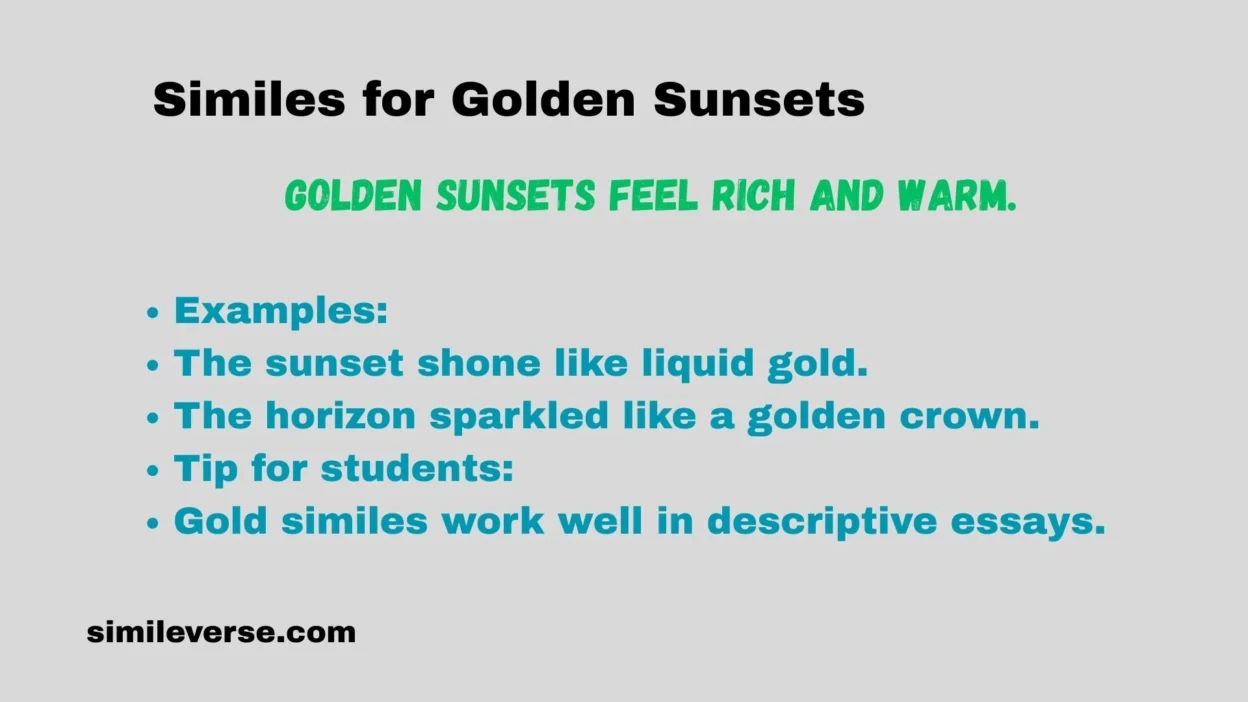
Similes for Golden Sunsets
Golden sunsets feel rich and warm.
Examples:
- The sunset shone like liquid gold.
- The horizon sparkled like a golden crown.
Tip for students:
Gold similes work well in descriptive essays.
Similes for Calm and Peaceful Sunsets
Some sunsets feel quiet and relaxing.
Examples:
- The sunset rested like a sleepy child.
- The sky faded like a whisper.
For readers:
Use gentle similes to show calm feelings.
Similes for Dramatic Sunsets
Dramatic sunsets are bold and eye-catching.
Examples:
- The sunset exploded like fireworks.
- Clouds clashed like waves in a storm.
Writing tip:
Strong verbs make dramatic similes more powerful.
Similes for Romantic Sunsets
Romantic sunsets feel warm and emotional.
Examples:
- The sunset glowed like a love letter written in light.
- The sky blushed like a shy smile.
Insight:
Romantic similes often use soft and emotional words.
Similes for Sunsets Over the Ocean
Ocean sunsets reflect light beautifully.
Examples:
- The sun sank like a coin into water.
- The waves shimmered like mirrors of fire.
Tip:
Combine sea and sky images for richer similes.
Similes for Sunsets in the Mountains
Mountain sunsets feel grand and peaceful.
Examples:
- The sunset rested on peaks like a glowing blanket.
- Shadows stretched like giant fingers.
For kids:
Imagine the mountains wearing the sunset.
Similes for Sunsets in the Desert
Desert sunsets are warm and vast.
Examples:
- The sunset spread like a fiery carpet.
- The sand glowed like polished copper.
Similes for Cloudy Sunsets
Clouds add texture to sunsets.
Examples:
- Clouds floated like painted feathers.
- The sky looked like a layered cake of color.
Similes for Rainy Sunsets
Rainy sunsets feel soft and magical.
Examples:
- The sunset shimmered like wet silk.
- Light slipped through clouds like golden rain.
Similes for Winter Sunsets
Winter sunsets are cool and gentle.
Examples:
- The sunset faded like a quiet sigh.
- The sky glowed pale like frosted glass.
Similes for Summer Sunsets
Summer sunsets are bright and bold.
Examples:
- The sunset burned like a blazing torch.
- The sky melted like warm butter.
Similes for Autumn Sunsets
Autumn sunsets feel cozy and rich.
Examples:
- The sunset glowed like falling leaves.
- The sky warmed like a soft blanket.
Similes for Spring Sunsets
Spring sunsets feel fresh and hopeful.
Examples:
- The sunset bloomed like a flower.
- Colors danced like butterflies.
Similes for Sunsets and Emotions
Sunsets often match how we feel.
Examples:
- The sunset comforted me like a hug.
- The sky wept colors like quiet tears.
Poetic Similes for Sunsets
Poets love creative comparisons.
Examples:
- The sunset whispered like a fading song.
- The sky burned like a poet’s dream.
Simple Similes for Kids
Easy similes help young learners.
Examples:
- The sunset was like a big orange ball.
- The sky looked like a colorful drawing.
Creative Similes for Story Writing
Stories come alive with similes.
Examples:
- The sunset closed the day like a gentle door.
- Night arrived like a quiet guest.
Similes for Sunsets in Poems
Poems use rhythm and imagery.
Examples:
- The sunset sang like a lullaby.
- Colors fell like slow music.
Similes for Sunsets in Essays
Essays become stronger with imagery.
Examples:
- The sunset marked the end like a final chapter.
How to Write Your Own Sunset Similes
Creating similes is easy with practice.
Steps:
- Observe the sunset
- Notice colors and feelings
- Compare it to something familiar
Tip:
There is no wrong simile if it makes sense.
Common Mistakes When Writing Similes
Avoid confusing or overused comparisons.
Tip:
Keep similes simple and clear for readers.
Classroom Activities Using Sunset Similes
Teachers can use sunsets creatively.
Ideas:
- Drawing and writing similes
- Group storytelling
Sunsets in Literature and Similes
Many books describe sunsets beautifully.
Insight:
Reading helps you learn new simile ideas.
Benefits of Learning Similes Early
Similes improve language skills.
For kids:
They boost imagination and confidence.
Practice Exercises for Students
Practice makes writing better.
Activity:
Write three similes for today’s sunset.
Final Thoughts:
Beautiful similes for sunsets help us turn nature into words. They make writing colorful, emotional, and fun for kids and adults alike. By observing sunsets and practicing simple comparisons, anyone can become a better writer. If for school, stories, or poems, sunset similes open the door to creativity and imagination.