Similes are fun word pictures that compare one thing to another using “like” or “as.” They help children and adults explain feelings clearly and creatively. When something feels awkward, similes make that strange, uncomfortable feeling easier to understand.
Learning similes builds strong writing, better speaking skills, and confidence for kids and learners of all ages.
What Does “Awkward” Mean in Simple Words?
Awkward means uncomfortable, strange, clumsy, or embarrassing.
It can describe a feeling, a moment, a movement, or even a silence.
For example:
- Forgetting someone’s name
- Tripping in front of classmates
- Not knowing what to say in a conversation
Similes help describe these moments in a fun, clear, and memorable way.
Why Use Similes to Describe Awkward Moments?
Similes:
- Make writing more interesting and vivid
- Help readers feel the emotion
- Improve creative thinking
- Are easy for kids to learn and use
- Make awkward situations sound funny instead of stressful
Best Similes for Awkward (Easy and Clear)
Awkward like a giraffe on roller skates
Meaning: Very clumsy or uncomfortable
Example: He danced awkwardly, like a giraffe on roller skates.
Tip: Great for describing physical movements.
Awkward like a fish climbing a tree
Meaning: Completely out of place
Example: She felt awkward, like a fish climbing a tree at the party.
Tip: Perfect for social situations.
Awkward like a square peg in a round hole
Meaning: Not fitting in
Example: He felt awkward in the new school, like a square peg in a round hole.
Tip: Common and easy to understand.
Awkward like silence after a bad joke
Meaning: Uncomfortable quiet
Example: The room felt awkward, like silence after a bad joke.
Tip: Useful for dialogue scenes.
Awkward like wearing shoes on the wrong feet
Meaning: Something feels wrong
Example: The meeting felt awkward, like wearing shoes on the wrong feet.
Similes for Socially Awkward Situations
Awkward like waving back at someone who wasn’t waving at you
Meaning: Embarrassing mistake
Example: It was awkward, like waving back at someone who wasn’t waving at you.
Awkward like forgetting your lines on stage
Meaning: Sudden embarrassment
Example: He stood awkward, like forgetting your lines on stage.
Awkward like a long pause on a video call
Meaning: Uncomfortable waiting
Example: The call turned awkward, like a long pause on a video call.
Funny Similes for Awkward (Kids Love These)
Awkward like a penguin trying to fly
Meaning: Doing something impossible
Example: His presentation was awkward, like a penguin trying to fly.
Awkward like spaghetti slipping off a fork
Meaning: Hard to manage
Example: The conversation felt awkward, like spaghetti slipping off a fork.
Awkward like a robot learning to dance
Meaning: Stiff and unnatural
Example: He moved awkwardly, like a robot learning to dance.
Similes for Awkward Silence
Awkward like a ticking clock in an empty room
Meaning: Silence feels loud
Example: The silence was awkward, like a ticking clock in an empty room.
Awkward like holding your breath too long
Meaning: Tense moment
Example: The pause felt awkward, like holding your breath too long.
Similes for Physical Awkwardness
Awkward like tripping over your own feet
Meaning: Clumsy movement
Example: He ran awkwardly, like tripping over his own feet.
Awkward like balancing on one foot
Meaning: Unsteady
Example: She stood awkward, like balancing on one foot.
Similes for Emotional Awkwardness
Awkward like laughing at the wrong time
Meaning: Emotional discomfort
Example: His smile was awkward, like laughing at the wrong time.
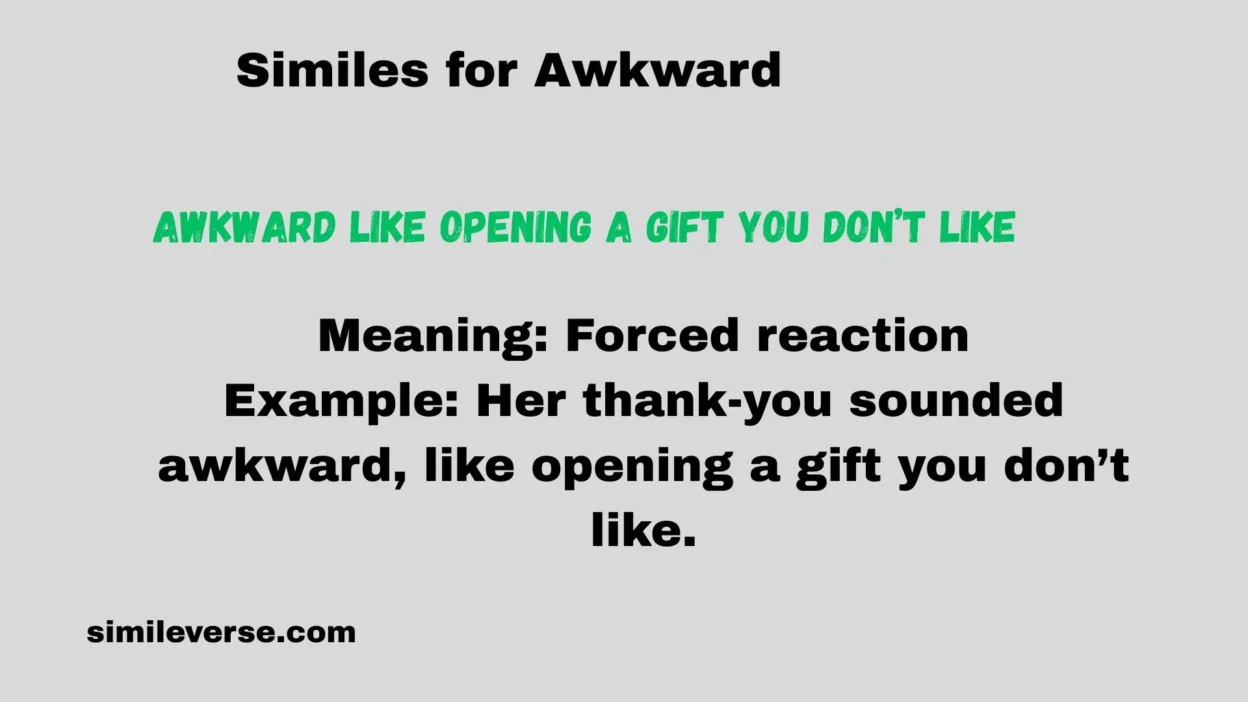
Awkward like opening a gift you don’t like
Meaning: Forced reaction
Example: Her thank-you sounded awkward, like opening a gift you don’t like.
Awkward Similes for Students and School Writing
Awkward like standing alone at recess
Meaning: Feeling left out
Example: He felt awkward, like standing alone at recess.
Awkward like reading out loud without practice
Meaning: Nervous and unsure
Example: She read awkwardly, like reading out loud without practice.
Creative Similes for Awkward Moments
Awkward like a broken zipper at a party
Meaning: Embarrassing problem
Example: The moment felt awkward, like a broken zipper at a party.
Awkward like stepping on a creaky stair at night
Meaning: Sudden attention
Example: It was awkward, like stepping on a creaky stair at night.
Simple Awkward Similes for Kids
Awkward like a puzzle piece that doesn’t fit
Meaning: Something feels wrong
Example: He felt awkward, like a puzzle piece that doesn’t fit.
Awkward like wearing a costume on the wrong day
Meaning: Out of place
Example: She felt awkward, like wearing a costume on the wrong day.
Similes for Awkward Conversations
Awkward like talking with your mouth full
Meaning: Hard to speak properly
Example: The talk was awkward, like talking with your mouth full.
Awkward like explaining a joke that didn’t land
Meaning: Trying too hard
Example: The moment turned awkward, like explaining a joke that didn’t land.
Similes for Awkward Body Language
Awkward like stiff cardboard
Meaning: No natural movement
Example: He stood awkward, like stiff cardboard.
Awkward like frozen arms in a photo
Meaning: Unnatural pose
Example: She looked awkward, like frozen arms in a photo.
Everyday Awkward Similes
Awkward like spilling water during a handshake
Meaning: Social embarrassment
Example: It was awkward, like spilling water during a handshake.
Awkward like calling a teacher “mom”
Meaning: Common embarrassment
Example: He felt awkward, like calling a teacher “mom.”
How to Teach Awkward Similes to Kids
- Start with real-life examples
- Ask children to act out awkward moments
- Let them create their own funny similes
- Use drawings and storytelling
- Praise creativity, not perfection
How to Use Awkward Similes in Writing
- Use them in stories and essays
- Add them to dialogue
- Avoid using too many in one paragraph
- Match the simile to the emotion
- Keep language simple and clear
Common Mistakes to Avoid
- Mixing metaphors
- Using very hard words
- Overusing the same simile
- Making similes too long
Why Awkward Similes Improve Vocabulary
They:
- Expand emotional vocabulary
- Improve imagination
- Help describe feelings clearly
- Make writing more expressive
Awkward vs Embarrassing: Is There a Difference?
- Awkward = uncomfortable or strange
- Embarrassing = shame or self-conscious
Similes help show both gently and creatively.
Practice Activity: Make Your Own Awkward Simile
Try this sentence:
“I felt awkward like __________.”
Examples:
- like a cat in a bathtub
- like a microphone that won’t turn on
- like waving to the wrong person
Best Places to Use Awkward Similes
- School essays
- Short stories
- Personal journals
- Speeches
- Creative writing competitions
Why Teachers Love Similes for Learning
Similes:
- Improve descriptive writing
- Make lessons fun
- Help visual learners
- Encourage creativity
Final Thoughts
Awkward moments happen to everyone. Using similes turns those moments into funny, relatable, and meaningful descriptions.
If you are a student, teacher, parent, or writer, learning the best similes for awkward will make your writing clearer, kinder, and more creative.
With practice, even the most uncomfortable moments can become great stories.