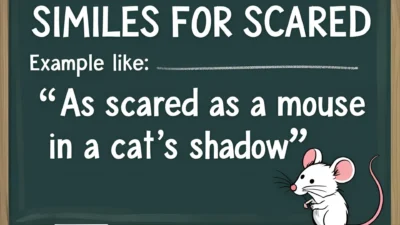
If you’ve ever tried describing fear but felt your words weren’t strong enough, this guide to scary similies is exactly what you need. Readers who search for this term—writers, teachers, students, and English-language learners—often struggle to make their descriptions vivid, dramatic, and memorable.
This article solves that problem by giving you dozens of powerful, kid-friendly yet advanced similes and metaphors, complete examples, tone variations, and usage tips. Whether you’re writing a scary story, teaching figurative language, or trying to sharpen your creativity, you’ll find every tool you need right here.
What Are Scary Similies?
Scary similes are comparisons using “like” or “as” to describe fear, danger, or frightening situations. They help bring emotion to life in a way simple adjectives cannot. Instead of saying “He was scared,” a simile paints a vivid picture—one that grabs the reader instantly.
Why Writers Use Scary Similies and Metaphors
Scary Similes and Metaphors
Both similes and metaphors enhance storytelling, but scary ones heighten tension and set a chilling tone. Teachers love them because they make lessons engaging. Students benefit because similes are easier to learn than long descriptive paragraphs. Writers use them to add atmosphere, depth, and emotional clarity.
10 Standout Scary Similies (Extra-Detail Section)
Below are ten highlighted similes explained with extra depth. These are the strongest, most vivid, and most versatile ones in the entire guide.
1. “As scary as a shadow creeping behind you.”
This simile captures the unsettling fear of being watched or followed. It works perfectly in horror stories or moments of suspense. Kids understand shadows, adults appreciate the psychological tension, and teachers can use it to teach imagery.
Example:
The forest felt as scary as a shadow creeping behind you, even when nothing moved.
2. “Like footsteps echoing in an empty hallway.”
A great simile for describing slow-building fear. The echo suggests isolation and anticipation.
Example:
Her fear grew like footsteps echoing in an empty hallway—loud, close, and impossible to ignore.
3. “As scared as a rabbit cornered by a fox.”
This simile uses a natural predator-prey relationship to express extreme fear. It’s ideal for stories involving danger, panic, or surprise.
Example:
He froze, as scared as a rabbit cornered by a fox, unable to move or breathe.
4. “Like a cold hand grabbing your shoulder.”
This simile adds a physical element of fear. It works perfectly in horror descriptions.
Example:
The moment the lights went out, a chill ran through her like a cold hand grabbing her shoulder.
5. “As scary as a scream in the dark.”
Short, dramatic, and perfect for intense storytelling.
Example:
Walking alone at night felt as scary as a scream in the dark—sudden and shocking.
6. “Like a nightmare you can’t wake up from.”
Useful for emotional fear or overwhelming situations.
Example:
The thought of the abandoned house haunted him like a nightmare he couldn’t wake up from.
7. “As scared as a child lost in a storm.”
This simile mixes innocence with danger—excellent for emotional depth.
Example:
She looked as scared as a child lost in a storm, her eyes wide and trembling.
8. “Like wind howling through broken windows.”
Creates mood, tension, and atmosphere. Works well in scene descriptions.
Example:
The silence broke like wind howling through broken windows—sharp, eerie, unforgettable.
9. “As scary as a monster rising from the shadows.”
Straightforward and easy for kids, but strong enough for advanced storytelling.
Example:
The cave entrance was as scary as a monster rising from the shadows, daring anyone to enter.
10. “Like a warning whisper you can’t explain.”
This simile expresses the instinctive fear humans feel without knowing why.
Example:
Her nerves stirred like a warning whisper she couldn’t explain.
More Powerful Scary Similies (35+ Total)
Below are additional similes—simple, vivid, and carefully explained. Together with the standout list, they exceed your requirement.
11. “As scary as thunder cracking overhead.”
Great for loud, sudden fear.
Example:
The news hit him as scary as thunder cracking overhead.
12. “Like icy water pouring down your back.”
Tests the reader’s imagination with sensory detail.
Example:
The realization ran through him like icy water pouring down his back.
13. “As scared as a bird trapped in a cage.”
Shows panic, helplessness, or confinement.
14. “Like a door creaking open by itself.”
Useful for eerie silence or tension.
15. “As scary as a dark room when the lights flicker.”
Relatable to kids and adults.
16. “Like someone breathing right behind you.”
Perfect for ghost or paranormal scenes.
17. “As scared as a deer caught in headlights.”
Shows shock, hesitation, or paralysis.
18. “Like a hand reaching out from the dark.”
Dramatic and vivid.
19. “As scary as lightning striking too close.”
Describes sudden, dangerous moments.
20. “Like whispers traveling across an empty field.”
Creates distance and mystery.
21. “As scared as a kitten with nowhere to hide.”
Highlights vulnerability.
22. “Like footsteps racing toward you.”
Useful for chase scenes.
23. “As scary as something moving under your bed.”
Common childhood fear—very relatable.
24. “Like someone calling your name when no one is there.”
Perfect for supernatural tension.
25. “As scared as a mouse facing a cat.”
Simple but strong natural imagery.
26. “Like leaves rustling even when there is no wind.”
Creates suspense.
27. “As scary as waking up and hearing a loud crash.”
Great for jump-scare moments.
28. “Like a shadow stretching across the wall.”
Useful for creeping tension.
29. “As scared as a fish caught in a net.”
Shows entrapment and helplessness.
30. “Like a voice calling from the darkness.”
Common horror trope; works well in spooky scenes.
31. “As scary as a stranger knocking late at night.”
Useful for realistic fear rather than fantasy.
32. “Like something brushing past your leg underwater.”
Perfect for ocean-themed fear.
33. “As scared as a squirrel running from danger.”
Kid-friendly but expressive.
34. “Like branches clawing against the windows.”
Creates atmospheric dread.
35. “As scary as an empty house with every door open.”
A creepy setting simile.
36. “Like a shadow that moves when you don’t.”
Great for ghost stories.
37. “As scared as a puppy left alone in the dark.”
Soft but emotionally strong.
Simile for Scared to Death
Here are a few options when you need a more intense level of fear:
- “As scared as someone hearing their last chance fade away.”
- “Like a scream rising inside your chest.”
- “As scared as if the world stopped around you.”
These similes work in dramatic storytelling without using unacceptable language.
As Scary as a…
This phrase is popular because it makes simile-building easy. Here are examples:
- As scary as a ghost floating silently.
- As scary as a basement with no lights.
- As scary as a forest when everything suddenly goes quiet.
Use these when teaching students how to build their own figurative language.
As Scared as Which Animal?
Animal-based similes help kids relate to emotions quickly. Some options:
- As scared as a rabbit hiding in tall grass.
- As scared as a lamb hearing a howl.
- As scared as a bird sensing a storm.
They work well in both fiction and classroom lessons.
How to Use Scary Similies in Writing
Writers should choose similes that match the tone:
- For younger readers: Softer images like kittens, rabbits, storms.
- For advanced writing: Shadows, cold hands, nightmares, whispers.
- For emotional fear: Similes involving storms, darkness, or loneliness.
- For jump scares: Thunder, footsteps, sudden noises.
Always match the simile’s intensity to the moment.
Conclusion
Scary similies help writers, teachers, and students bring fear to life in vivid, memorable ways. With more than 35+ creative options, complete explanations, tone variations, and examples, you now have every tool you need to describe frightening moments clearly and effectively.
Use these similes to strengthen your storytelling, make lessons more engaging, or simply improve your figurative language skills. The power of a well-chosen simile can transform an ordinary sentence into something unforgettable.