Similes are special comparisons that help us describe feelings using “like” or “as.”
They turn emotions into clear pictures in our minds.
For kids and learners, similes make writing more fun, expressive, and powerful.
Sadness can be hard to explain, but similes help us share those feelings gently and clearly.
In this guide, you’ll discover powerful similes for sadness that are easy to understand and use.
What Are Similes and Why Are They Important?
Similes compare two different things using like or as to make meaning clearer.
Why similes matter:
- They make writing more interesting
- They help readers imagine emotions
- They improve vocabulary and creativity
- They help kids express feelings safely
Example:
Sad as a wilted flower without water.
Tip for learners:
If you can picture it in your head, it’s probably a good simile.
What Does Sadness Mean in Simple Words?
Sadness is a feeling of unhappiness, loss, or disappointment.
Everyone feels sad sometimes—children, adults, and even animals.
Sadness can be:
- Quiet
- Heavy
- Sudden
- Long-lasting
- Gentle or very deep
Similes help explain how sadness feels, not just that it exists.
Why Use Similes to Describe Sadness?
Using similes for sadness:
- Makes emotions easier to understand
- Helps children explain feelings
- Adds depth to stories and essays
- Improves creative and emotional writing
Example:
Her sadness clung to her like a shadow.
Writing tip:
Good similes show feelings instead of telling them directly.
Simple Similes for Sadness for Kids
These similes are easy, gentle, and perfect for young learners.
- Sad like a rainy day
- Sad as a broken toy
- Sad like a lonely puppy
- Sad as a cloud without sunshine
- Sad like a bird with a torn wing
Example sentence:
He felt sad like a rainy day with no rainbow.
Tip:
Use things kids see every day—weather, animals, toys.
Powerful Similes for Deep Sadness
Deep sadness needs stronger comparisons.
- Sad like the ocean at night
- Sad as an empty house
- Sad like a fading star
- Sad as a song without music
- Sad like a candle burning out
Example:
Her heart felt sad like the ocean at night—dark and endless.
Insight:
Powerful similes use
Emotional Similes for Sadness in Writing
These similes work well in stories, poems, and essays.
- Sadness wrapped around him like cold fog
- Sad like tears trapped behind closed eyes
- Sad as a letter never sent
- Sad like footsteps fading away
- Sad as silence after goodbye
Writing tip:
Emotional similes often use touch, sound, or silence.
Similes for Sadness in Stories
Stories become richer when emotions are shown clearly.
- Sad like a road with no end
- Sad as a fallen leaf in winter
- Sad like a forgotten memory
- Sad as a door that never opens
- Sad like a clock that stopped ticking
Example:
The boy walked home, sad like a fallen leaf in winter.
Similes for Sadness in Poems
Poetry loves similes because they create rhythm and feeling.
- Sad like moonlight behind clouds
- Sad as a violin playing alone
- Sad like a river moving slowly
- Sad as night without stars
- Sad like a whisper in the dark
Poetry tip:
Poems often use nature and music for sadness.
Similes for Quiet Sadness
Not all sadness is loud.
- Sad like a silent room
- Sad as dust on old books
- Sad like soft rain at night
- Sad as a dim candle
- Sad like a sigh without sound
Example:
His sadness sat quietly, like dust on old books.
Similes for Heavy Sadness
Heavy sadness feels hard to carry.
- Sad like a stone on the chest
- Sad as wet clothes in winter
- Sad like a bag full of rocks
- Sad as dark clouds overhead
- Sad like a slow, tired walk
Tip:
Use weight and pressure to show heaviness.
Similes for Sudden Sadness
Sudden sadness comes quickly.
- Sad like thunder without warning
- Sad as a door slammed shut
- Sad like a glass shattering
- Sad as a light turning off
- Sad like cold wind in summer
Example:
The news hit him, sad like thunder without warning.
Similes for Long-Lasting Sadness
Some sadness stays for a long time.
- Sad like a never-ending night
- Sad as a road with no sunrise
- Sad like an old wound
- Sad as winter that won’t leave
- Sad like a shadow that follows
Insight:
Long sadness is often shown with time and darkness.
Similes for Sadness Using Nature
Nature makes sadness easy to imagine.
- Sad like autumn leaves falling
- Sad as a dry riverbed
- Sad like a stormy sky
- Sad as a lonely mountain
- Sad like a tree without leaves
Tip for kids:
Think of weather when describing feelings.
Similes for Sadness Using Weather
Weather is a popular comparison.
- Sad like endless rain
- Sad as grey clouds
- Sad like a cold winter morning
- Sad as fog covering the sun
- Sad like thunder without lightning
Example:
Her heart felt sad like endless rain.
Similes for Sadness Using Darkness
Darkness often represents sadness.
- Sad like a dark tunnel
- Sad as night without moon
- Sad like shadows on walls
- Sad as a room with lights off
- Sad like a blackout
Writing tip:
Darkness works best for deep emotions.
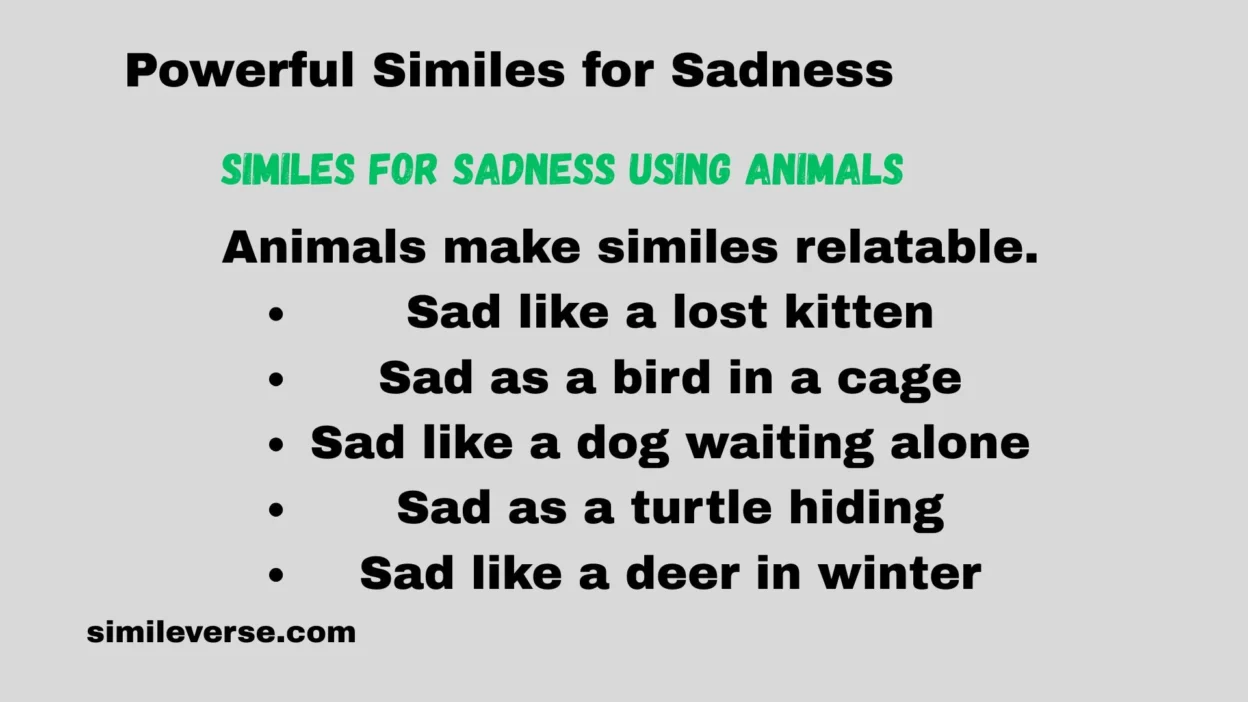
Similes for Sadness Using Animals
Animals make similes relatable.
- Sad like a lost kitten
- Sad as a bird in a cage
- Sad like a dog waiting alone
- Sad as a turtle hiding
- Sad like a deer in winter
Example:
She felt sad like a lost kitten in the rain.
Similes for Sadness Using Objects
Objects help make sadness concrete.
- Sad like a cracked mirror
- Sad as an empty chair
- Sad like a broken clock
- Sad as a torn letter
- Sad like a faded photograph
Tip:
Use objects that show loss or damage.
Similes for Sadness for Students
Great for essays and assignments.
- Sad like hopes falling apart
- Sad as dreams fading away
- Sad like a blank page
- Sad as silence in class
- Sad like unfinished work
Academic tip:
Keep similes clear and relevant to your topic.
Similes for Sadness for Teachers
Useful in lessons and examples.
- Sad like a story without ending
- Sad as a lesson unlearned
- Sad like a quiet classroom
- Sad as chalk dust falling
- Sad like a closed book
Similes for Sadness for Parents
Helpful for emotional conversations.
- Sad like a child missing home
- Sad as bedtime tears
- Sad like a hug needed
- Sad as a goodbye wave
- Sad like waiting alone
Parent tip:
Gentle similes help children talk about feelings.
Similes for Sadness in Daily Life
Everyday sadness examples.
- Sad like missing a bus
- Sad as losing keys
- Sad like empty weekends
- Sad as cold coffee
- Sad like waiting too long
Similes for Sadness in Creative Writing
Perfect for novels and short stories.
- Sad like memories echoing
- Sad as time slowing down
- Sad like colors fading
- Sad as silence after laughter
- Sad like a dream ending
Sadness Similes with Meanings
- Sad like a rainy day – dull and gloomy
- Sad as a broken toy – damaged happiness
- Sad like an empty house – loneliness
- Sad as fading light – hope disappearing
- Sad like fallen leaves – loss and change
Tip:
Always understand the meaning behind the image.
Common Mistakes When Using Similes for Sadness
Avoid these errors:
- Using too many similes at once
- Making comparisons confusing
- Repeating the same idea
- Using similes that don’t match the mood
Writing tip:
One strong simile is better than many weak ones.
How to Create Your Own Similes for Sadness
Simple steps:
- Think about how sadness feels
- Choose something similar
- Use “like” or “as”
- Keep it clear and simple
Example:
Sad like a balloon losing air.
How Similes Improve Emotional Intelligence
Similes:
- Help name emotions
- Improve empathy
- Encourage expression
- Support mental well-being
For kids, similes turn feelings into safe words.
Similes vs Metaphors for Sadness
- Simile: uses like/as
Sad like a rainy day - Metaphor: direct comparison
Sadness was a rainy day
Tip:
Start with similes—they’re easier.
Why Sadness Similes Matter in Education
They help:
- Writing skills
- Reading comprehension
- Emotional learning
- Creative thinking
Teachers use similes to build language and empathy.
Best Tips for Teaching Sadness Similes to Kids
- Use pictures
- Use real-life examples
- Encourage sharing
- Keep language simple
- Praise creativity
Powerful One-Line Similes for Sadness
- Sad like a star losing light
- Sad as a song fading out
- Sad like a lonely road
- Sad as night rain
- Sad like goodbye tears
Conclusion
Sadness is a natural feeling, and similes give it a gentle voice.
Through powerful similes for sadness, children and adults can express emotions clearly and creatively.
From simple comparisons to deep emotional images, similes turn feelings into understanding.
Whether for school, stories, or daily life, these similes help us connect, heal, and communicate better.
Keep practicing, and let your words carry your feelings with care.