Have you ever stopped while writing an email or post and thought, “Should this be past or passed?” You’re not alone. This is one of the most searched grammar questions in English because the two words sound the same but do very different jobs. Even native speakers mix them up daily.
People search for “past or passed” because a small mistake can change meaning, sound unprofessional, or confuse readers. A sentence like “She past the exam” looks wrong, but many writers don’t know why. The confusion happens because past can act as a noun, adjective, adverb, or preposition, while passed is only a verb (the past tense of pass).
This article clears that confusion once and for all. You’ll get a quick answer, simple explanations, real-life examples, common mistakes, and clear advice on which word to use and when. By the end, you’ll confidently choose past or passed—without guessing.
Past or Passed – Quick Answer
Past relates to time, position, or earlier moments.
Passed is the past tense of the verb “pass”, meaning went by or completed successfully.
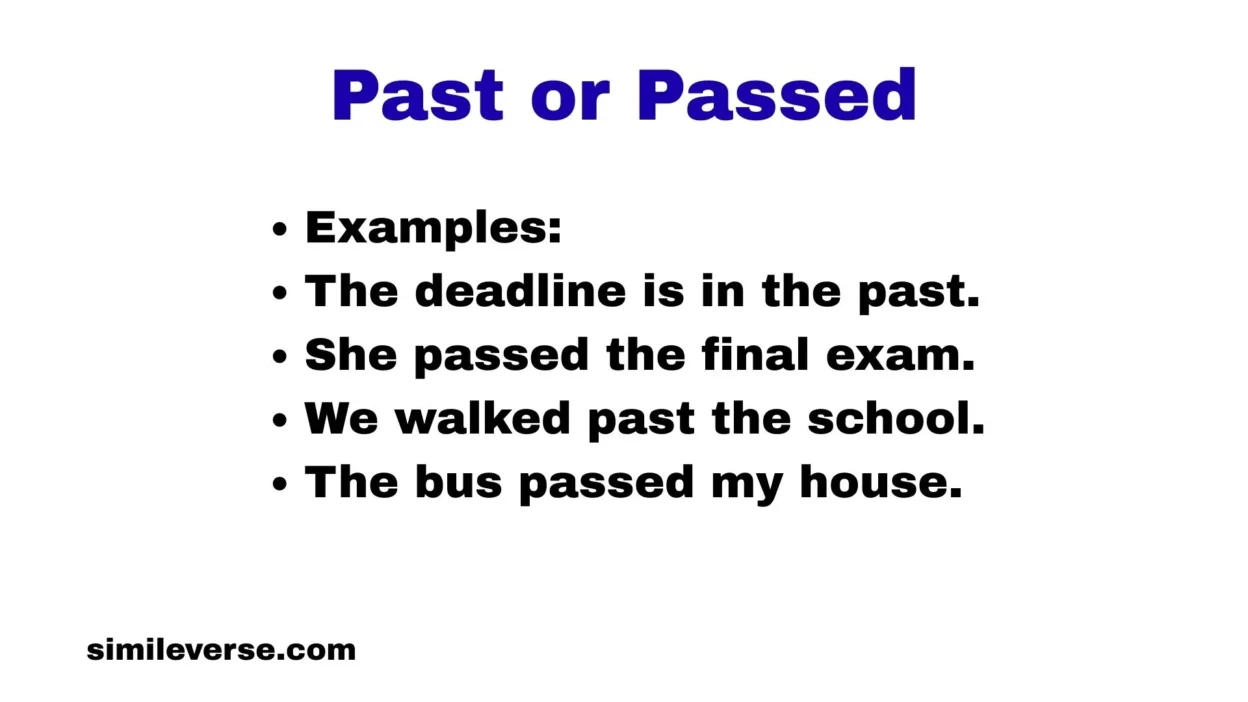
Examples:
- The deadline is in the past.
- She passed the final exam.
- We walked past the school.
- The bus passed my house.
👉 Tip: If you can replace the word with “went by” or “completed,” use passed. Otherwise, use past.
The Origin of Past or Passed
The word past comes from Middle English paste, meaning gone by. Over time, it became a flexible word used for time, direction, and position.
The word pass comes from Old French passer, meaning to go by or cross. Passed simply evolved as the past tense form of pass.
The spelling difference exists because:
- Past became a descriptive word (noun, adjective, adverb, preposition).
- Passed stayed a verb form.
So, even though they sound identical, English kept them separate to show function, not pronunciation.
British English vs American English Spelling
There is no spelling difference between British and American English for past and passed. Both follow the same rules.
Comparison Table: British vs American Usage
| Word | British English Example | American English Example |
|---|---|---|
| Past | In the past, letters took weeks. | In the past, mail was slower. |
| Passed | He passed the driving test. | She passed the bar exam. |
✅ Meaning and spelling are identical in both varieties of English.
Which Spelling Should You Use?
Choose based on function, not location.
- US audience: Follow the same rule—past for time/position, passed for actions.
- UK/Commonwealth: Same usage applies.
- Global or ESL audience: Use simple sentence checks to avoid errors.
Quick rule:
- Action happened → passed
- Time, direction, or position → past
Common Mistakes with Past or Passed
❌ She past the interview.
She passed the interview.
❌ The train passed the station at 6 pm ago.
The train went past the station at 6 pm.
❌ He has passed memories.
He has past memories.
❌ We walked passed the park.
We walked past the park.
Past or Passed in Everyday Examples
Emails
- I passed your message to the manager.
- That issue is now in the past.
News
- The bill passed Parliament today.
- In the past, such laws failed.
Social Media
- Can’t believe how fast time has passed!
- Leaving the past behind.
Formal Writing
- The committee passed the proposal.
- Lessons from the past guide future decisions.
Past or Passed – Google Trends & Usage Data
Search data shows “past or passed” is highly popular in:
- United States
- United Kingdom
- India
- Pakistan
- Canada
Most searches come from:
- Students
- ESL learners
- Content writers
- Professionals writing emails or reports
“Passed” appears more in academic and news contexts, while “past” dominates storytelling and historical writing.
Past vs Passed – Side-by-Side Comparison Table
| Feature | Past | Passed |
|---|---|---|
| Part of Speech | Noun, adjective, adverb, preposition | Verb |
| Meaning | Time, position, earlier | Completed action |
| Can show action? | ❌ No | ✅ Yes |
| Example | The past matters. | She passed easily. |
FAQs About Past or Passed
1. Is “past” ever a verb?
No. Past is never a verb.
2. Is “passed” always a verb?
Yes. Passed is always a verb.
3. Can I say “walked passed”?
No. Say walked past.
4. Which is correct: time has past or passed?
Correct: time has passed.
5. Is “past due” correct?
Yes. It refers to time already gone.
6. Why do they sound the same?
They are homophones—same sound, different meaning.
7. Do grammar checkers catch this mistake?
Sometimes, but not always. Understanding the rule is safer.
Conclusion
The difference between past or passed is simple once you focus on function instead of sound. Past talks about time, position, or earlier events, while passed always shows an action that happened. If something happened, moved, or was completed, use passed. If you’re talking about history, direction, or time gone by, use past.
This small grammar fix can instantly improve your writing—whether it’s an email, exam answer, blog post, or professional document. Remember the quick test: if you can replace the word with “went by”, choose passed. Otherwise, past is the right choice. Mastering this pair helps you write clearly, confidently, and correctly every time.