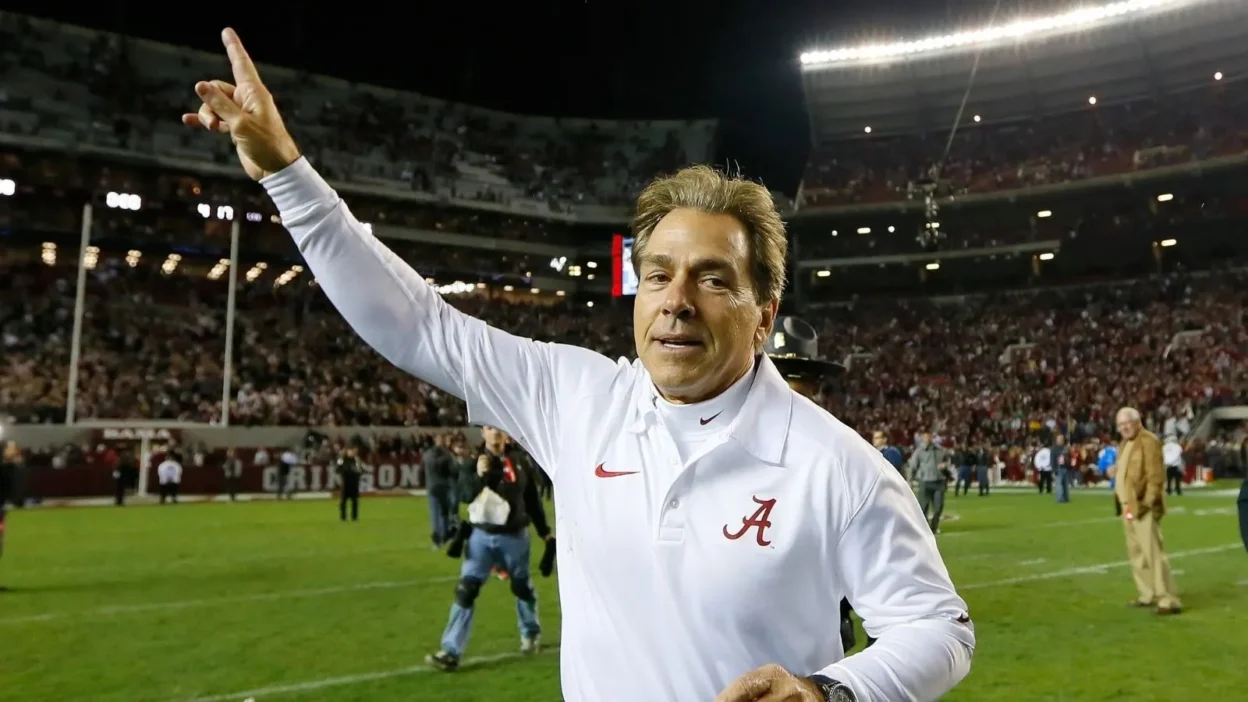
Nick Saban is widely regarded as one of the greatest coaches in college football history, with a career defined by discipline, strategy, and unprecedented success.
From his early days as a player at Kent State to becoming the architect of Alabama’s football dynasty, Saban’s journey is a testament to hard work, vision, and leadership.
Over decades, he has transformed multiple programs, won numerous national championships, and developed countless players who went on to succeed in the NFL. His coaching philosophy, often referred to as “The Process,” emphasizes preparation, accountability, and relentless pursuit of excellence.
For football fans, aspiring coaches, and sports analysts, studying Saban’s career offers valuable lessons on leadership, team building, and maintaining high performance under pressure.
In this article, we’ll explore Nick Saban’s coaching journey in detail, highlighting his achievements, methods, challenges, and enduring legacy in college football.
Early Life and Football Beginnings
Nick Saban was born on October 31, 1951, in Fairmont, West Virginia, a small town that would play a pivotal role in shaping his work ethic and competitive spirit. Growing up in a modest family, Saban learned the value of discipline and determination from an early age. Football quickly became his passion, and he excelled as a high school player, showcasing both athletic talent and a sharp understanding of the game. His success on the field earned him a place at Kent State University, where he played as a defensive back under coach Don James.
At Kent State, Saban’s playing career may not have drawn national headlines, but it profoundly influenced his future coaching philosophy. He developed a keen understanding of defense, teamwork, and the importance of preparation—lessons he would later apply to his coaching career. During his college years, Saban also worked under several mentors who emphasized strategy, leadership, and adaptability, planting the seeds for his own coaching style.
Even as a young player, Saban displayed qualities that would define his career: focus, resilience, and a meticulous attention to detail. His time as a student-athlete laid the groundwork for a lifelong commitment to excellence, both on and off the field. These early experiences in West Virginia and at Kent State provided Saban with the foundation to rise through the coaching ranks and eventually become one of college football’s most legendary figures.
Early Coaching Career
After graduating from Kent State University, Nick Saban quickly transitioned from player to coach, beginning what would become a remarkable journey in football leadership. His first coaching role was as a graduate assistant at Kent State in 1973, where he worked closely with the defensive staff. This early experience allowed him to understand the nuances of coaching strategy, player management, and game preparation. From the start, Saban showed an intense attention to detail, a trait that would become a hallmark of his career.
Over the next several years, Saban gained experience at multiple programs, including University of Toledo, Syracuse, and West Virginia, often focusing on defensive strategy and special teams. These early positions were essential for learning the intricacies of recruiting, evaluating talent, and building disciplined units. During this time, he developed a reputation as a coach who demanded excellence and expected his players to commit fully to the team’s goals.
In 1979, Saban joined the NFL as an assistant with the Cleveland Browns, further expanding his knowledge of the game at the professional level. Though his NFL tenure was brief, it provided valuable insights into advanced tactics, organizational management, and leadership under pressure.
These formative years laid the foundation for Saban’s coaching philosophy, emphasizing preparation, discipline, and adaptability. By the mid-1980s, he had built a solid reputation as a rising star in football coaching circles, setting the stage for his first head coaching opportunities and eventual rise to national prominence.
First Head Coaching Roles
Nick Saban’s first opportunities as a head coach allowed him to apply the knowledge and discipline he had developed during his early coaching years. In 1977, Saban took the helm at the University of Toledo, becoming one of the youngest head coaches in college football at the time. At Toledo, he focused on building a structured, disciplined program and learning the challenges of leading an entire team. Although his tenure was relatively short, it gave him critical experience in program management, game planning, and player development.
After gaining experience in the NFL and various assistant roles, Saban returned to college football as head coach at Michigan State University in 1995. Michigan State presented a more competitive environment and the pressure of rebuilding a struggling program. Saban implemented a strong recruiting strategy and emphasized defensive discipline, gradually transforming the team into a contender. While he faced challenges with consistency, his ability to develop talent and instill a winning culture began to draw national attention.
Saban’s next major role was at Louisiana State University (LSU) in 2000, where his coaching career truly reached new heights. At LSU, he immediately made an impact, implementing rigorous training regimens and focusing on both player performance and character development. In 2003, Saban led LSU to a national championship, solidifying his reputation as one of college football’s top coaches. This success demonstrated his ability to take programs to the next level, combining strategic expertise, recruiting talent, and fostering a disciplined, championship-focused culture.
The University of Alabama Era
Nick Saban’s arrival at the University of Alabama in 2007 marked the beginning of one of the most dominant eras in college football history. Tasked with rebuilding a program struggling to maintain its traditional excellence, Saban immediately implemented his signature philosophy: discipline, preparation, and an unwavering focus on “The Process.” He emphasized that success is built step by step, day by day, both on and off the field.
Under Saban’s leadership, Alabama quickly returned to national prominence. His recruiting strategy became legendary, attracting top talent from across the country and consistently producing future NFL players. Beyond recruiting, Saban focused on player development, ensuring athletes excelled physically, mentally, and academically. His coaching staff, often referred to as the Saban coaching tree, has produced numerous successful head coaches, highlighting his influence beyond just Alabama.
Saban’s tenure at Alabama is marked by multiple national championships, conference titles, and record-breaking winning streaks. His teams are known for disciplined defense, efficient offense, and the ability to perform under pressure, even in high-stakes games. He has also adapted to evolving trends in college football, incorporating innovative offensive and defensive strategies while maintaining his core principles.
Through his leadership at Alabama, Saban has built not just a football program, but a dynasty. His era has redefined excellence in college football, setting new standards for coaching, recruiting, and player development. Today, Nick Saban is widely regarded as the benchmark for success in college football, a symbol of consistency, discipline, and championship-level leadership.
Coaching Philosophy
Nick Saban’s coaching philosophy is the cornerstone of his success, built on discipline, preparation, and a relentless commitment to excellence. Central to his approach is the concept known as “The Process,” which emphasizes focusing on daily improvement rather than obsessing over outcomes. According to Saban, winning championships is the result of consistent effort, attention to detail, and adherence to a structured plan, both on and off the field.
Leadership is another key element of Saban’s philosophy. He demands accountability from his players and staff, expecting each individual to take responsibility for their role in the team’s success. This focus on discipline extends beyond the field, with Saban emphasizing character development, academic performance, and personal growth. By instilling these values, he ensures that his players are well-rounded individuals prepared for life beyond football.
Saban’s coaching methods also highlight adaptability and innovation. While he maintains core principles, he continually adjusts strategies to match evolving trends in college football, from offensive schemes to defensive tactics. He places great importance on recruiting and developing talent, identifying players with both skill and mindset capable of thriving in his system.
Finally, mentorship and building a strong coaching staff are vital components of Saban’s approach. Many of his assistants have gone on to become successful head coaches, a testament to his ability to cultivate leadership beyond himself. His philosophy has become a model for aspiring coaches and a blueprint for building a championship-caliber program.
Achievements and Records
Nick Saban’s coaching career is defined by extraordinary achievements and record-breaking success. Over decades, he has established himself as one of the most accomplished coaches in college football history. Since taking over at the University of Alabama, Saban has led the Crimson Tide to multiple national championships, consistently competing at the highest level and cementing his legacy as a program builder and winner.
Throughout his career, Saban has accumulated over 250 career wins, a milestone few coaches reach. His teams have also won numerous Southeastern Conference (SEC) titles, maintaining dominance in one of college football’s most competitive conferences. Saban’s ability to sustain excellence year after year has resulted in several unprecedented winning streaks, reflecting both his strategic brilliance and his skill in motivating players to perform consistently under pressure.
Beyond team success, Saban has had a profound impact on player development. Under his guidance, dozens of athletes have progressed to the NFL, with many achieving All-Pro status and shaping professional careers. His attention to detail, rigorous training programs, and emphasis on discipline ensure that players are prepared for challenges at every level of the game.
Saban has also earned numerous individual accolades, including Coach of the Year awards and recognition as one of the top coaches in college football history. His achievements are not limited to statistics; they reflect a career built on leadership, strategic innovation, and an unrelenting pursuit of excellence, setting a benchmark for generations of coaches and players alike.
Challenges and Controversies
Despite his remarkable success, Nick Saban’s coaching career has not been without challenges and controversies. Leading elite programs comes with immense pressure, and Saban has faced scrutiny throughout his career for decisions both on and off the field. One recurring challenge has been managing the expectations of fans, administrators, and players in high-stakes environments like Alabama and LSU, where winning is considered mandatory.
Saban has also encountered criticism for his strict, no-nonsense coaching style. While many praise his discipline and high standards, some players and observers have described his approach as intense or even ruthless. Balancing accountability with motivation has been a delicate task, but Saban’s ability to maintain team cohesion despite criticism highlights his leadership skills.
Another challenge has been adapting to the evolving landscape of college football. Changes in recruiting rules, player transfers, and the increasing influence of name, image, and likeness (NIL) deals have required Saban to remain flexible while staying true to his core philosophy. He has faced tough seasons and high-profile losses, but each setback has been approached as an opportunity to refine his strategy and strengthen his programs.
Off the field, Saban has navigated media scrutiny and public debate surrounding his coaching decisions and the culture of college athletics. His ability to respond calmly, stay focused on “The Process,” and prioritize long-term success over short-term criticism has allowed him to overcome obstacles and maintain his status as one of the most respected and influential coaches in college football history.
FAQ
1. Who is Nick Saban?
Nick Saban is one of the most successful college football coaches in history. He is best known for his tenure as head coach at the University of Alabama, where he has won multiple national championships and developed a football dynasty.
2. What is Nick Saban’s coaching philosophy?
Saban’s philosophy, often called “The Process,” emphasizes daily preparation, discipline, and accountability. He focuses on building consistent habits, developing talent, and prioritizing both personal and athletic growth.
3. How many national championships has Nick Saban won?
As of 2026, Nick Saban has won seven national championships, including six with Alabama and one with LSU, making him one of the most decorated coaches in college football history.
4. Where did Nick Saban begin his coaching career?
Saban started as a graduate assistant at Kent State University in the early 1970s and held various assistant and coordinator roles at colleges and in the NFL before becoming a head coach at Toledo, Michigan State, and LSU.
5. Has Nick Saban influenced other coaches?
Yes, many of Saban’s former assistants have become successful head coaches themselves. This “Saban coaching tree” demonstrates his long-term impact on the sport beyond his own teams.
6. What makes Nick Saban a legendary coach?
His combination of strategic expertise, rigorous preparation, talent development, and leadership has created a winning culture at every program he’s led, setting a benchmark for coaches and players across college football.
Conclusion
Nick Saban’s coaching career stands as one of the most impressive and influential in the history of college football.
From his humble beginnings in Fairmont, West Virginia, to his legendary tenure at the University of Alabama, Saban has consistently demonstrated a commitment to excellence, discipline, and leadership.
His journey highlights the importance of preparation, adaptability, and a relentless work ethic in achieving sustained success.
Throughout his career, Saban has transformed multiple programs into championship contenders, earning seven national titles, countless conference championships, and recognition as one of the greatest coaches of all time.
Beyond statistics and victories, his true legacy lies in the players and coaches he has mentored.
Many of his athletes have gone on to succeed in the NFL, while numerous assistants have become respected head coaches, expanding Saban’s influence across college football.
Saban’s coaching philosophy, often summarized as “The Process,” reflects his belief that success is the result of consistent effort, attention to detail, and unwavering discipline.
He has shown that leadership is not just about winning games but also about developing character, resilience, and accountability in players and staff alike.
In the end, Nick Saban is more than a coach; he is a symbol of excellence, a benchmark for future generations, and a lasting figure in the evolution of college football.
His career offers valuable lessons not only for coaches and athletes but for anyone striving to achieve greatness through dedication and strategic thinking.