Many people search for “miss or ms” because these two titles look similar but carry very different meanings. You may see Miss and Ms. used in emails, school forms, wedding invitations, job applications, or news articles—and wonder which one is correct. The confusion grows because both titles are used before a woman’s name, yet they reflect different social and personal details.
This keyword solves a very real problem: how to address a woman politely and correctly without causing offense or sounding outdated. Some people worry about being too formal, while others fear being disrespectful. Others are unsure if Miss and Ms. are spelling variants, cultural differences, or interchangeable words.
In modern English, especially in professional and global settings, choosing the right title matters. It shows respect, awareness, and clarity in communication. This article gives you a quick answer, explains the origin and history, compares British and American usage, highlights common mistakes, and shows real-life examples. By the end, you’ll know exactly when to use Miss or Ms. with confidence.
Miss or Ms – Quick Answer
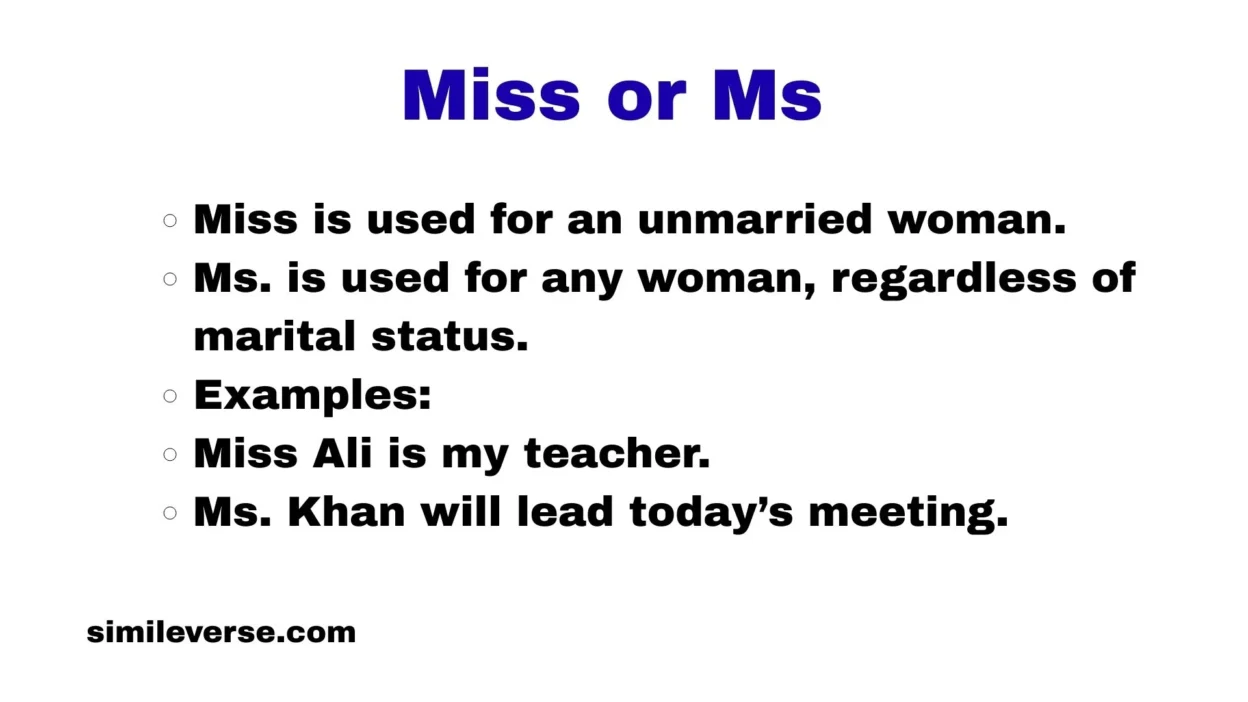
Miss is used for an unmarried woman.
Ms. is used for any woman, regardless of marital status.
Examples:
- Miss Ali is my teacher.
- Ms. Khan will lead today’s meeting.
If you do not know a woman’s marital status, Ms. is the safest and most professional choice.
The Origin of Miss or Ms
The word Miss comes from the older word mistress, which once meant a woman of authority. Over time, Miss became a title for young or unmarried women.
Ms. is much newer. It became popular in the 20th century, especially during the women’s rights movement. Women wanted a title like Mr., which does not show marital status. Ms. was created to give women the same privacy and respect.
There is no spelling difference here—Miss and Ms. are not spelling variants. They are different titles with different meanings.
British English vs American English Spelling
There is no spelling difference between British and American English for Miss and Ms.. However, usage style can vary slightly.
| Aspect | British English | American English |
|---|---|---|
| Miss | Common for young/unmarried women | Common, but less formal |
| Ms. | Widely accepted in formal writing | Strongly preferred in professional use |
| Period in Ms. | Often written as Ms | Usually written as Ms. |
Which Spelling Should You Use?
Your audience decides the best choice.
- United States: Use Ms. in work, emails, and formal writing.
- UK & Commonwealth: Ms (without a period) is common and polite.
- Global or Professional Audience: Always choose Ms. or Ms.
- School or Traditional Settings: Miss may be acceptable if clearly appropriate.
If unsure, Ms. is always correct and respectful.
Common Mistakes with Miss or Ms
Here are frequent errors people make:
- ❌ Using Miss for a married woman
- ❌ Assuming Ms. means unmarried
- ❌ Writing Miss. with a period (incorrect)
- ❌ Avoiding Ms. because it feels “modern”
Corrections:
- Use Miss only when marital status is known and relevant.
- Use Ms. when status is unknown or private.
- Write Miss without a period.
Miss or Ms in Everyday Examples
Emails
- Dear Ms. Ahmed,
- Hello Miss Sarah,
News Writing
- Ms. Malik was appointed as CEO today.
Social Media
- Big thanks to Ms. Noor for the support!
Formal Writing
- Ms. Fatima Khan submitted the report.
Miss or Ms – Google Trends & Usage Data
Search trends show “Ms” is more popular in:
- United States
- Canada
- Corporate and academic searches
“Miss” appears more often in:
- School-related content
- Traditional or cultural settings
- Informal searches
Overall, Ms. is growing worldwide as the neutral and professional option.
Miss vs Ms – Comparison Table
| Feature | Miss | Ms. |
|---|---|---|
| Shows marital status | Yes | No |
| Professional use | Limited | Very common |
| Safe if unsure | ❌ No | ✅ Yes |
| Used for married women | ❌ No | ✅ Yes |
FAQs About Miss or Ms
1. Is Ms. short for Miss?
No. Ms. is a separate title.
2. Can I use Ms. for a married woman?
Yes. Ms. works for all women.
3. Is Miss outdated?
Not outdated, but more limited in use.
4. Should I ask which title to use?
Yes, if appropriate. Otherwise, use Ms.
5. Is Ms. rude?
No. It is polite and professional.
6. Do I use a period after Ms?
Yes in American English. Optional in British English.
7. Can Miss be used for adults?
Yes, but usually in informal or traditional contexts.
Conclusion
Understanding miss or ms helps you communicate clearly and respectfully. While both titles are correct, they serve different purposes. Miss refers to an unmarried woman and is often used in traditional or informal settings. Ms. is a modern, neutral title that works for all women, no matter their marital status.
In today’s global and professional world, Ms. is the safest and most accepted choice. It avoids assumptions and shows awareness of modern language use. British and American English follow the same meanings, with only small punctuation differences.
If you remember one rule, let it be this: When in doubt, use Ms. It is polite, inclusive, and always correct. Using the right title builds trust, respect, and confidence in your writing—whether it’s an email, article, or formal document.