“Lose or loose” is one of the most searched English grammar questions online—and for good reason. These two words look very similar, sound almost the same when spoken quickly, and are often mixed up in everyday writing. You might see sentences like “I don’t want to loose my phone” on social media, emails, or even professional blogs. While the mistake is common, it can change the meaning of a sentence and make writing look careless.
People search for lose or loose because they want a fast, clear answer: Which one is correct, and when? This confusion usually happens because both words come from English roots, have related meanings, and differ by just one extra “o.” Spellcheck doesn’t always help, especially in informal writing.
This article solves that confusion once and for all. You’ll get a quick answer, simple rules, real-life examples, and professional advice on which spelling to use. By the end, you’ll never hesitate again when choosing between lose and loose.
Lose or Loose – Quick Answer
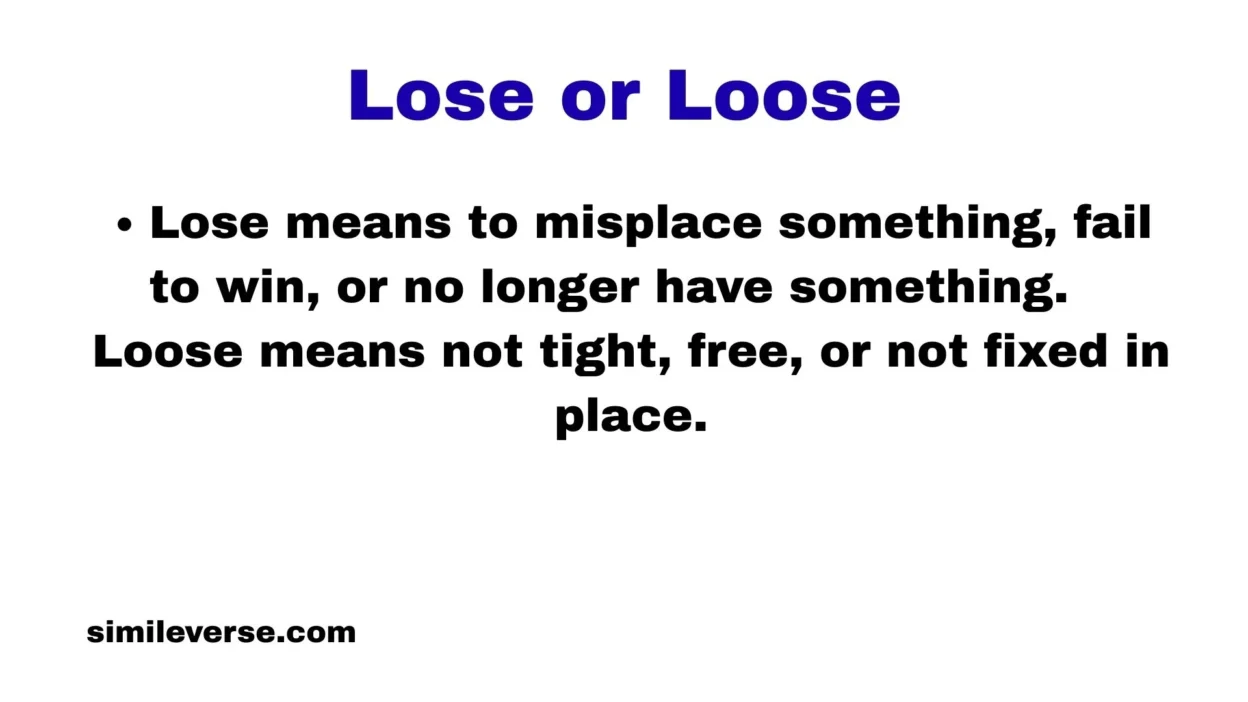
Lose means to misplace something, fail to win, or no longer have something.
Loose means not tight, free, or not fixed in place.
Examples:
- I don’t want to lose my keys.
- The team might lose the match.
- This shirt is too loose.
- The dog broke loose from its leash.
👉 Rule to remember:
If you can lose something, use lose.
If something is not tight, use loose.
The Origin of Lose or Loose
The word lose comes from Old English losian, meaning to perish or be destroyed. Over time, it came to mean failing to keep or win something.
Loose comes from Old Norse lauss, meaning free or unattached. That meaning has stayed mostly the same for centuries.
The spelling difference exists because English borrowed these words from different languages. Even though they look similar today, they were never the same word. Their meanings stayed separate, but modern pronunciation made them sound confusingly close.
British English vs American English Spelling
Good news: there is no spelling difference between British and American English for lose and loose. Both follow the same rules.
Comparison Table
| Aspect | Lose | Loose |
|---|---|---|
| Part of speech | Verb | Adjective / Verb |
| Meaning | Misplace or fail | Not tight or free |
| US English | Lose | Loose |
| UK English | Lose | Loose |
| Common error | Writing “loose” instead of “lose” | Used less incorrectly |
Which Spelling Should You Use?
- US audience: Use lose for misplacing or failing; loose for not tight.
- UK & Commonwealth: Same rule applies.
- Global or SEO content: Always double-check. Using the wrong one can hurt credibility and rankings.
Professional tip:
If your sentence talks about failure, loss, or misplacing, choose lose.
If it talks about fit, control, or freedom, choose loose.
Common Mistakes with Lose or Loose
Here are frequent errors people make:
- ❌ I don’t want to loose weight.
✅ I don’t want to lose weight. - ❌ Be careful not to loose the file.
✅ Be careful not to lose the file. - ❌ My shoes lose when I walk.
✅ My shoes are loose when I walk.
Why it happens:
“Loose” has an extra “o,” and people think it sounds longer—so they use it by mistake.
Lose or Loose in Everyday Examples
Emails:
- Please don’t lose this document.
- The screw is loose.
News:
- The company may lose millions this year.
- Safety rules prevent loose wiring.
Social Media:
- Trying not to lose my motivation 😅
- My jeans are too loose after dieting!
Formal Writing:
- Failure to comply may lose customer trust.
- Ensure no parts remain loose.
Lose or Loose – Google Trends & Usage Data
Search data shows “lose or loose” is most popular in:
- United States
- United Kingdom
- India
- Pakistan
- Philippines
The confusion appears most in:
- Social media posts
- Fitness content (“lose weight”)
- Emails and casual writing
“Lose” is searched far more often than “loose”, mainly because people accidentally type the wrong spelling and want confirmation.
Lose vs Loose – Side-by-Side Comparison
| Feature | Lose | Loose |
|---|---|---|
| Meaning | Misplace / fail | Not tight / free |
| Word type | Verb | Adjective / Verb |
| Example | Lose a game | Loose shirt |
| Common error | Confused with loose | Used instead of lose |
| Memory trick | One “o” = gone | Extra “o” = extra space |
FAQs About Lose or Loose
1. Is “loose” ever correct when talking about weight?
No. You always lose weight, never loose weight.
2. Why do people confuse lose and loose so often?
They look similar and sound close when spoken fast.
3. Can “loose” be a verb?
Yes. Example: They loosed the arrows.
4. Is “lose” pronounced like “loose”?
Not exactly. Lose sounds like “looz,” while loose has a longer sound.
5. Does British English use different rules?
No. Both US and UK English use the same spellings.
6. Which mistake is more common online?
Using loose instead of lose.
7. Can spellcheck catch this error?
Often no—both are real words.
Conclusion
The confusion between lose or loose is simple but important. Lose is about loss, failure, or misplacing something. Loose is about things that are not tight or are free. One extra letter completely changes the meaning of your sentence.
Using the wrong spelling can make writing look unprofessional, especially in emails, blogs, or SEO content. The good news is that once you learn the basic rule, the mistake is easy to avoid. Remember: If it’s gone, you lose it. If it’s not tight, it’s loose.
Whether you’re writing for school, work, or the internet, choosing the right word builds clarity and trust. Mastering small grammar details like this makes a big difference.