“It’s or its” is one of the most searched grammar questions in English—and for good reason. These two tiny words look almost the same, sound exactly the same, and appear everywhere: emails, schoolwork, blogs, social media posts, and even professional documents. Yet they mean very different things. One small apostrophe can completely change your sentence and, sometimes, your credibility as a writer.
People search for “it’s or its” because English breaks its own rules here. Usually, apostrophes show ownership (like Sarah’s book), but with its, the rule flips. That twist confuses students, writers, professionals, and even native speakers. Spellcheck doesn’t always save you either, because both forms are technically correct—just in different situations.
This article clears up that confusion once and for all. You’ll get a quick answer for fast writing, a deeper explanation for full understanding, real-life examples, common mistakes, and clear advice on which spelling to use and when. By the end, you’ll never pause again while typing it’s or its.
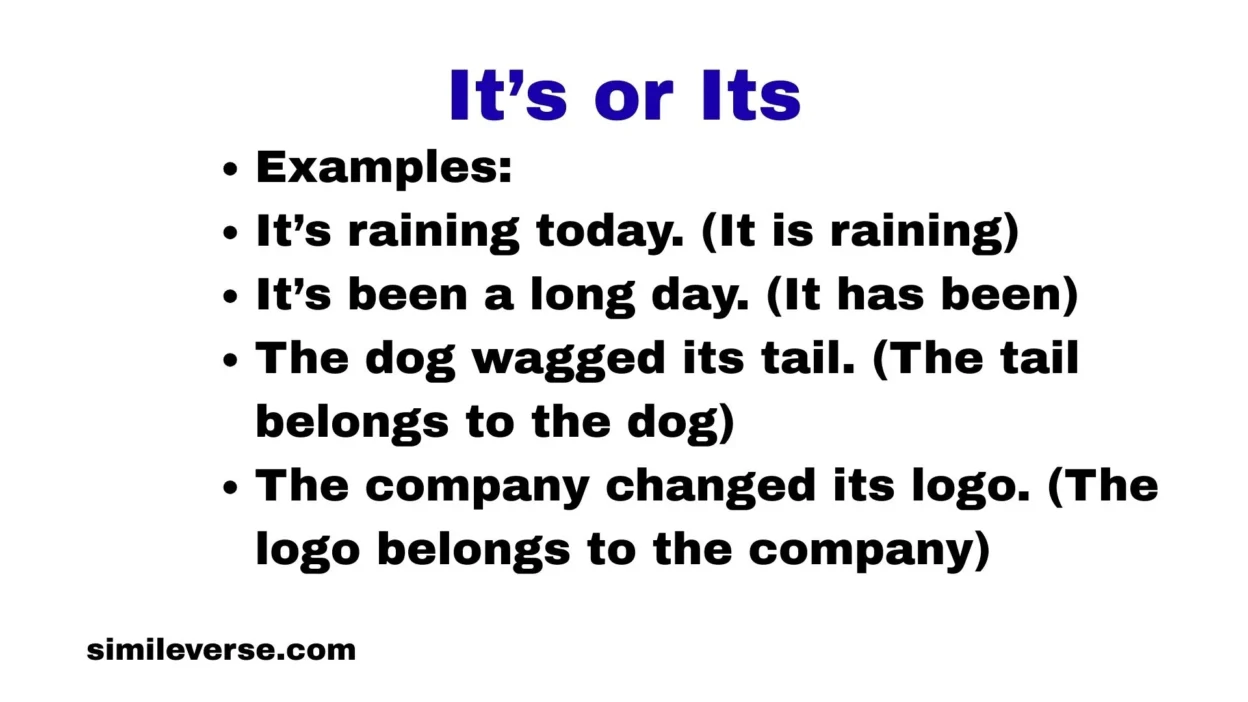
It’s or Its
It’s = it is or it has
Its = possessive form showing ownership
Examples:
- It’s raining today. (It is raining)
- It’s been a long day. (It has been)
- The dog wagged its tail. (The tail belongs to the dog)
- The company changed its logo. (The logo belongs to the company)
Quick trick:
If you can replace the word with it is or it has, use it’s.
If not, use its.
The Origin of It’s or Its
The confusion between it’s or its comes from English history. Apostrophes were first used to show missing letters. Over time, they also began to show possession.
For most nouns:
- John’s book = the book of John
But pronouns broke this pattern:
- his, hers, ours, theirs → no apostrophes
Its follows the pronoun rule, not the noun rule. That’s why:
- its (possessive) has no apostrophe
- it’s keeps the apostrophe because it shortens it is or it has
This odd rule is why English learners and native speakers alike still struggle with it’s or its today.
British English vs American English Spelling
There is no spelling difference between British English and American English for it’s or its. The rules are exactly the same.
Examples (Both UK & US):
- It’s going to rain tomorrow.
- The car lost its wheel.
Comparison Table
| Form | Meaning | UK Usage | US Usage | Example |
|---|---|---|---|---|
| it’s | it is / it has | Same | Same | It’s cold today. |
| its | possessive | Same | Same | The cat cleaned its paws. |
Key point:
This is a grammar issue, not a regional spelling issue.
Which Spelling Should You Use?
Your choice depends on meaning, not location.
- Use “it’s” when writing contractions in casual or formal writing.
- Use “its” when showing ownership.
Audience-based advice:
- US audience: Follow the same rule—meaning matters.
- UK/Commonwealth: Same rule applies.
- Global audience: Use the correct form to maintain clarity and professionalism.
If your writing is formal (academic, business, legal), double-check every it’s carefully.
Common Mistakes with It’s or Its
Here are the most frequent errors and how to fix them:
- ❌ The company changed it’s policy.
✅ The company changed its policy. - ❌ Its raining outside.
✅ It’s raining outside. - ❌ The phone lost it’s charger.
✅ The phone lost its charger. - ❌ The dog knows it’s name.
✅ The dog knows its name.
Why these mistakes happen:
Writers assume apostrophes always show possession—but its is the exception.
It’s or Its in Everyday Examples
Emails
- It’s great to hear from you.
- Please update its settings before sending.
News Writing
- It’s expected to affect the economy.
- The country revised its budget.
Social Media
- It’s finally Friday!
- The brand launched its new product.
Formal Writing
- It’s important to follow guidelines.
- The system updated its security features.
It’s or Its – Google Trends & Usage Data
Search interest for “it’s or its” remains high worldwide. It spikes during:
- School exam seasons
- Content writing growth
- ESL learning trends
Usage patterns:
- High search volume: US, UK, India, Pakistan, Canada
- Context: Grammar checks, writing clarity, academic help
People want fast answers first, then deeper explanations—exactly what this guide provides.
Comparison Table: It’s vs Its
| Feature | It’s | Its |
|---|---|---|
| Type | Contraction | Possessive pronoun |
| Apostrophe | Yes | No |
| Meaning | It is / It has | Belonging to “it” |
| Common Error | Used for possession | Used for contractions |
FAQs About It’s or Its
1. Is “its” ever written with an apostrophe?
No. Its never takes an apostrophe when showing possession.
2. Can “it’s” mean “it was”?
No. It’s only means it is or it has.
3. Why does “its” break the apostrophe rule?
Because it follows pronoun rules, not noun rules.
4. Is “its” formal or informal?
It works in both formal and informal writing.
5. Does autocorrect always catch this mistake?
No. Both forms are real words, so errors often slip through.
6. How can I remember the difference easily?
Replace the word with it is. If it works, use it’s.
7. Is this mistake serious in professional writing?
Yes. It can make writing look careless or unpolished.
Conclusion
The difference between it’s or its may seem small, but it matters a lot. One form shortens it is or it has, while the other shows ownership—no apostrophe allowed. This single rule solves nearly all confusion around the keyword.
Remember the simple test: if you can say it is, choose it’s. If you’re showing possession, choose its. This rule works everywhere—emails, essays, social posts, and professional documents. British English and American English follow the same standard, so you never need to change spelling by region.
Mastering it’s or its improves clarity, confidence, and credibility in your writing. Once you lock this rule in, you’ll spot mistakes instantly—and never make them again.