In today’s fast-paced world, technology is at the heart of nearly every industry. From healthcare and finance to entertainment and education, tech innovations are shaping the way we live, work, and communicate.
With this rapid digital transformation, many people are asking: is technology a good career path? The answer is not just about high salaries or job security—it’s also about growth opportunities, creativity, and adaptability in an ever-evolving field.
Careers in technology offer a wide range of options, from software development and data science to cybersecurity and artificial intelligence, making it a versatile choice for people with different skills and interests.
However, like any career, it comes with challenges such as constant learning, competition, and the pressure to stay updated with new tools and trends. This article will explore all aspects of a tech career to help you make an informed decision.
Why Technology Careers Are in High Demand
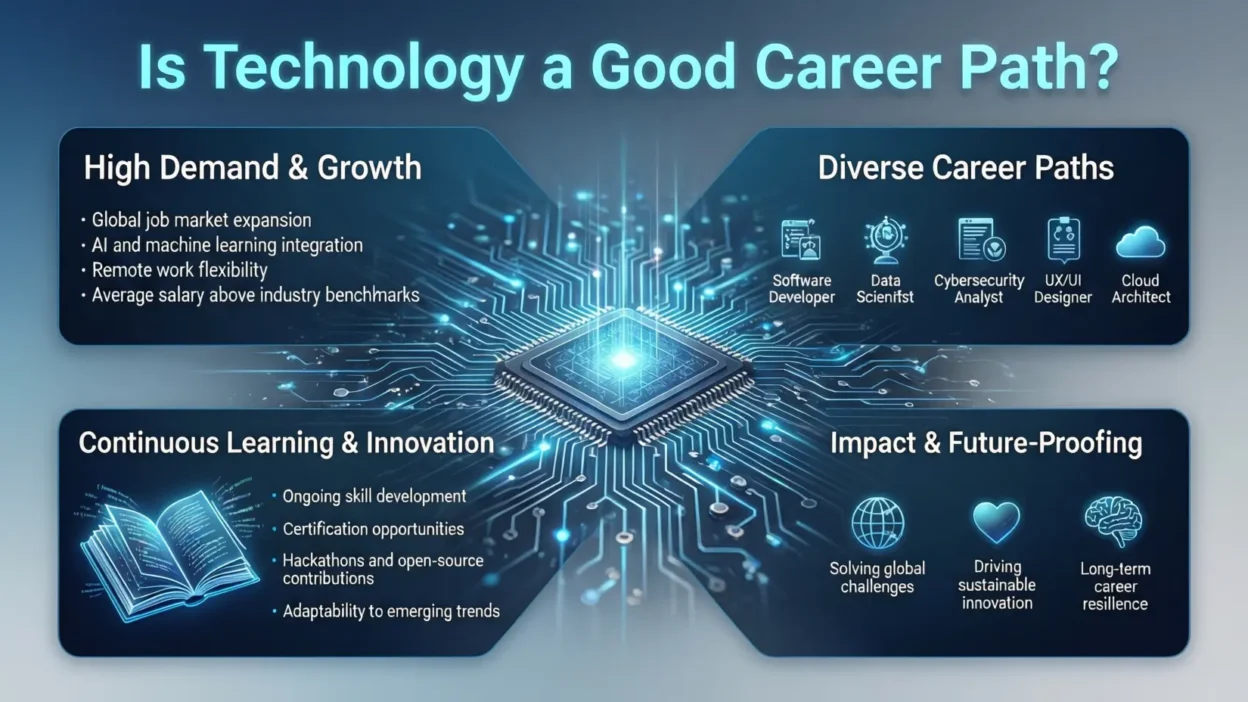
The technology sector has grown exponentially over the past decade, and this trend shows no signs of slowing down. Companies across industries increasingly rely on technology for operations, communication, and innovation. As a result, professionals skilled in areas like software development, data analysis, cybersecurity, and artificial intelligence are in constant demand. According to industry reports, tech jobs are projected to grow faster than most other sectors over the next ten years, making it a career path with strong job security.
Another key advantage of technology careers is the potential for competitive salaries. Many tech roles, from cloud engineers to data scientists, offer above-average pay, especially for those who specialize in high-demand fields. Beyond income, technology careers provide opportunities to innovate and make a tangible impact. Whether developing a mobile app, creating an AI solution, or designing a cybersecurity system, tech professionals often work on projects that improve efficiency, solve real-world problems, and shape the future.
Additionally, technology careers offer flexibility that many traditional jobs do not. Remote work, freelancing, and global collaboration are increasingly common in tech roles, allowing professionals to balance their work-life needs while staying connected to cutting-edge projects. Combined with continuous learning opportunities, a tech career can be both financially rewarding and personally fulfilling.
Challenges and Essential Skills in Technology Careers
While technology offers exciting opportunities, it also comes with unique challenges that professionals must navigate. One of the main hurdles is the rapid pace of technological change. Tools, programming languages, and platforms evolve constantly, and staying relevant requires ongoing learning and adaptability. Without updating skills regularly, even experienced professionals risk falling behind in the competitive tech landscape.
Another challenge is high competition in popular tech fields. Roles like software engineering, data science, and cybersecurity attract many talented individuals, making it crucial to specialize or develop niche expertise. Additionally, certain tech positions can involve high-pressure environments and tight deadlines, which may lead to stress or burnout if work-life balance is not carefully managed. Accessibility can also be a barrier, as some roles require formal education, certifications, or significant self-learning, which may be costly or time-consuming for some people.
To succeed in technology careers, professionals need a combination of technical and soft skills. Core technical skills may include programming languages, cloud computing, cybersecurity knowledge, and data analysis. Soft skills—such as problem-solving, communication, adaptability, and teamwork—are equally important for collaborating on projects and navigating complex challenges. Certifications, bootcamps, and online courses can help bridge skill gaps and open doors to new opportunities.
In short, a tech career is rewarding but demands dedication, continuous learning, and the ability to adapt to a constantly evolving environment. For those willing to invest in their growth, the opportunities can be limitless.
Future Trends and Long-Term Outlook in Technology Careers
The future of technology careers looks promising, but it is shaped by rapid innovation and emerging fields. One of the most significant trends is the rise of artificial intelligence (AI) and machine learning, which are transforming industries from healthcare to finance. Professionals with AI expertise will likely remain in high demand, as businesses increasingly rely on automation, predictive analytics, and intelligent systems. Similarly, cybersecurity is becoming critical as companies face growing threats from cyberattacks, creating a strong need for security experts worldwide.
Other emerging areas include blockchain, cloud computing, quantum computing, and data science, offering specialized career paths for those willing to develop niche skills. The growing popularity of remote work also expands opportunities globally, allowing professionals to collaborate with teams anywhere in the world while maintaining flexible schedules. Additionally, tech is increasingly intersecting with sustainability and social impact, with green technology, renewable energy solutions, and smart infrastructure creating new career avenues.
However, the evolving landscape also means professionals must remain adaptable. Long-term career growth in technology requires continuous learning, keeping up with trends, and anticipating which skills will be in demand in the next 5–10 years. By embracing emerging technologies and pursuing ongoing education, tech professionals can ensure job security, career advancement, and relevance in a fast-changing industry.
How to Decide If a Tech Career Is Right for You
Choosing a career in technology requires more than just following trends—it involves evaluating your skills, interests, and long-term goals. The first step is self-assessment. Ask yourself if you enjoy problem-solving, logical thinking, and working with computers or digital systems. Are you comfortable with continuous learning and adapting to new tools? A genuine interest in technology often predicts long-term satisfaction and success.
Next, explore different subfields within technology to identify which areas align with your strengths and curiosity. Software development, data science, AI, cybersecurity, and UX/UI design are just a few options. Experimenting through coding tutorials, online courses, or small projects can provide hands-on experience without a major commitment. Internships, freelancing, and volunteering for tech projects are also effective ways to test the waters and build practical skills.
Education and training play a crucial role. Whether you pursue a formal degree, attend a coding bootcamp, or earn online certifications, acquiring the right skills is essential for standing out in the competitive tech landscape. Additionally, consider long-term goals, such as desired salary, work-life balance, remote opportunities, and potential for growth.
Ultimately, a tech career suits individuals who are curious, adaptable, and willing to invest time in developing both technical and soft skills. By carefully evaluating your interests, testing different roles, and building the necessary skills, you can confidently decide whether technology is the right career path for you.
FAQ:
Q1: Is a career in technology secure long-term?
Yes, technology careers are generally secure due to the high demand for skilled professionals. As businesses increasingly rely on digital solutions, jobs in software development, AI, data analysis, and cybersecurity remain essential. However, continuous learning is necessary to stay relevant.:
Q2: Do I need a college degree to work in technology?
Not always. While some roles, especially in large companies, may require a degree, many tech jobs can be accessed through coding bootcamps, online courses, certifications, or self-taught skills. Practical experience often matters as much as formal education.
Q3: What skills are most important for a tech career?
Key skills include programming, data analysis, cloud computing, cybersecurity, problem-solving, adaptability, and teamwork. Soft skills such as communication and project management are also critical for career growth.
Q4: Can I work remotely in a tech career?
Absolutely. Many technology roles, such as software development, IT support, and data analysis, offer remote or hybrid work options, providing flexibility and global opportunities.
Q5: Which tech fields have the best future prospects?
AI and machine learning, cybersecurity, data science, cloud computing, and blockchain are among the fastest-growing and most in-demand fields. Emerging areas like green tech and digital sustainability also show promising opportunities.
Q6: How can I start a tech career with no prior experience?
Begin with online tutorials, coding bootcamps, or beginner-friendly certifications. Small projects, internships, and freelancing help build practical experience and strengthen your portfolio.
Conclusion
Technology careers offer a unique combination of opportunity, innovation, and financial reward, making them an appealing choice for many.
The high demand for skilled professionals, competitive salaries, and the ability to work on projects that shape industries and solve real-world problems are among the top advantages of entering the tech field.
Additionally, the flexibility provided by remote work, freelancing, and global collaboration makes technology careers adaptable to different lifestyles and personal goals.
However, it is important to recognize the challenges as well. Rapidly changing technologies, high competition, and the need for continuous learning can be demanding.
Success in this field requires dedication, adaptability, and a willingness to update skills regularly. Soft skills like communication, problem-solving, and teamwork are just as crucial as technical expertise.
For those considering a tech career, self-assessment, exploring subfields, and gaining hands-on experience are essential steps. Understanding your strengths, interests, and long-term goals will help ensure a fulfilling career path.
Emerging areas like AI, cybersecurity, data science, and sustainable technology offer promising opportunities for growth and innovation.
In conclusion, technology can be a highly rewarding career path for individuals who are passionate, adaptable, and committed to continuous learning.
By carefully evaluating opportunities and investing in skill development, you can build a stable, dynamic, and future-proof career in the technology industry.