Choosing the right career path can be a challenging decision, especially in dynamic industries like real estate and finance. One career option gaining attention is working in Real Estate Investment Trusts (REITs).
REITs are companies that own, operate, or finance income-generating real estate, offering investors a way to earn from property without directly owning it. But what does a career in this sector look like, and is it truly a promising path?
From analyst positions to asset management roles, REITs offer diverse opportunities for professionals with a mix of financial, analytical, and strategic skills.
Salaries can be competitive, career growth strong, and the experience gained in managing or investing in real estate can be invaluable. In this article, we’ll explore the ins and outs of REIT careers, including required skills, potential earnings, industry trends, and whether this path could align with your professional goals.
What Are Real Estate Investment Trusts
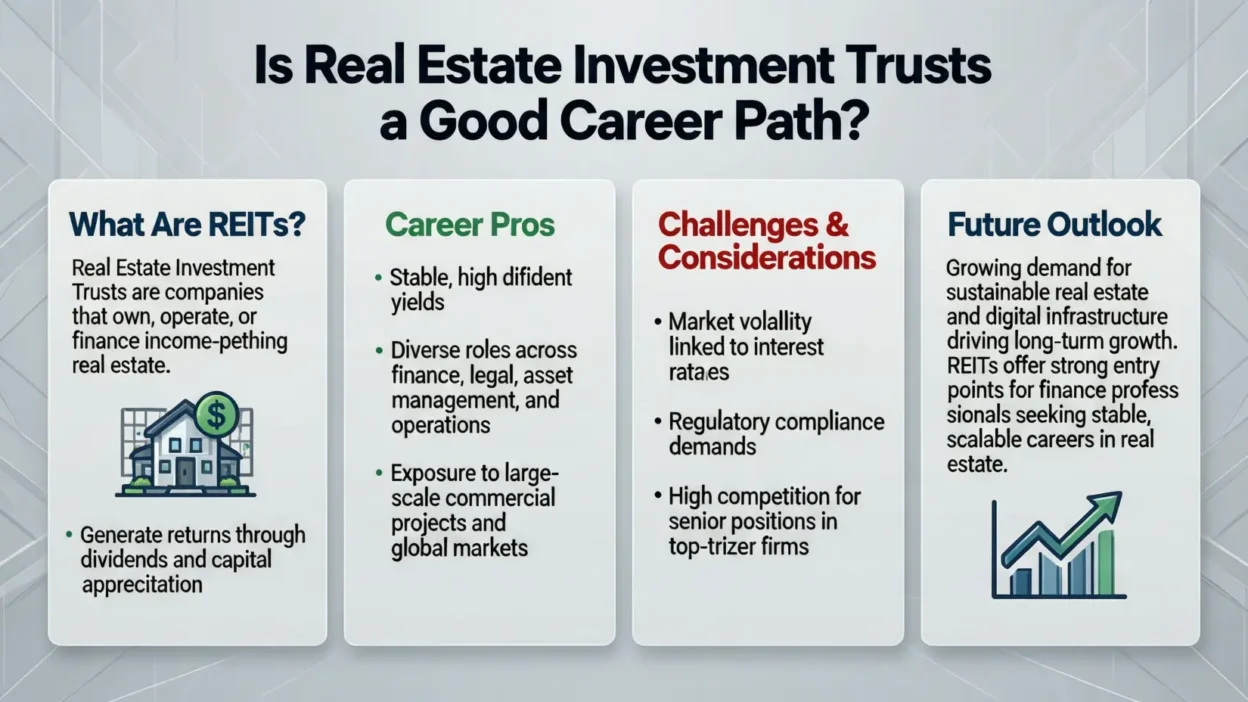
Real Estate Investment Trusts, commonly known as REITs, are companies that own, operate, or finance income-generating real estate. Unlike traditional real estate investments, REITs allow individuals to invest in large-scale properties—such as office buildings, shopping malls, apartments, and hospitals—without directly purchasing or managing them. Essentially, REITs pool investors’ money to acquire and manage these properties, and the income generated, mainly through rent or property sales, is distributed to shareholders as dividends.
There are several types of REITs:
- Equity REITs: Own and manage properties, earning revenue primarily from rents.
- Mortgage REITs: Provide financing to property owners and earn income from interest on loans.
- Hybrid REITs: Combine both equity and mortgage investments.
For those considering a career in REITs, understanding these structures is crucial. Roles in REIT companies can range from financial analysis and asset management to property management and investment strategy. Working in this field offers exposure to both real estate markets and financial operations, making it a unique intersection of property management, finance, and strategic planning. As the REIT sector grows, so do opportunities for professionals to develop specialized skills and build long-term careers.
Career Opportunities in REITs
A career in Real Estate Investment Trusts (REITs) offers a variety of roles that cater to different skills, interests, and levels of experience. One of the most common positions is the REIT Analyst, who evaluates properties, studies market trends, and prepares investment reports. Analysts often work closely with fund managers to make informed investment decisions.
Another key role is the Asset Manager, responsible for overseeing the performance of properties in a REIT’s portfolio. This position involves strategic planning, maximizing property value, and ensuring consistent income streams. Meanwhile, Property Managers focus on the day-to-day operations of buildings, including tenant relations, maintenance, and budgeting.
For those interested in finance, Fund Managers or Portfolio Managers oversee the acquisition and sale of real estate assets, monitor investment performance, and ensure regulatory compliance. Additionally, REIT companies often hire Financial Analysts and Accountants to manage budgets, financial statements, and reporting obligations.
Entry-level positions provide a stepping stone into the industry, while mid-level and senior roles allow for specialization and leadership opportunities. The variety of positions within REITs makes it a flexible career path, whether your strengths lie in finance, operations, or strategic management. With increasing demand for real estate investments, these roles are expected to grow, offering both career stability and professional development.
Required Skills and Qualifications
A successful career in Real Estate Investment Trusts (REITs) requires a combination of formal education, professional certifications, and practical skills. Most roles in the industry prefer candidates with a bachelor’s degree in finance, real estate, business administration, or economics. These programs provide a strong foundation in financial analysis, investment principles, and real estate markets.
Professional certifications can also enhance career prospects. Common credentials include CFA (Chartered Financial Analyst) for finance-focused roles, CPA (Certified Public Accountant) for accounting and auditing positions, and CCIM (Certified Commercial Investment Member) for specialized real estate expertise. These certifications demonstrate proficiency and commitment, making candidates more competitive.
Key technical skills include financial modeling, investment analysis, real estate valuation, market research, and risk assessment. Professionals must be able to evaluate property performance, calculate returns, and make data-driven recommendations. Proficiency in software tools such as Excel, ARGUS, and property management platforms is often required.
Equally important are soft skills, such as effective communication, negotiation, critical thinking, and problem-solving. REIT professionals often collaborate with investors, tenants, property managers, and legal teams, so strong interpersonal skills are essential. Strategic thinking and the ability to adapt to market trends can also set a candidate apart.
In summary, combining the right educational background, certifications, and both technical and soft skills creates a strong foundation for a rewarding and successful career in REITs. Continuous learning is essential, as the real estate and finance industries are constantly evolving.
Salary and Growth Potential
A career in Real Estate Investment Trusts (REITs) can be financially rewarding, with salaries that vary based on role, experience, and location. Entry-level positions, such as REIT analysts or junior property managers, typically earn between $50,000 and $70,000 per year, depending on the size of the company and the market. These roles often include performance bonuses, which can further enhance total compensation.
Mid-level professionals, such as asset managers or fund managers, can earn $80,000 to $120,000 annually, with potential for higher earnings through profit-sharing or incentive programs tied to property performance. Senior-level executives, including portfolio managers, directors, or REIT executives, can earn upwards of $150,000 to $250,000 or more, especially in large or publicly traded REITs.
Beyond salary, REIT careers offer strong growth potential. As the real estate market expands, experienced professionals can progress from analyst roles to management positions or even executive leadership. The skills acquired—financial analysis, property valuation, strategic planning, and market research—are highly transferable, opening opportunities in other real estate sectors, investment firms, or corporate finance.
Additionally, the REIT industry continues to diversify, with emerging sectors like industrial, healthcare, and technology-driven real estate, creating new career paths. Combining competitive pay, advancement opportunities, and the ability to specialize in high-demand markets makes a career in REITs appealing for long-term growth and financial stability.
Pros and Cons of a REIT Career
A career in Real Estate Investment Trusts (REITs) comes with several advantages, but it also has challenges that professionals should consider before committing.
Pros:
- High Earning Potential: Many REIT roles, especially in asset management and fund management, offer competitive salaries and performance-based bonuses.
- Diverse Opportunities: The industry includes various roles, from financial analysis to property management, allowing professionals to align their careers with their strengths and interests.
- Professional Growth: Working in REITs provides exposure to real estate markets, investment strategies, and corporate finance, enhancing transferable skills.
- Networking: REIT professionals often collaborate with investors, developers, and financial institutions, helping build valuable connections.
- Dynamic Work Environment: The intersection of real estate and finance makes daily tasks engaging and varied, with opportunities to work on high-value projects.
Cons:
- Market Sensitivity: REIT performance can fluctuate based on economic cycles, interest rates, and real estate market trends, affecting job stability.
- High Competition: Entry-level roles are competitive, often requiring strong academic backgrounds, certifications, and internships.
- Long Hours: Some positions, particularly in finance and asset management, may demand extended work hours during peak periods.
While the pros often outweigh the cons, success in a REIT career requires adaptability, continuous learning, and resilience. Understanding these factors helps aspiring professionals determine whether this path aligns with their goals, lifestyle, and career expectations.
Industry Outlook and Future Trends
The Real Estate Investment Trust (REIT) industry is experiencing steady growth and evolving to meet changing market demands, making it an exciting career path for long-term opportunities. According to industry reports, REITs continue to attract investors due to their ability to generate consistent income and provide portfolio diversification. This trend contributes to the expansion of REIT companies, which in turn increases job opportunities across the sector.
Emerging sectors within REITs are also reshaping career opportunities. Industrial REITs, focused on logistics and warehousing, have grown significantly due to the rise of e-commerce. Healthcare REITs are expanding to manage hospitals, senior living facilities, and medical office buildings, creating specialized roles. Additionally, technology-driven REITs are integrating data analytics and smart building management, requiring professionals with both technical and financial expertise.
Economic cycles and interest rates continue to influence REIT performance, but experienced professionals who can navigate market fluctuations are in high demand. Careers in REITs offer exposure to strategic investment decisions, property portfolio management, and real estate market forecasting.
As the industry diversifies, professionals who combine analytical skills, financial knowledge, and adaptability are positioned for success. The growth of specialized sectors and the increasing sophistication of REIT operations suggest that careers in this field will remain dynamic, competitive, and rewarding for those prepared to invest in continuous learning and skill development.
REIT Careers vs. Other Real Estate or Finance Careers
When considering a career in Real Estate Investment Trusts (REITs), it’s helpful to compare it with other real estate and finance career options to understand the differences in opportunities, work environment, and growth potential.
Compared to traditional real estate careers, such as brokers, developers, or property managers, REIT roles are more investment-focused. While real estate brokers primarily handle property sales and developers oversee construction projects, REIT professionals manage property portfolios, analyze investment performance, and develop strategies to maximize returns. This makes REIT careers particularly appealing to those interested in finance and analytical work rather than direct property sales or development.
Compared to finance careers like investment banking, private equity, or asset management, REIT positions often offer a more stable work-life balance and exposure to tangible real estate assets. While investment banking may involve high-pressure deals and long hours, REIT roles combine financial analysis with operational insights, making the work more diversified. Additionally, REIT professionals gain specialized knowledge in real estate markets, which can be valuable for future opportunities in finance or property management.
Ultimately, REIT careers occupy a unique space at the intersection of real estate and finance, offering competitive compensation, professional growth, and exposure to investment strategy. For individuals interested in both property markets and financial analysis, a REIT career can provide a well-rounded, rewarding path that balances analytical challenges with real-world asset management.
How to Break Into a REIT Career
Breaking into a career in Real Estate Investment Trusts (REITs) requires a combination of education, experience, networking, and strategic planning. For beginners, internships or entry-level roles in REIT companies, property management firms, or real estate investment firms are an excellent starting point. These positions provide hands-on experience with property valuation, financial analysis, and market research, which are essential skills for advancement.
Education and certifications also play a key role. A bachelor’s degree in finance, business administration, economics, or real estate is typically required, while professional certifications such as CFA, CPA, or CCIM can significantly enhance your profile. These credentials demonstrate specialized knowledge and commitment to the field, increasing your competitiveness in the job market.
Networking is equally important. Joining professional associations like NAREIT (National Association of Real Estate Investment Trusts) or attending real estate conferences helps aspiring professionals connect with industry leaders and learn about opportunities. LinkedIn and alumni networks are also valuable for finding mentors and job openings.
Building a strong skill set is critical. Focus on financial modeling, real estate market analysis, investment strategy, and communication skills. Additionally, understanding emerging trends such as industrial, healthcare, and technology-driven REITs can set you apart from other candidates.
By combining education, practical experience, certifications, and networking, aspiring professionals can successfully enter the REIT industry and position themselves for long-term growth and rewarding career opportunities.
FAQ
1. What is a REIT career?
A REIT career involves working for a Real Estate Investment Trust, managing or analyzing income-generating properties. Roles include analysts, asset managers, property managers, and fund managers. Professionals focus on property valuation, financial performance, and strategic investment decisions.
2. What qualifications are needed for REIT jobs?
Most REIT roles require a bachelor’s degree in finance, business, real estate, or economics. Professional certifications such as CFA, CPA, or CCIM are highly recommended, especially for finance-focused or senior positions. Strong analytical, communication, and problem-solving skills are essential.
3. How much can I earn in a REIT career?
Entry-level roles typically earn $50,000–$70,000, mid-level positions $80,000–$120,000, and senior roles or executives can earn $150,000–$250,000+, depending on experience and company size. Bonuses and profit-sharing opportunities can significantly increase total compensation.
4. Is a REIT career stable?
While REITs can be affected by market cycles and interest rates, demand for skilled professionals remains strong. Experienced analysts and managers are in high demand, especially in emerging sectors like industrial, healthcare, and technology-focused REITs.
5. How do I start a career in REITs?
Start with internships or entry-level roles, pursue relevant certifications, and build a network through professional associations like NAREIT. Gaining hands-on experience and keeping up with industry trends will improve your chances of long-term success.
6. Are REIT careers suitable for finance or real estate professionals?
Yes. REIT careers combine elements of finance, investment, and real estate management, making them ideal for professionals interested in both property markets and financial analysis.
Conclusion
A career in Real Estate Investment Trusts (REITs) offers a unique opportunity to combine finance, real estate, and strategic management into a rewarding professional path.
With roles ranging from analysts and asset managers to property managers and fund managers, the industry provides diverse options for individuals with varying skills and interests.
Competitive salaries, performance bonuses, and long-term growth potential make REITs financially attractive, while the exposure to real estate markets and investment strategies adds significant professional value.
However, a REIT career is not without challenges. The industry is sensitive to economic cycles and market fluctuations, requiring adaptability and resilience.
High competition for entry-level roles means strong education, certifications, and networking are essential for success.
Additionally, some positions may involve long hours and high-pressure decision-making, particularly in asset management and investment roles.
Despite these challenges, the growing diversification of REIT sectors, including industrial, healthcare, and technology-focused investments, offers expanding career opportunities.
For professionals who enjoy analyzing markets, managing assets, and making strategic investment decisions, a REIT career can be both stable and fulfilling.
Ultimately, whether a REIT career is right for you depends on your interests, skills, and long-term goals.
By building the right qualifications, gaining practical experience, and staying updated on industry trends, aspiring professionals can achieve a successful and rewarding career in this dynamic field.