Similes are like tiny bridges made of words. They help us compare one thing to another so our meaning becomes clearer and more colorful. When we use similes, our writing blooms — just like flowers in spring.
Kids, students, teachers, and parents all benefit from learning similes because they make language more expressive, fun, and imaginative.
In this guide, we’ll explore flower similes — what they mean, how they work, and how you can use them to make your writing shine.
🌼 What Are Flower Similes?
A simile compares two things using the words “like” or “as.”
So, a flower simile compares something to a flower or to the way flowers look, grow, bloom, or behave.
Example:
- Her smile was like a blooming rose.
This simile helps us picture a fresh, beautiful smile — just like a rose opening.
🌷 Why Do Writers Use Flower Similes?
Flower similes help writers:
- Create <strong>strong images
- Show feelings and emotions
- Make writing beautiful and poetic
- Help readers visualize ideas
Flowers are a powerful symbol of beauty, growth, love, hope, and kindness — so they naturally fit well into language.
🌹 How Do Similes Help Kids Learn Better?
For kids, similes:
- Encourage creative thinking
- Improve vocabulary
- Make reading and writing more exciting
- Build confidence in expression
Similes turn simple sentences into magical ones. Instead of saying “She is happy,” a child can say:
- She is as happy as a sunflower in the sun.
That sounds joyful and vibrant!
(From here onward, each H2 section explains a common topic or query related to Flower Similes, with examples and tips.)
🌺 Flower Similes Meaning
Flower similes compare people, feelings, or things to flowers to show beauty, growth, softness, or fragility.
Examples:
- Her cheeks were like roses.
- He opened up like a flower in spring.
- The children were as bright as tulips in a garden.
Tip for learners:
Think about what flowers remind you of — beauty, color, life — and use those ideas in your writing.
🌼 Similes Using Flowers in English
Here are some common similes using flowers:
- As fresh as a daisy
- As delicate as a lily
- As bright as a sunflower
- Like roses in the snow
- As soft as petals
- Blooming like wildflowers
Each one paints a picture in your mind — that’s the magic of similes.
🌷 Similes for Flowers Themselves
Sometimes, we compare flowers to other things:
- The flowers danced like butterflies in the breeze.
- The roses stood like soldiers in a row.
- The lilies floated like tiny boats on the pond.
- The tulips bowed like polite ladies.
This helps readers imagine movement, shape, and beauty.
🌹 Similes About Blooming Flowers
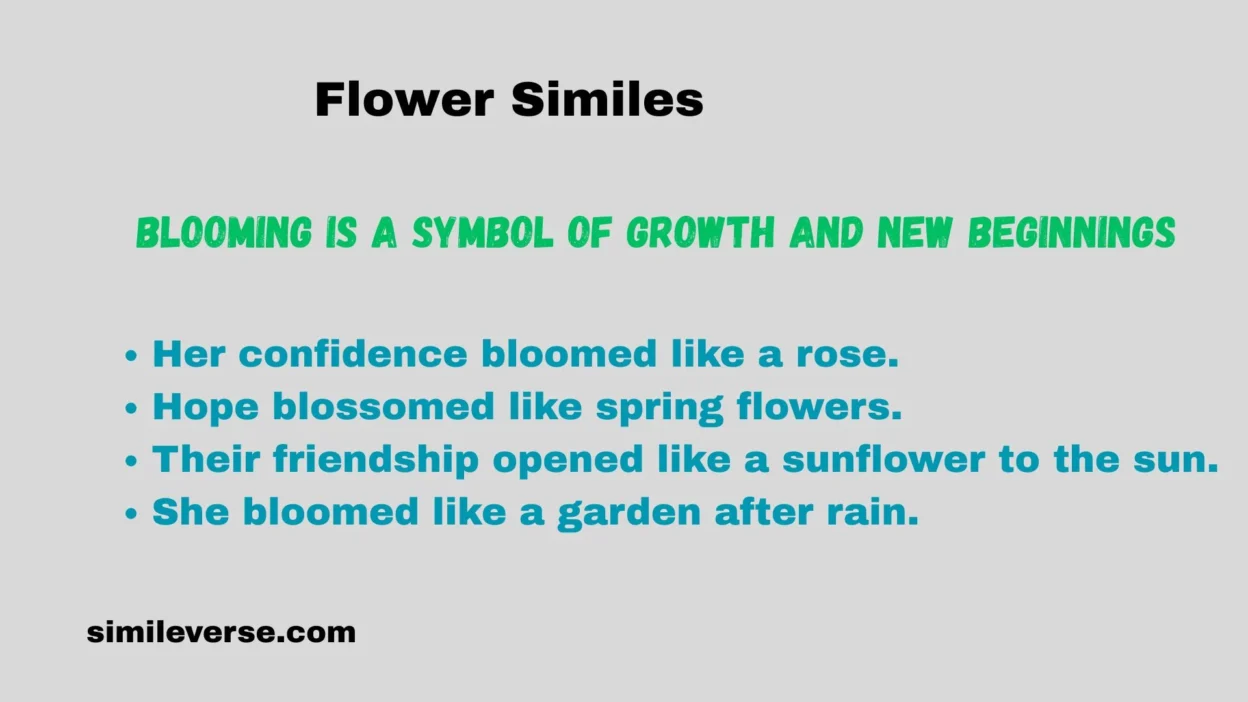
Blooming is a symbol of growth and new beginnings.
Examples:
- Her confidence bloomed like a rose.
- Hope blossomed like spring flowers.
- Their friendship opened like a sunflower to the sun.
- She bloomed like a garden after rain.
Writing tip:
Use “bloom” when describing positive change or growth.
🌸 Similes for Beauty Using Flowers
Flowers = beauty. So they often appear in beautiful similes.
Examples:
- She was as lovely as a rose in full bloom.
- The dress was like a field of wildflowers — colorful and bright.
- Her face was as radiant as a sunflower.
- He looked as fresh as a daisy.
These similes are perfect for stories, descriptions, and poems.
🌻 Similes for Happiness with Flowers
Flowers symbolize joy and sunshine.
Examples:
- He was as happy as a sunflower facing the sun.
- The children laughed like flowers dancing in the wind.
- Her heart bloomed like spring after winter.
Use flower similes when you want to express pure joy.
🌺 Romantic Flower Similes
Flowers are often linked with love.
Examples:
- Their love grew like a rose climbing a wall.
- His words were as soft as petals.
- Her blush spread like roses across her cheeks.
- They cared for each other like gardeners care for rare flowers.
Great for poetry, letters, and storytelling.
🌼 Nature Similes with Flowers
Flowers connect beautifully with other nature elements.
Examples:
- The meadow was like a colorful blanket of blooms.
- The petals fell like raindrops.
- The garden glowed like a sunset.
These are perfect for descriptive writing.
🌷 Similes for Children About Flowers
Simple similes kids can use:
- She was as bright as a flower.
- The class bloomed like a garden of ideas.
- The baby was as soft as a petal.
- Their friendship bloomed like spring flowers.
Encourage kids to describe things colorfully — not just plainly.
🌹 Funny Flower Similes
Similes can also be playful!
- He wilted like a flower without water after running.
- Her hair stuck out like a dandelion in the wind.
- The dog rolled like a flower blown away by a breeze.
These bring humor into writing.
🌸 Emotional Flower Similes
Flowers sometimes show fragile emotions.
- Her heart felt as fragile as a petal.
- His hope withered like a flower in winter.
- Tears fell like petals from a broken bloom.
These similes help express feelings gently.
🌻 Similes for Growth Using Flowers
Flowers grow slowly — like people.
- She grew like a flower reaching for the sun.
- His talent blossomed like a garden.
- Ideas bloomed like spring buds.
Perfect for motivational or inspirational writing.
🌺 Similes for Kindness with Flowers
Kindness is soft and gentle — like flowers.
- Her words were as gentle as petals.
- He spread kindness like wildflowers.
- Her smile opened hearts like flowers in sunlight.
These similes feel warm and encouraging.
🌼 Similes for Colorful Things Using Flowers
Flowers are color-rich — so they help describe brightness.
- The parade was like a garden in full bloom.
- The classroom looked as colorful as a flower field.
- The fireworks burst like petals in the sky.
Great for descriptive essays.
🌷 Similes for Softness with Flowers
Flowers are known for soft texture.
- Her skin was as soft as a rose petal.
- His voice was like petals whispering in the wind.
- The blanket felt like a flower’s touch.
These similes add sensory detail.
🌹 Similes for Fragility Using Flowers
Flowers are delicate — just like some feelings or situations.
- Their trust was as delicate as a flower.
- The old book was as fragile as dried petals.
- Her heart felt like a wilted rose.
Use these when you want to show vulnerability.
🌸 Similes for Hope Using Flowers
Flowers are symbols of hope after winter.
- Hope bloomed like flowers after rain.
- Her dreams grew like spring buds.
- The town came back to life like a garden in sunshine.
These similes feel uplifting and positive.
🌻 Similes for Students Using Flowers
Here are kid-friendly lines:
- Ideas bloom like flowers when we think together.
- Learning is like watering a garden.
- Mistakes are like weeds — we learn to pull them out.
Perfect for teachers!
🌺 Similes for Spring Flowers
Spring is the season of renewal.
- The fields were like a rainbow of petals.
- The trees were dressed like flower queens.
- Spring arrived like a garden being painted.
These are wonderful for nature essays.
🌼 Similes for Wildflowers
Wildflowers symbolize freedom and uniqueness.
- She was like a wildflower — free and joyful.
- His ideas spread like wildflowers across the room.
- They laughed like wildflowers in the wind.
These show spirit and individuality.
🌷 Similes for Roses
Roses symbolize love, beauty, and sometimes pain.
- Her cheeks were like roses.
- Their love was like a rose — beautiful but thorny.
- His words were as sweet as rose petals.
Perfect for emotional writing.
🌹 Similes for Sunflowers
Sunflowers follow the sun — representing positivity.
- She was as bright as a sunflower.
- His smile stretched like a sunflower field.
- They stood tall like sunflowers in the light.
These show confidence, warmth, and joy.
🌸 Similes for Lilies
Lilies symbolize purity.
- Her dress was as pure as a white lily.
- The hall looked like a pond filled with lilies.
- Her heart was as calm as a lily on the water.
Soft and serene.
🌻 Similes for Daisies
Daisies = freshness and innocence.
- She was as fresh as a daisy.
- The morning air was like a daisy’s breath.
- Their laughter was as light as daisies in the wind.
Sweet and simple.
🌺 Similes in Poetry Using Flowers
Poets love flower similes because they create instant images.
Example poetic lines:
- Her dreams bloomed like roses in the dark.
- The night sky opened like a flower of stars.
- Loneliness wilted like an unwatered bloom.
Encourage students to write their own!
🌼 Similes for Writing Practice
Here are starters kids can complete:
- Her eyes were like…
- The garden looked as bright as…
- The petals were as soft as…
- He smiled like…
This builds creativity.
🌷 Everyday Similes Using Flowers
You might already use these:
- As fresh as a daisy
- Bloom like a flower
- As bright as a sunflower
Recognizing similes helps improve reading comprehension.
🌹 How to Write Your Own Flower Similes
Follow these steps:
- Choose a feeling or idea
Example: happiness - Think of a flower image
Example: sunflower in sunlight - Connect them using “like” or “as”
👉 She was as happy as a sunflower in the sun.
Tip:
Use your senses — sight, smell, touch, and emotion.
🌸 Common Mistakes to Avoid
❌ Using the same simile over and over
❌ Mixing metaphors
❌ Making confusing comparisons
❌ Using very long similes
Keep them clear and meaningful.
🌻 Educational Benefits of Learning Similes
For students, similes help:
- Build imagination
- Improve writing
- Encourage deep thinking
- Enhance vocabulary
- Strengthen reading skills
Teachers can use them in:
✔ storytelling
✔ creative writing
✔ poetry lessons
✔ language arts activities
🌺 Flower Similes in Everyday Life
We use them in:
- Greeting cards
- Poems
- Songs
- Stories
- Classroom lessons
- Speeches
- Letters
They make language warm and human.
🌼 List of Flower Similes for Practice
Here’s a collection you can use or adapt:
- As fresh as a daisy
- As delicate as a flower
- As bright as a sunflower
- As soft as petals
- As colorful as a garden
- Blooming like roses
- Rising like a flower toward the sun
- Opening like a spring blossom
- Dying like flowers in winter
- Falling like petals
- As sweet as a rose
- As graceful as a lily
- As fragile as a petal
- As cheerful as daisies
- Growing like wildflowers
- Shining like sunflowers
- Blushing like roses
- Floating like lilies
- Dancing like flowers in the wind
- Spreading like wildflowers
Encourage children to make more!
🌷 Final Tips for Learners and Parents
✔ Read lots of stories — notice the similes
✔ Try writing one simile a day
✔ Practice comparing feelings to flowers
✔ Use simple language
✔ Have fun — creativity loves play
🌼 Conclusion
Flower similes make language bloom with color, feeling, and imagination. Whether you’re a student writing a story, a teacher planning a lesson, a parent helping with homework, or a reader who simply loves words — similes help you see the world more creatively.
Just like flowers, our thoughts and words can grow, open, and brighten the world when we express them beautifully.