English can be confusing, even for fluent speakers. One common problem people face is knowing when to use choose or chose. They look similar. They sound related. But they are not interchangeable. This small difference causes big mistakes in writing, emails, exams, blogs, and even professional documents.
People search for “choose or chose” because they want a quick, clear answer. They may have written a sentence and paused, unsure which word fits. Others want to avoid grammar errors that make their writing look unprofessional. This confusion mostly comes from verb tense. English verbs change form based on time, and choose is an irregular verb, which makes things trickier.
This article solves that confusion step by step. You’ll get a fast answer, simple rules, real-life examples, and clear guidance on which spelling to use and when. By the end, you’ll know exactly how to use choose and chose with confidence—no guessing, no second thoughts.
Choose or Chose – Quick Answer
Choose is the present tense.
Chose is the past tense.
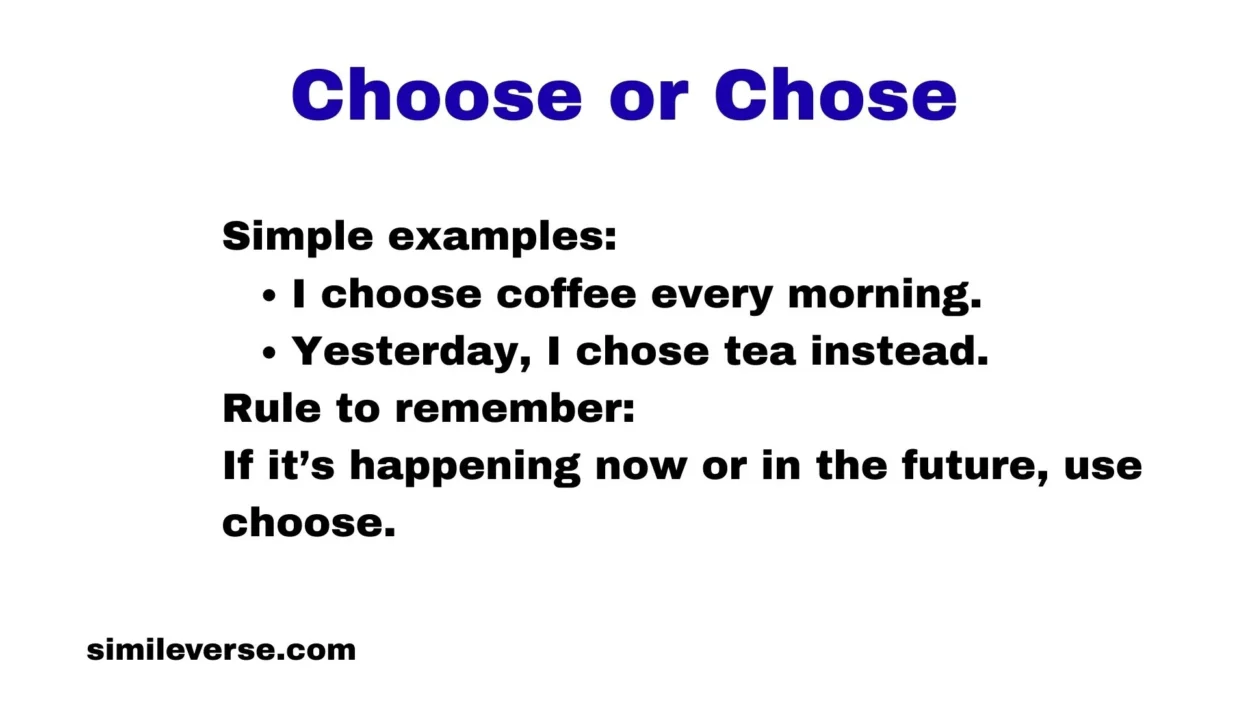
Simple examples:
- I choose coffee every morning.
- Yesterday, I chose tea instead.
Rule to remember:
If it’s happening now or in the future, use choose.
If it already happened in the past, use chose.
The Origin of Choose or Chose
The word choose comes from Old English ceosan, meaning “to decide” or “to select.” Over time, English kept the meaning but changed the verb forms.
English has many irregular verbs, and choose is one of them:
- Present: choose
- Past: chose
- Past participle: chosen
The spelling difference exists because English evolved from Germanic roots, not from strict spelling rules. That’s why choose → chose doesn’t follow simple patterns like walk → walked.
British English vs American English Spelling
Good news: there is no spelling difference between British and American English for choose or chose.
Both follow the same grammar rules in all major English varieties.
Comparison Table
| Form | Tense | British English | American English |
|---|---|---|---|
| choose | Present | choose | choose |
| chose | Past | chose | chose |
| chosen | Past participle | chosen | chosen |
So, location does not change the spelling—time does.
Which Spelling Should You Use?
Use the spelling based on your audience and tense, not location.
- US audience: Follow tense rules (choose = now, chose = past)
- UK/Commonwealth audience: Same rules apply
- Global audience: Use correct tense for clarity
Quick tip:
Ask yourself:
👉 Is the action finished?
- Yes → chose
- No → choose
Common Mistakes with Choose or Chose
Here are frequent errors people make:
❌ I choose this option yesterday.
✅ I chose this option yesterday.
❌ She chose what movie to watch tomorrow.
✅ She will choose what movie to watch tomorrow.
❌ He has choose wisely.
✅ He has chosen wisely.
Key fix:
Match the verb to the time word in the sentence.
Choose or Chose in Everyday Examples
Emails
- Please choose a meeting time.
- I chose the earlier slot.
News
- Voters choose their leaders.
- The committee chose a new chairperson.
Social Media
- Always choose kindness.
- I chose peace today.
Formal Writing
- Applicants must choose one option.
- The board chose the final proposal.
Choose or Chose – Google Trends & Usage Data
Search data shows that “choose or chose” is popular in:
- United States
- United Kingdom
- India
- Pakistan
- Australia
Most searches come from:
- Students
- ESL learners
- Content writers
- Professionals
People mainly search this keyword when:
- Writing past events
- Editing emails or essays
- Preparing exams or tests
This shows a strong need for quick grammar clarity.
Choose or Chose Comparison Table
| Feature | Choose | Chose |
|---|---|---|
| Verb tense | Present | Past |
| Time focus | Now / Future | Already happened |
| Example | I choose wisely | I chose wisely |
| Common error | Used for past | Used for present |
FAQs About Choose or Chose
1. Is “choose” present or past tense?
Choose is present tense.
2. Is “chose” correct English?
Yes, chose is the past tense of choose.
3. Can I use “choose” for yesterday?
No. Yesterday needs chose.
4. What is the past participle of choose?
The past participle is chosen.
5. Do British and American English use different spellings?
No. Both use choose and chose the same way.
6. Why do people confuse choose and chose?
They look similar and are irregular verb forms.
7. How can I remember the difference?
Think:
- Choose = now
- Chose = over
Conclusion
The difference between choose or chose is simple once you focus on time. Choose is for the present and future. Chose is for the past. The spelling does not change by country, style, or audience—only by tense. That’s why so many people get confused, but also why the fix is easy.
If you remember one rule, remember this:
👉 If the action already happened, use chose.
Using the correct form improves clarity, confidence, and professionalism in your writing. Whether you’re sending an email, writing a blog, or answering an exam question, choosing the right word matters.
Now you know the difference—so next time, you’ll choose correctly, not wonder which one you chose.