Similes are simple and powerful tools that help us explain feelings by comparing them to familiar things. For children and learners, similes make emotions easier to understand and remember.
When we talk about being worried, similes turn invisible feelings into clear pictures in the mind. This guide will help kids, students, teachers, parents, and writers learn the best similes for worried in a fun, easy, and meaningful way.
What Does “Worried” Mean?
Being worried means feeling uneasy, nervous, or anxious about something that might happen. Children may worry about exams, parents worry about family, and adults worry about work or the future. Understanding this emotion helps us express it clearly in speaking and writing.
Tip for learners: When you can name a feeling, it becomes easier to handle it.
What Is a Simile?
A simile is a figure of speech that compares two different things using the words “like” or “as.” Similes help describe emotions, actions, and ideas in a colorful way.
Example:
- She was worried like a cat stuck in the rain.
Why Use Similes for Worried Feelings?
Similes help us:
- Explain feelings clearly
- Make writing interesting
- Help kids understand emotions
- Improve storytelling and essays
For teachers: Similes are great tools for emotional learning and creative writing.
Best Similes for Worried – Simple and Clear
Here are easy and common similes that clearly describe worry.
- Worried like a mouse hearing footsteps
- Worried as a leaf shaking in the wind
Sentence example:
- He felt worried like a mouse hearing footsteps in the dark.
Similes for Worried for Kids
Children understand similes best when they are simple and visual.
- Worried like a puppy left alone
- Worried as a balloon about to pop
Tip for kids: Think of animals or toys when making similes.
Easy Similes for Worried Students
Students often need simple language for schoolwork.
- Worried like a student waiting for results
- Worried as a clock ticking loudly
Example:
- She was worried like a student waiting for exam results.
Similes for Worried in Daily Life
These similes fit everyday conversations.
- Worried like a phone with low battery
- Worried as a knot tied too tight
Similes for Worried Feelings in Writing
Writers use similes to show emotion instead of telling it.
- Worried like clouds before a storm
- Worried as waves crashing again and again
Writing tip: Show worry through actions and comparisons.
Creative Similes for Worried
Creative similes make writing stand out.
- Worried like a spider on a shaky web
- Worried as ink spreading on wet paper
Funny Similes for Worried
Humor can soften worry.
- Worried like a cat in a room full of rocking chairs
- Worried as popcorn popping nonstop
Similes for Worried and Nervous Together
Worry and nervousness often come together.
- Worried and nervous like a drum beating too fast
- Worried as hands shaking in cold air
Strong Similes for Deep Worry
For serious situations, strong similes work best.
- Worried like carrying a heavy stone in the chest
- Worried as a dark tunnel with no light
Gentle Similes for Mild Worry
Not all worry is extreme.
- Worried like a buzzing fly
- Worried as a wrinkle on smooth paper
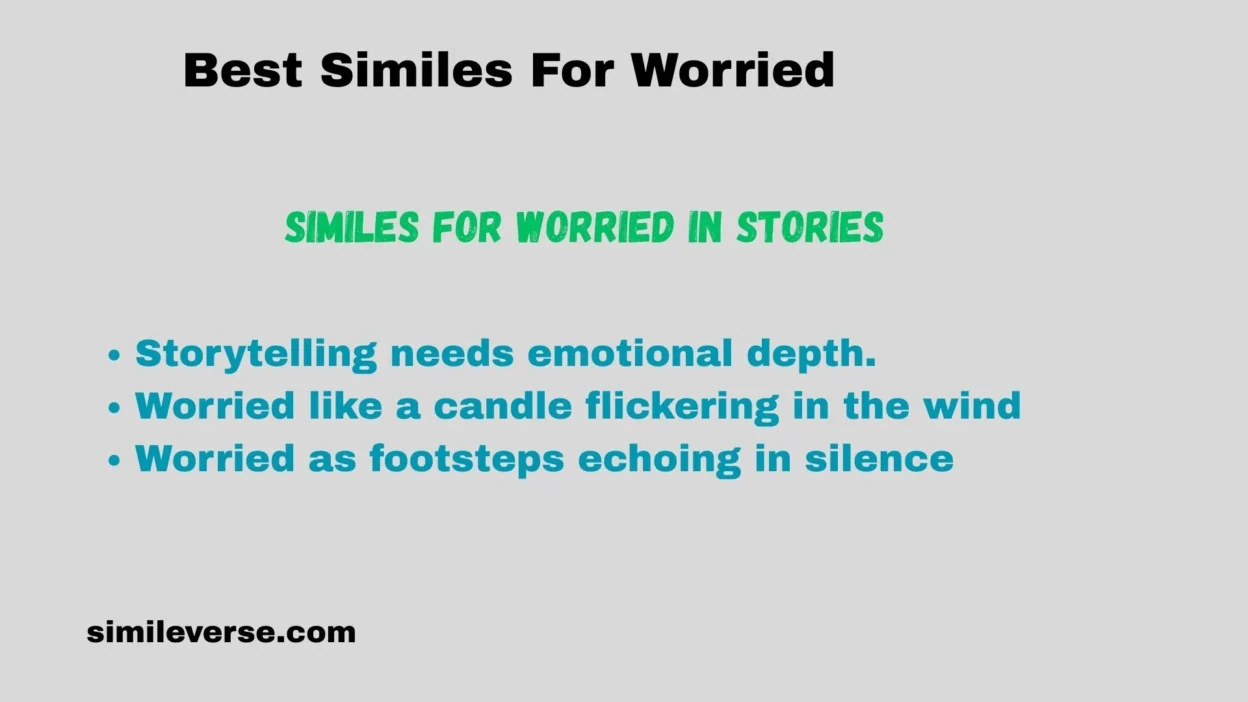
Similes for Worried in Stories
Storytelling needs emotional depth.
- Worried like a candle flickering in the wind
- Worried as footsteps echoing in silence
Similes for Worried in Essays
Essays should be clear and meaningful.
- Worried like a problem waiting to be solved
- Worried as thoughts racing in circles
Similes for Worried Parents
Parents often worry about safety and future.
- Worried like a bird guarding its nest
- Worried as eyes watching every move
Similes for Worried Teachers
Teachers worry about students and results.
- Worried like a gardener waiting for seeds to grow
- Worried as lesson plans falling apart
Emotional Similes for Worried
These similes focus on feelings.
- Worried like a heart beating too loud
- Worried as tears held back
Nature-Based Similes for Worried
Nature makes similes easy to imagine.
- Worried like thunder before rain
- Worried as trees bending in wind
Animal Similes for Worried
Animals show emotions clearly.
- Worried like a rabbit sensing danger
- Worried as a turtle hiding in its shell
Similes for Worried About Exams
Students relate to exam worry.
- Worried like pages fluttering in the wind
- Worried as a pen running out of ink
Similes for Worried About the Future
Future worries are common.
- Worried like a road disappearing into fog
- Worried as shadows growing longer
Similes for Worried at Night
Nighttime often increases worry.
- Worried like stars hidden by clouds
- Worried as silence growing louder
Short Similes for Worried
Perfect for quick writing.
- Worried like a ticking clock
- Worried as a tight knot
Long Descriptive Similes for Worried
For advanced writing.
- Worried like standing alone in a storm with no shelter
- Worried as waves crashing without rest
How to Teach Similes for Worried to Kids
- Use pictures and stories
- Ask kids to share feelings
- Connect similes to real life
Teacher tip: Encourage creativity, not perfection.
How to Make Your Own Similes for Worried
Steps:
- Think of the feeling
- Imagine something similar
- Use “like” or “as”
Example:
- I feel worried like a balloon floating too high.
Common Mistakes When Using Similes
- Making them too confusing
- Using clichés too often
- Mixing emotions
Fix: Keep similes simple and clear.
Similes for Worried vs Anxious
Worried is lighter than anxious.
- Worried like a buzzing thought
- Anxious like a storm inside
Why Similes Help Emotional Expression
Similes:
- Improve emotional intelligence
- Help communication
- Support mental well-being
Similes for Worried in Poems
Poetry loves imagery.
- Worried like moonlight shaking on water
- Worried as words stuck in the throat
Similes for Worried in Creative Writing
Creative writing needs originality.
- Worried like paint dripping slowly
- Worried as footsteps following behind
Practice Section: Try These Yourself
Fill in the blank:
- I felt worried like ________.
Great for classrooms and home learning.
Final Thoughts:
Similes turn the feeling of worry into clear pictures that everyone can understand. From kids to adults, similes help express emotions gently, creatively, and effectively.
By learning and using the best similes for worried, you improve writing skills, emotional awareness, and communication. Keep practicing, stay creative, and let your words paint pictures.