Similes are special comparisons that make writing more colorful and fun. They help children and adults explain feelings using imagination and pictures in words. When we compare crying to things we already know, emotions become easier to understand.
Learning similes also improves vocabulary, creativity, and confidence in speaking and writing. That is why similes are so important for kids, students, and storytellers.
What Are Similes for Crying?
Similes for crying are comparisons that describe tears, sadness, or emotional pain using “like” or “as.” They help readers clearly imagine how someone is crying.
Example:
She cried like rain pouring from a dark cloud.
Tip for learners:
If it uses like or as and compares emotions, it is usually a simile.
Why Do Writers Use Similes to Describe Crying?
- Show emotions instead of just telling them
- Make writing more emotional and vivid
- Help readers connect with characters
- Improve storytelling and poetry
For kids:
Similes make stories feel alive and easier to imagine.
Best Similes for Crying in Simple Words
These similes are easy to understand and perfect for children:
- Crying like a baby
- Crying like a lost puppy
- Crying like rain on a window
- Crying like a broken toy
Example sentence:
The boy cried like a lost puppy when he couldn’t find his mother.
Similes for Crying Like Rain
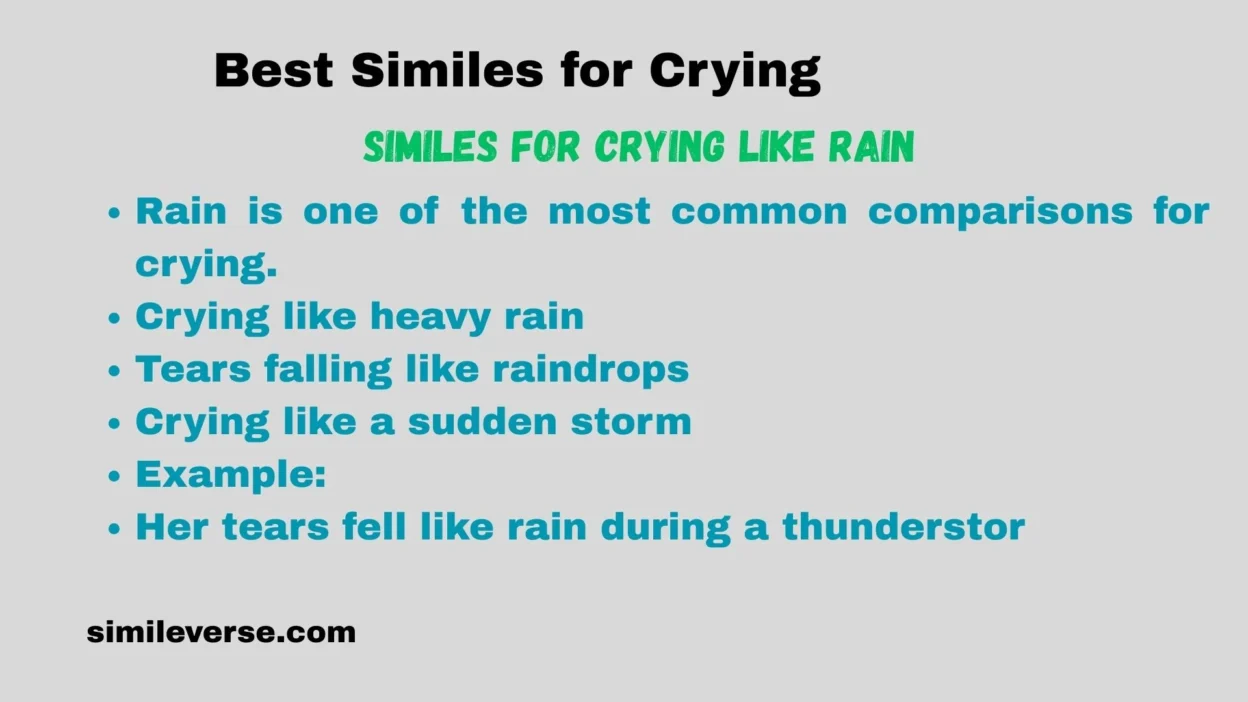
Rain is one of the most common comparisons for crying.
- Crying like heavy rain
- Tears falling like raindrops
- Crying like a sudden storm
Example:
Her tears fell like rain during a thunderstorm.
Writing tip:
Use rain similes when describing deep or uncontrollable crying.
Similes for Crying Quietly
Not all crying is loud. Some tears are silent.
- Crying like dew on grass
- Tears like silent raindrops
- Crying as softly as falling snow
Example:
He cried like dew forming on leaves in the morning.
Similes for Crying Loudly
These similes describe strong emotions:
- Crying like a siren
- Wailing like a fire alarm
- Crying like thunder
Example:
The child cried like thunder after losing his favorite toy.
Similes for Crying Out of Sadness
Sadness is a common reason for crying.
- Crying like a broken heart
- Tears like melting ice
- Crying like wilting flowers
Example:
She cried like a flower wilting without water.
Similes for Crying Out of Pain
Painful crying needs strong imagery.
- Crying like a wounded animal
- Crying like a cracked bell
- Tears like sharp needles
Tip:
Use gentle similes for kids’ writing.
Similes for Crying in Stories
Story writers use similes to show emotions.
Examples:
- He cried like rain trapped behind glass.
- Her tears flowed like a river after the storm.
Story tip:
One strong simile is better than many weak ones.
Similes for Crying in Poems
Poets love emotional similes.
- Tears like silver beads
- Crying like the moon hiding behind clouds
Poetry example:
Her tears shone like stars falling from the sky.
Similes for Crying for Kids
Kid-friendly similes include:
- Crying like a baby bird
- Crying like a broken crayon
- Tears like spilled milk
Teacher tip:
Use familiar objects to help kids understand emotions.
Similes for Crying in English Class
These similes are great for exams and homework:
- Crying like rain
- Tears flowing like a river
- Crying like a stormy sky
Emotional Similes for Crying
These similes focus on feelings:
- Crying like a heart cracking
- Tears like shattered glass
- Crying like lost dreams
Creative Similes for Crying
Unique similes make writing stand out:
- Tears like falling pearls
- Crying like clouds breaking open
- Crying like the sky losing hope
Similes for Crying in Daily Life
Everyday situations need simple similes:
- Crying like a tired child
- Crying like spilled water
- Crying like a sad song
Similes for Crying in Essays
Formal but expressive similes:
- Tears flowed like an endless stream
- Crying as steady as rainfall
Similes for Crying and Tears
Focus on tears:
- Tears like glass drops
- Tears like tiny rivers
- Tears like falling stars
Similes for Crying from Happiness
Not all crying is sad.
- Crying like sunshine after rain
- Tears like joyful rainbows
Example:
She cried like sunshine breaking through clouds.
Similes for Crying from Fear
Fear-based crying similes:
- Crying like a trapped bird
- Crying like shaking leaves
Similes for Crying in Literature
Classic-style similes:
- Crying like ancient rain
- Tears like time dripping away
Similes for Crying in Creative Writing
Use imagination:
- Crying like the sky breaking
- Tears like melted diamonds
Short Similes for Crying
Perfect for quick writing:
- Crying like rain
- Crying like a baby
- Tears like water
Long Similes for Crying
Detailed descriptions:
- Crying like clouds pouring out years of pain
- Tears falling like endless rain on empty streets
Funny Similes for Crying (Light Use)
For lighthearted writing only:
- Crying like an empty ketchup bottle
- Crying like a leaky faucet
Tip:
Avoid funny similes in serious writing.
Similes for Crying in Speeches
Emotional but respectful:
- Tears flowed like shared sorrow
- Crying like a united storm
Similes for Crying for Students
Easy and effective:
- Crying like rain
- Crying like a sad puppy
Similes for Crying in Storytelling
Storytelling favorites:
- Crying like night rain
- Tears like broken promises
Common Mistakes When Using Similes for Crying
Avoid:
- Overusing similes
- Mixing funny and sad tones
- Using unclear comparisons
How to Teach Similes for Crying to Kids
- Use pictures
- Act out emotions
- Let kids create their own similes
How to Create Your Own Similes for Crying
Ask:
- What does crying look like?
- What does it feel like?
- What object matches that feeling?
Why Learning Similes Improves Writing Skills
Similes:
- Improve vocabulary
- Build creativity
- Strengthen emotional expression
Best Tips for Using Similes Naturally
- Keep them simple
- Match the mood
- Use one strong simile per paragraph
Conclusion:
Similes for crying help us express emotions clearly and beautifully. They turn simple tears into powerful images that readers can feel and understand.
If you are a child learning English, a student writing essays, a teacher guiding creativity, or a writer crafting stories, similes make your words stronger. By using the best similes for crying, your writing becomes more emotional, meaningful, and memorable.