Feeling anxious is something everyone experiences—kids, teens, and adults alike. Writers often use similes to explain anxious feelings in a clear, creative, and memorable way. Similes help readers see emotions instead of just reading about them.
For children especially, similes turn confusing feelings into simple pictures they can understand. In this guide, you’ll explore the best similes for anxious, explained gently and clearly for all ages.
What Is a Simile? (Simple Explanation for Kids)
A simile is a comparison using the words “like” or “as.”
It helps us explain feelings, objects, or actions by comparing them to something familiar.
Example:
I felt anxious like a cat stuck in a room full of rocking chairs.
Similes make writing fun, colorful, and easier to understand.
What Does “Anxious” Mean?
Being anxious means feeling worried, nervous, uneasy, or scared about something that might happen.
You might feel anxious before:
- An exam
- Speaking in class
- Meeting new people
- Trying something new
Similes help explain these feelings without using hard words.
Why Use Similes for Anxious Feelings?
Similes are powerful because they:
- Help kids express emotions clearly
- Make writing more interesting
- Improve vocabulary and creativity
- Help readers understand feelings faster
That’s why teachers, parents, and students love using similes in stories and essays.
Best Similes for Anxious (Quick List)
Before we dive deeper, here are a few popular ones:
- Anxious like a deer in headlights
- Anxious like a ticking clock
- Anxious as a rabbit in the open field
- Anxious like butterflies trapped in a jar
Now, let’s explore them one by one in detail.
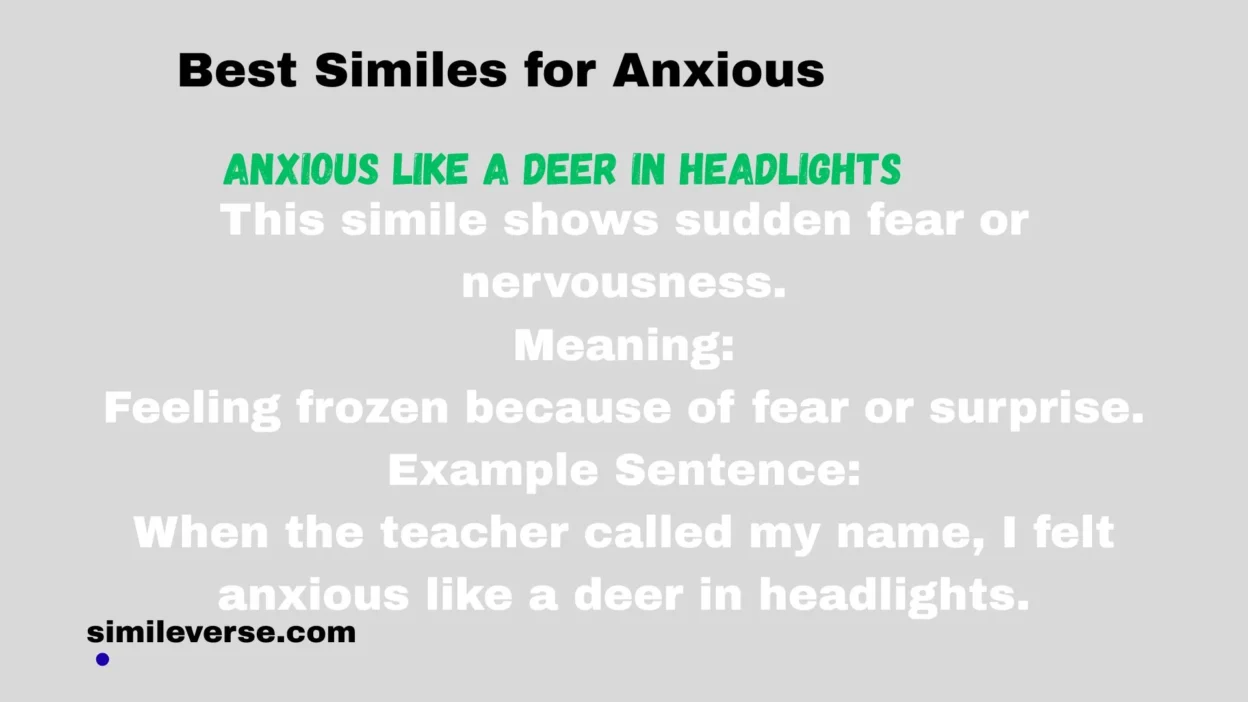
Anxious Like a Deer in Headlights
This simile shows sudden fear or nervousness.
Meaning:
Feeling frozen because of fear or surprise.
Example Sentence:
When the teacher called my name, I felt anxious like a deer in headlights.
Tip for Kids:
Use this when someone feels scared and doesn’t know what to do.
Anxious Like Butterflies in the Stomach
A very common and friendly simile.
Meaning:
Feeling nervous excitement or worry inside.
Example:
Before the race, I felt anxious like butterflies in my stomach.
Insight:
This simile is great for school writing and daily conversations.
Anxious as a Cat in a Room Full of Dogs
This simile shows constant alertness.
Meaning:
Feeling unsafe or uncomfortable.
Example:
He was anxious as a cat in a room full of dogs during his first day at school.
Anxious Like a Ticking Clock
This simile connects anxiety with time pressure.
Meaning:
Worry that grows as time passes.
Example:
Waiting for the results made me anxious like a ticking clock.
Anxious as a Rabbit in an Open Field
This shows fear of danger.
Meaning:
Feeling exposed or unprotected.
Example:
Standing on stage, she felt anxious as a rabbit in an open field.
Anxious Like a Balloon About to Pop
A vivid and fun image.
Meaning:
Feeling full of stress and ready to burst.
Example:
Before the exam, I felt anxious like a balloon about to pop.
Writing Tip:
Perfect for descriptive stories.
Anxious Like a Mouse Hearing Footsteps
This simile is great for younger readers.
Meaning:
Feeling scared and alert.
Example:
He felt anxious like a mouse hearing footsteps in the hallway.
Anxious as Leaves Shaking in the Wind
A gentle and poetic simile.
Meaning:
Feeling nervous and shaky.
Example:
My hands were anxious as leaves shaking in the wind.
Anxious Like a Fish Out of Water
A very popular simile.
Meaning:
Feeling uncomfortable or out of place.
Example:
At the new school, I felt anxious like a fish out of water.
Anxious Like a Tight Knot in the Chest
This simile focuses on physical feeling.
Meaning:
A heavy, uncomfortable nervous feeling.
Example:
There was an anxious feeling like a tight knot in my chest.
Anxious Like a Storm Waiting to Break
Meaning:
Worry building up inside.
Example:
She felt anxious like a storm waiting to break.
Anxious as a Bird Trapped in a Cage
This simile shows helplessness.
Meaning:
Feeling stuck and worried.
Example:
He was anxious as a bird trapped in a cage before the interview.
Anxious Like a Drum Beating Too Fast
This simile connects anxiety with heartbeat.
Meaning:
Heart racing because of fear.
Example:
My heart felt anxious like a drum beating too fast.
Anxious Like Shadows Growing at Night
A creative and imaginative simile.
Meaning:
Fear increasing over time.
Example:
Her thoughts grew anxious like shadows growing at night.
Anxious as Ice Cracking Underfoot
This simile suggests uncertainty.
Meaning:
Feeling nervous about what might happen next.
Example:
He felt anxious as ice cracking underfoot during the test.
Anxious Like a Candle Flickering in the Wind
A soft and emotional simile.
Meaning:
Feeling unsteady and unsure.
Example:
She was anxious like a candle flickering in the wind.
Anxious Like Waiting for Thunder After Lightning
This simile uses nature imagery.
Meaning:
Fear of something bad coming.
Example:
I felt anxious like waiting for thunder after lightning.
Anxious Like Shoes That Don’t Fit
A simple, kid-friendly simile.
Meaning:
Feeling uncomfortable.
Example:
He felt anxious like shoes that don’t fit.
Anxious Like a Phone That Won’t Stop Buzzing
A modern simile kids relate to.
Meaning:
Constant worry.
Example:
Her thoughts were anxious like a phone that won’t stop buzzing.
Anxious as a Door Creaking Open Slowly
This simile builds suspense.
Meaning:
Fear mixed with curiosity.
Example:
He felt anxious as a door creaking open slowly.
Anxious Like a Puzzle Missing a Piece
This simile shows uncertainty.
Meaning:
Feeling something isn’t right.
Example:
I felt anxious like a puzzle missing a piece.
Anxious Like a Cloud Blocking the Sun
A gentle emotional image.
Meaning:
Worry hiding happiness.
Example:
An anxious feeling like a cloud blocking the sun followed her all day.
Anxious Like Holding a Secret Too Long
Relatable and emotional.
Meaning:
Stress from keeping worries inside.
Example:
He felt anxious like holding a secret too long.
Anxious as a Snowman Under the Sun
This simile shows pressure.
Meaning:
Feeling stressed and uneasy.
Example:
She was anxious as a snowman under the sun before the results.
Anxious Like Footsteps Behind You
A classic fear-based simile.
Meaning:
Feeling watched or nervous.
Example:
Walking alone made him anxious like footsteps behind him.
Anxious Like a Rope Pulled Too Tight
Clear and physical.
Meaning:
Tension and stress.
Example:
My body felt anxious like a rope pulled too tight.
Anxious Like a Classroom Before an Exam
Very relatable.
Meaning:
Shared nervous energy.
Example:
The room felt anxious like a classroom before an exam.
Anxious Like a Heart Skipping Beats
Emotion-focused simile.
Meaning:
Strong nervousness.
Example:
She felt anxious like her heart skipping beats.
Anxious Like Standing on the Edge of a Cliff
Strong visual imagery.
Meaning:
Fear of the unknown.
Example:
He felt anxious like standing on the edge of a cliff.
Anxious Like Waiting for a Big Announcement
Simple and effective.
Meaning:
Nervous anticipation.
Example:
Everyone felt anxious like waiting for a big announcement.
How Kids Can Use Similes for Anxious in Writing
Kids can use similes to:
- Write better stories
- Explain feelings in diaries
- Improve school essays
- Express emotions safely
Tip: Start with “I felt anxious like…” and finish with something familiar.
Tips for Teachers and Parents
- Encourage kids to share feelings through similes
- Praise creativity, not perfection
- Use similes in reading and storytelling
- Let children create their own similes
This builds emotional intelligence and confidence.
Common Mistakes to Avoid When Using Similes
- Don’t mix too many similes in one sentence
- Keep comparisons simple
- Make sure the simile makes sense
- Avoid copying—create your own
Why Learning Similes Matters in 2026 and Beyond
In 2026, communication skills matter more than ever. Similes help children:
- Express emotions clearly
- Improve reading comprehension
- Write creatively
- Build confidence in language
They are simple tools with powerful impact.
Final Thoughts
Similes turn anxious feelings into clear pictures we can understand and share. Whether you’re a student, teacher, parent, or writer, learning the best similes for anxious helps explain emotions gently and creatively. Use these similes in stories, essays, conversations, and daily life to make feelings easier to express and understand.