Similes are fun and simple ways to compare one thing to another using words like “as” or “like.”
They help kids and learners describe feelings, places, and situations more clearly.
When we use similes, our writing becomes more colorful and interesting.
They also help readers imagine exactly how something feels or looks.
That’s why learning similes is so important for young writers and readers.
What Does “Alone” Mean in Simple Words?
Being alone means being by yourself, without anyone else around.
It does not always mean feeling sad or lonely.
Sometimes, being alone can feel peaceful, calm, or even happy.
Other times, it can feel quiet, empty, or scary.
Similes help us explain how “alone” feels in different situations.
Why Use Similes to Describe Being Alone?
Similes make emotions easier to understand.
They turn feelings into pictures in the reader’s mind.
Instead of saying “I was alone,” you can say something more vivid.
This helps improve storytelling and creative writing.
It also builds stronger vocabulary skills for children.
Similes for Alone for Kids (Easy and Friendly)
Kids need simple and safe comparisons.
Here are a few child-friendly similes for alone:
- Alone like a single cloud in the sky
- Alone like a lost sock
- Alone like a bird on a quiet branch
Example sentence:
The puppy sat alone like a single cloud floating in the blue sky.
Tip for kids:
Choose similes that are easy to imagine and gentle in feeling.
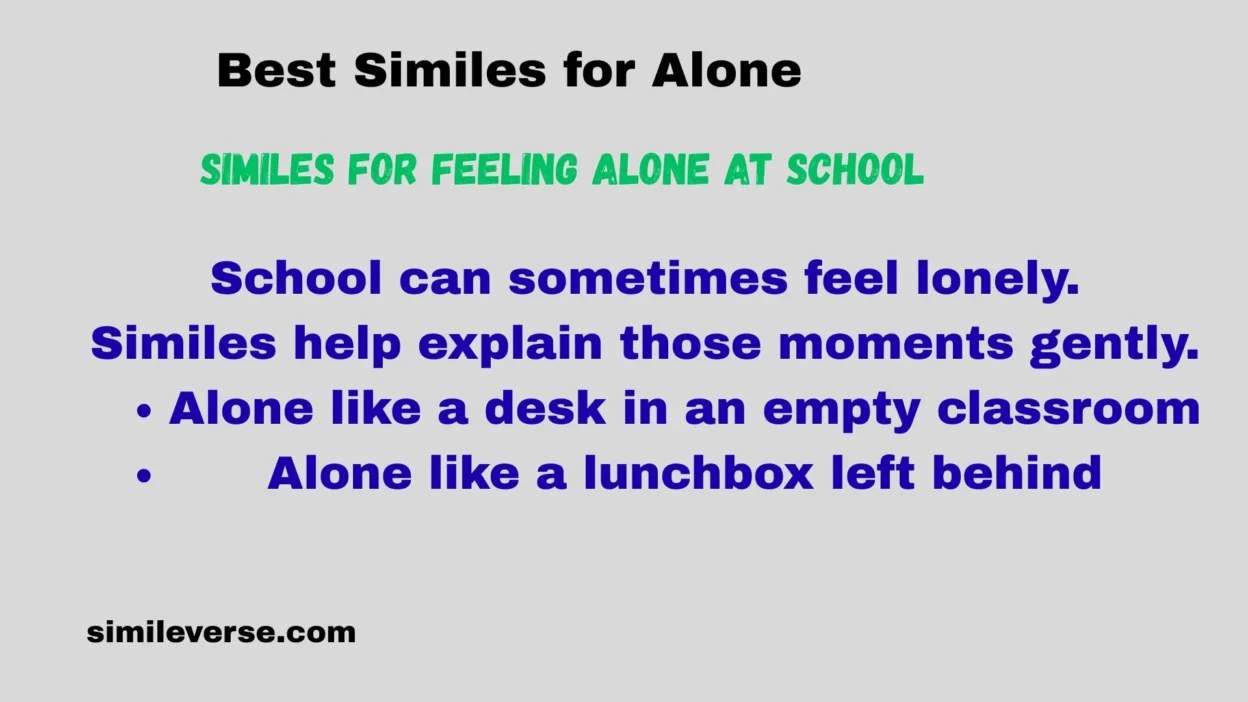
Similes for Feeling Alone at School
School can sometimes feel lonely.
Similes help explain those moments gently.
- Alone like a desk in an empty classroom
- Alone like a lunchbox left behind
Example:
I felt alone like a desk in an empty classroom during recess.
Learning tip:
Use familiar places to make your similes stronger.
Similes for Being Alone at Home
Being alone at home can feel quiet or peaceful.
- Alone like a house with the lights off
- Alone like a clock ticking in silence
Example:
The house felt alone like a clock ticking in silence.
Similes for Lonely Feelings
Lonely is an emotional form of being alone.
- Lonely like a star with no night sky
- Lonely like a song with no music
Example:
She felt lonely like a song with no music.
Insight:
Lonely similes often focus on missing something important.
Similes for Alone but Happy
Being alone is not always sad.
- Alone like a cat sleeping in the sun
- Alone like a child reading under a tree
Example:
He was alone like a cat sleeping in the sun, calm and happy.
Similes for Alone in Nature
Nature gives beautiful images for similes.
- Alone like a tree on an open field
- Alone like a boat on a quiet lake
Example:
The tree stood alone like a boat on a quiet lake.
Similes for Alone in Stories and Books
Writers often use similes to show emotion.
- Alone like a hero without a guide
- Alone like a page missing its book
Example:
The hero felt alone like a page missing its book.
Similes for Being Alone at Night
Night can make loneliness stronger.
- Alone like a lamp glowing in darkness
- Alone like a moon in an empty sky
Example:
She felt alone like a lamp glowing in the dark room.
Similes for Alone in a Crowd
You can feel alone even with people around.
- Alone like a whisper in a noisy room
- Alone like a shadow in bright light
Example:
He felt alone like a whisper in a noisy room.
Similes for Emotional Isolation
Emotional loneliness can feel deep.
- Alone like a locked door with no key
- Alone like a bridge with no path
Example:
She felt alone like a locked door with no key.
Similes for Alone and Quiet
Quiet moments can feel peaceful.
- Alone like a snow-covered field
- Alone like a paused song
Example:
The room felt alone like a paused song.
Similes for Alone and Sad
Sadness often comes with loneliness.
- Alone like a broken toy
- Alone like a rainy playground
Example:
He sat alone like a broken toy in the corner.
Similes for Alone for Creative Writing
Creative writing needs fresh images.
- Alone like a story with one character
- Alone like a road with no signs
Example:
She walked alone like a road with no signs.
Similes for Alone in Poetry
Poetry uses gentle, emotional similes.
- Alone like a tear on a cheek
- Alone like a feather drifting away
Example:
He drifted alone like a feather in the wind.
Similes for Alone in Real Life Situations
Daily life gives many ideas.
- Alone like a chair after guests leave
- Alone like a park after sunset
Example:
The park felt alone like a chair after guests leave.
Similes for Alone and Lost
Lost feelings are close to loneliness.
- Alone like a map with no directions
- Alone like a child in fog
Example:
She felt alone like a map with no directions.
Similes for Alone and Forgotten
Being forgotten hurts deeply.
- Alone like a letter never opened
- Alone like a toy under the bed
Example:
He felt alone like a letter never opened.
Similes for Alone but Strong
Alone can also mean strength.
- Alone like a mountain standing tall
- Alone like a tree surviving storms
Example:
She stood alone like a mountain, strong and calm.
Similes for Alone in Friendship Situations
Friendship problems cause loneliness.
- Alone like a bench with one seat
- Alone like a game with no players
Example:
He felt alone like a game with no players.
Similes for Alone for Students
Students face loneliness sometimes.
- Alone like a notebook with one name
- Alone like a test taken in silence
Example:
She felt alone like a notebook with one name.
Similes for Alone in Emotional Writing
Emotional writing needs honesty.
- Alone like a heart beating quietly
- Alone like a tear falling unseen
Example:
He felt alone like a tear falling unseen.
Similes for Alone Using Everyday Objects
Objects help kids understand easily.
- Alone like a single shoe
- Alone like a cup without water
Example:
The shoe lay alone like a cup without water.
Similes for Alone in Short Sentences
Short similes are powerful.
- Alone like a dot on a page
- Alone like a line with no words
Example:
He felt alone like a dot on a page.
Similes for Alone vs Lonely (Difference Explained)
Alone means being by yourself.
Lonely means feeling sad about it.
- Alone like a quiet room
- Lonely like a room missing voices
Tip:
Teach kids that alone is not always bad.
How to Teach Similes for Alone to Kids
Use pictures and stories.
Ask children how being alone feels.
Let them create their own similes.
Praise creativity, not perfection.
Common Mistakes When Using Similes for Alone
Avoid very confusing comparisons.
Don’t repeat the same simile again and again.
Make sure the comparison makes sense.
Keep language simple for young readers.
How Similes Improve Writing Skills
They make writing more expressive.
They help readers connect emotionally.
They build vocabulary and imagination.
They improve storytelling confidence.
Practice Activity: Create Your Own Simile for Alone
Ask yourself:
How does alone feel to me?
What does it look like?
What object or place matches that feeling?
Example:
I feel alone like a candle burning softly.
Best Tips for Using Similes Naturally
Use them only when needed.
Keep them clear and relatable.
Match the emotion carefully.
Read your sentence out loud.
Conclusion:
Similes help us explain feelings in a beautiful and simple way.
They turn the word “alone” into pictures, emotions, and stories.
For kids, similes build creativity and confidence in writing.
For teachers and parents, they are powerful learning tools.
By using the best similes for alone, writing becomes clearer, kinder, and more meaningful.