Clouds float above us every day, quietly decorating the sky. To describe their beauty, writers often use similes—comparisons using like or as. Similes help children and adults paint pictures with words, making writing more colorful and fun. Learning similes builds imagination, improves vocabulary, and makes storytelling exciting, especially for kids.
What Are Similes? (Simple Explanation for Kids)
A simile is a way to compare two things using the words “like” or “as.”
It helps us describe something more clearly by linking it to something familiar.
For example:
“The cloud was like cotton candy in the sky.”
This helps readers imagine how the cloud looks—soft, fluffy, and sweet.
Why similes matter:
- They make writing more interesting
- They help kids express ideas easily
- They improve creativity and thinking skills
Why Use Similes to Describe Clouds?
Clouds change shape, color, and size all the time. Sometimes they look soft, sometimes dramatic, and sometimes magical. Similes help us:
- Describe cloud beauty in a fun way
- Improve poems, stories, and essays
- Help children connect nature with imagination
Cloud similes are perfect for school writing, poems, bedtime stories, and creative essays.
Beautiful Clouds Similes for Kids
Kids love simple and happy comparisons. These similes are easy to understand and fun to imagine.
Examples:
- Clouds are like fluffy pillows in the sky
- Clouds float like balloons at a party
- Clouds look like soft toys drifting above
Tip for kids:
When creating your own simile, think: What does the cloud remind me of?
Beautiful Clouds Similes for Students
Students often need similes for essays, paragraphs, and exams.
Examples:
- The clouds moved like slow ships sailing across the sky
- White clouds spread like paint on a blue canvas
Writing tip:
Use similes to add emotion and detail to descriptive writing.
Beautiful Clouds Similes for Creative Writing
Creative writers use similes to bring scenes to life.
Examples:
- Clouds curled like silver dragons resting in the sky
- The sky wore clouds like a soft woolen shawl
Insight:
Unusual similes make your writing memorable and vivid.
Similes for White Clouds
White clouds often represent peace, purity, and calm.
Examples:
- White clouds are like freshly washed cotton
- They shine like snowflakes resting in the sky
- Clouds drift like white feathers floating gently
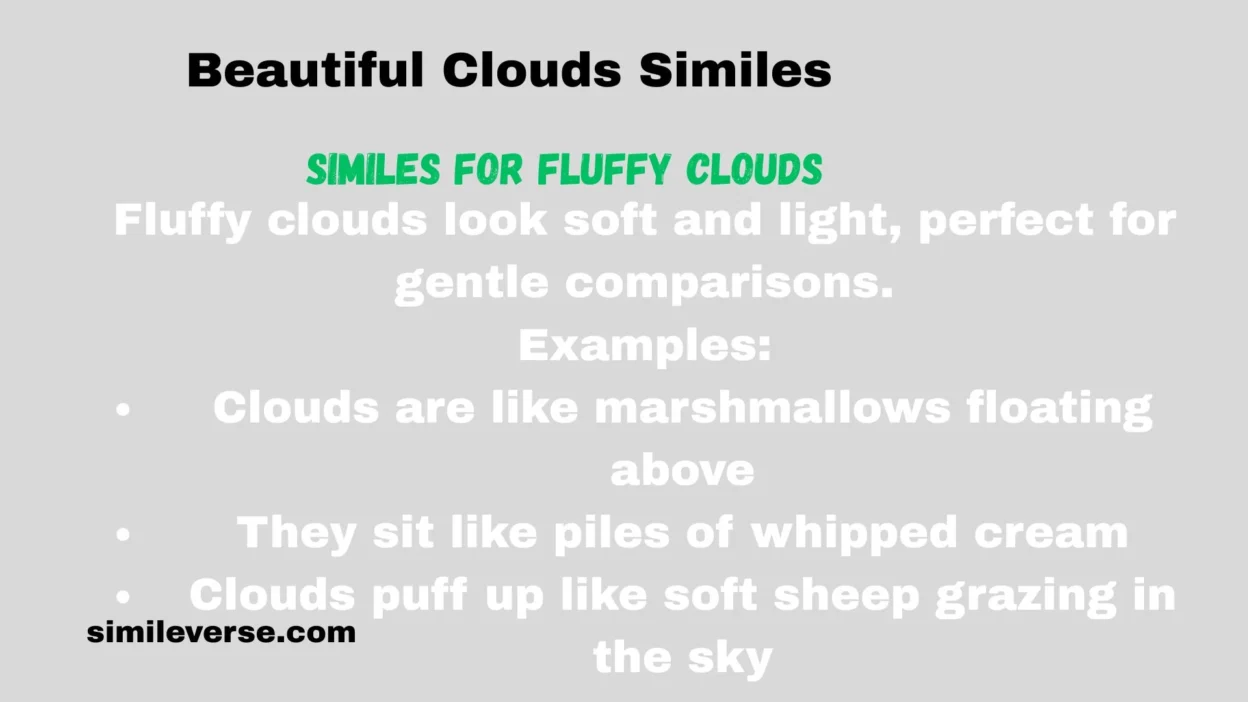
Similes for Fluffy Clouds
Fluffy clouds look soft and light, perfect for gentle comparisons.
Examples:
- Clouds are like marshmallows floating above
- They sit like piles of whipped cream
- Clouds puff up like soft sheep grazing in the sky
Similes for Soft Clouds
Soft clouds create a calm and dreamy feeling.
Examples:
- Clouds feel like silk blankets in the sky
- They spread like baby powder in the air
Similes for Clouds in a Blue Sky
The contrast of white clouds and blue sky is beautiful.
Examples:
- Clouds float like chalk drawings on blue paper
- They drift like islands in a blue ocean
Similes for Morning Clouds
Morning clouds are gentle and peaceful.
Examples:
- Morning clouds glow like sleepy smiles
- They fade like mist from warm tea
Similes for Sunset Clouds
Sunset clouds are colorful and dramatic.
Examples:
- Clouds burn like fire-painted feathers
- They glow like melted gold in the sky
Similes for Golden Clouds
Golden clouds appear during sunrise or sunset.
Examples:
- Golden clouds shine like honey spread across the sky
- They sparkle like glowing coins
Similes for Pink Clouds
Pink clouds feel magical and dreamy.
Examples:
- Pink clouds float like strawberry ice cream
- They blush like roses in the sky
Similes for Orange Clouds
Orange clouds often signal evening beauty.
Examples:
- Orange clouds glow like burning candles
- They drift like autumn leaves on fire
Similes for Storm Clouds
Storm clouds feel heavy and powerful.
Examples:
- Storm clouds gather like angry giants
- They roll like dark waves
Similes for Dark Clouds
Dark clouds often represent sadness or danger.
Examples:
- Dark clouds hang like heavy curtains
- They loom like shadows of fear
Similes for Rain Clouds
Rain clouds promise change and relief.
Examples:
- Rain clouds burst like overfilled balloons
- They cry like tired children
Similes for Thunder Clouds
Thunder clouds feel loud and dramatic.
Examples:
- Thunder clouds roar like wild lions
- They clash like drums in the sky
Similes for Moving Clouds
Movement adds life to cloud descriptions.
Examples:
- Clouds race like playful horses
- They slide like dancers across the stage
Similes for Slow-Moving Clouds
Slow clouds feel peaceful.
Examples:
- Clouds drift like lazy boats
- They move like quiet thoughts
Similes for Clouds at Night
Night clouds feel mysterious.
Examples:
- Night clouds float like ghosts
- They hide like secrets in the dark
Similes for Clouds and Dreams
Clouds often symbolize dreams and imagination.
Examples:
- Clouds are like dreams you can almost touch
- They float like thoughts in a sleeping mind
Similes for Clouds in Poems
Poetry loves cloud imagery.
Examples:
- Clouds bloom like flowers in the sky
- They whisper like soft lullabies
Similes for Clouds in Stories
Stories use clouds to set mood.
Examples:
- Clouds wrapped the town like a blanket
- They watched silently like sky guardians
Easy Cloud Similes for Grade 1–3
Simple similes for young learners.
Examples:
- Clouds are like cotton
- Clouds look like sheep
Cloud Similes for School Essays
Perfect for academic writing.
Examples:
- Clouds scattered like puzzle pieces
- They hovered like silent watchers
Funny Similes for Clouds
Humor makes learning fun.
Examples:
- Clouds look like giant popcorn
- They wobble like jelly on a plate
Nature-Based Similes for Clouds
Nature comparisons feel natural and relatable.
Examples:
- Clouds spread like snowfields
- They float like dandelion seeds
Emotional Similes Using Clouds
Clouds often reflect feelings.
Examples:
- Clouds hung like heavy thoughts
- They lifted like hope after sadness
How to Teach Cloud Similes to Kids
Tips for teachers and parents:
- Ask kids what shapes they see in clouds
- Encourage drawing and writing together
- Use storytelling and games
Learning becomes fun when imagination leads the way.
How to Create Your Own Cloud Similes
Simple steps:
- Look at the cloud
- Think of something similar
- Use like or as
- Keep it simple
Example:
The cloud looked like a giant pillow.
Common Mistakes to Avoid When Writing Similes
- Don’t overuse similes
- Avoid confusing comparisons
- Keep language age-appropriate
Clarity is more important than complexity.
Why Cloud Similes Are Timeless in Writing
Clouds have inspired writers for centuries because they:
- Represent freedom
- Symbolize change
- Spark imagination
Even in 2026, cloud similes remain popular in poems, stories, and school lessons.
Conclusion:
Beautiful cloud similes help us see the sky with fresh eyes. They turn simple clouds into pillows, dreams, ships, and stories. For kids, similes build creativity. For students, they improve writing.
Everyone, they make language joyful. Whether you’re writing a poem, teaching a lesson, or enjoying nature, cloud similes add beauty to words and imagination.