Andy Reid is one of the most influential and respected head coaches in NFL history, known for his innovative offensive schemes, leadership, and consistent success.
With over two decades of coaching experience, Reid has shaped the landscape of modern football, becoming a key figure in both the Philadelphia Eagles and Kansas City Chiefs’ franchises.
Reid’s influence extends far beyond his win-loss record. His expertise in developing quarterbacks, his commitment to building team culture, and his offensive innovations have made him a coaching legend.
This article explores the key milestones of Andy Reid’s career, from his early years in Philadelphia to his legacy in Kansas City, and delves into the philosophies and strategies that have made him a defining figure in the NFL.
Early Life and Career
Born on March 19, 1958, in Los Angeles, California, Andy Reid’s journey to NFL coaching greatness began with a deep-rooted love for football. Raised in a family that appreciated sports, Reid developed an early passion for the game. He played offensive line at Glendale Community College before transferring to Brigham Young University (BYU), where he played under head coach LaVell Edwards. Though he didn’t make a major impact as a player at the professional level, Reid’s football intelligence and understanding of the game became clear early on, positioning him for a career in coaching.
After graduating from BYU in 1981, Reid began his coaching career as a graduate assistant for his alma mater.This period of his life was critical, as it allowed Reid to immerse himself in the intricacies of offensive play-calling and player development. His knack for analyzing talent and executing detailed game plans quickly caught the attention of NFL teams.
In 1992, Reid made the leap to the NFL as an assistant coach with the Green Bay Packers, where he served under the legendary Mike Holmgren. His work with the Packers’ offense, particularly in developing quarterback Brett Favre, laid the foundation for his future success. Reid’s time in Green Bay solidified his reputation as an offensive mastermind and eventually paved the way for his first head coaching opportunity with the Philadelphia Eagles in 1999.
Rise to Prominence in Philadelphia (1999-2012)
The Eagles were in need of a fresh direction after a period of mediocrity, and Reid quickly made his mark with a clear vision for the team’s future. His first major task was to rebuild a franchise that had experienced instability at the quarterback position. Enter Donovan McNabb, a key figure in Reid’s success. The two developed a strong partnership that would define the Eagles’ rise to prominence in the early 2000s.
Reid’s system emphasized a balanced attack, utilizing the West Coast offense with a focus on precision passing and an efficient running game. He adapted the system to McNabb’s strengths, allowing the quarterback to thrive with short, quick throws and building an offensive line that protected him effectively. Reid’s offensive strategies were innovative for the time, blending passing with the ability to maintain a consistent running game, and it quickly paid off.
Under Reid, the Eagles became perennial contenders. The team made five NFC Championship Game appearances from 2001 to 2008 and reached Super Bowl XXXIX in the 2004 season, although they fell short against the New England Patriots. Despite the disappointment, Reid’s ability to consistently field competitive teams made him one of the NFL’s top head coaches.
The Transition to Kansas City (2013-Present)
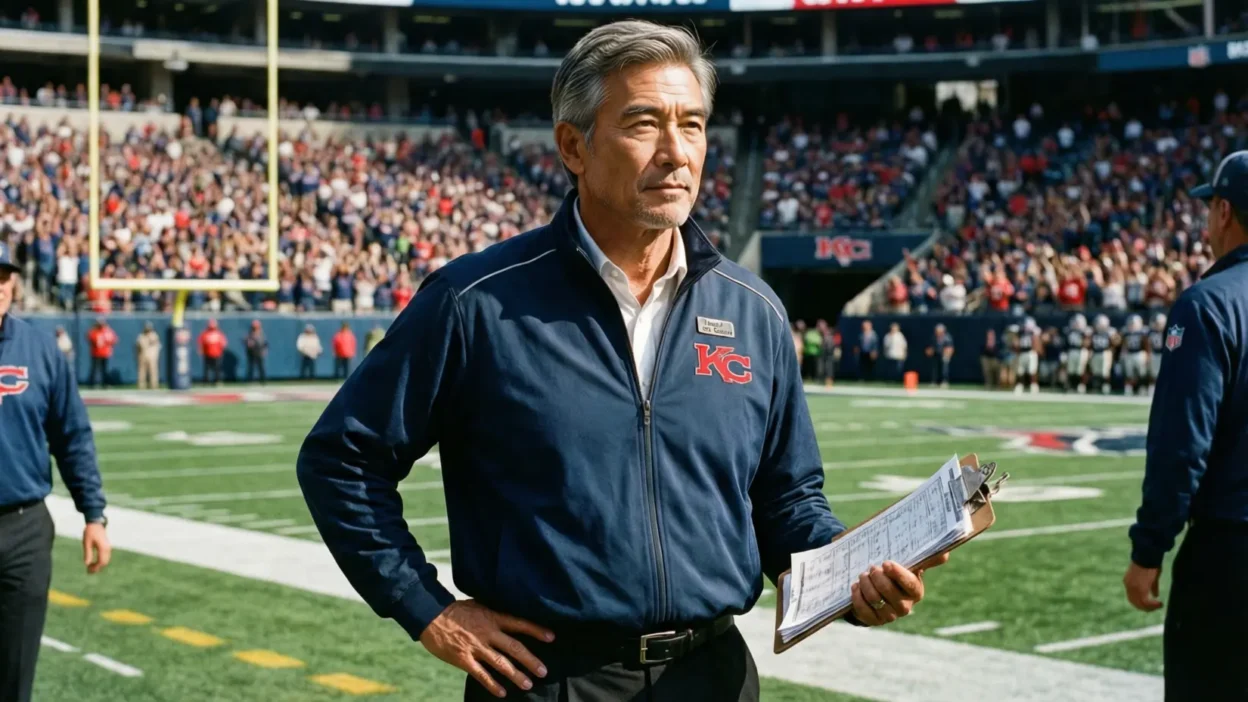
In 2013, after 14 seasons with the Philadelphia Eagles, Andy Reid took on a new challenge as the head coach of the Kansas City Chiefs. The Chiefs, who had experienced struggles in recent years, were coming off a 2-14 season, and Reid’s arrival signaled a fresh start for the franchise. His first year in Kansas City was a resounding success. The Chiefs improved dramatically, finishing the 2013 season with an 11-5 record, making Reid an instant hero in Kansas City.
One of Reid’s first major decisions was the acquisition of quarterback Alex Smith, who had struggled in San Francisco but thrived under Reid’s tutelage. Smith, a steady and reliable leader, played a key role in the Chiefs’ turnaround. Reid, known for his ability to adapt his system to his quarterbacks, installed a version of his West Coast offense that played to Smith’s strengths, and the Chiefs became a legitimate playoff contender once again.
However, it was Reid’s development of young quarterback Patrick Mahomes that truly cemented his legacy in Kansas City. In 2017, the Chiefs traded up in the draft to select Mahomes, and Reid wasted no time in crafting an offense that would allow the young QB to flourish. Mahomes, with his unique arm talent and playmaking ability, thrived under Reid’s guidance, and the Chiefs offense became one of the most dynamic in the NFL.
In 2020, Reid’s efforts culminated in a Super Bowl victory, as the Chiefs defeated the San Francisco 49ers in Super Bowl LIV, giving Reid his long-awaited championship and solidifying his place among the NFL’s coaching elite.
Coaching Philosophy and Leadership
At the heart of Reid’s system is his commitment to the West Coast offense, a style that emphasizes quick, precise passing and a balanced attack. His adaptations of this system have become a hallmark of his coaching career, from his early days in Philadelphia to his success in Kansas City.
One of Reid’s standout traits is his ability to develop quarterbacksHis leadership in mentoring quarterbacks goes beyond the X’s and O’s; he instills confidence and discipline, fostering a collaborative environment where players can thrive.
Reid’s leadership extends beyond the offensive side of the ball. He emphasizes team unity and accountability, ensuring that all players—whether starters or backups—understand their role in the team’s success. His calm, measured demeanor and emphasis on relationships help foster loyalty among his players, who often praise his approachability and genuine care for their well-being.
Ultimately, Reid’s leadership philosophy is a balance between structure and creativity—he empowers his players to be innovative within a well-organized system. This unique combination has led to his sustained success over decades in the NFL.
Key Milestones and Achievements
One of the most significant milestones in Reid’s career came in 2020 when he led the Kansas City Chiefs to a Super Bowl victory in Super Bowl LIV. After 21 years of coaching, this victory was a crowning achievement for Reid, as it finally secured him the elusive championship. The Chiefs’ victory over the San Francisco 49ers marked Reid’s first Super Bowl win, a moment that solidified his legacy among the NFL’s coaching elite. Under his guidance, the Chiefs overcame a 10-point deficit in the fourth quarter, showcasing Reid’s ability to make critical adjustments in high-pressure moments.
Throughout his career, Reid has consistently led his teams to the playoffs, with 13 playoff appearances and numerous division titles. His impressive regular-season win totals—well over 200—demonstrate his ability to maintain a high level of performance year after year. Notably, he became the fastest head coach to reach 200 career wins, a testament to his longevity and success in the league.
Reid’s individual accolades include numerous Coach of the Year nominations and recognition from his peers. His coaching tree is another significant achievement, with many of his former assistants, such as Doug Pederson (Super Bowl-winning coach of the Eagles) and Matt Nagy (former Bears head coach), going on to have successful careers of their own.
Innovative Coaching Style and Influence
While many associate this system with legendary figures like Bill Walsh, Reid took the concept and made it his own, incorporating elements of power running and vertical passing to make it even more dynamic.
Reid’s offensive philosophy is based on flexibility, allowing his schemes to evolve as new talent emerges. His ability to tailor his offense to the strengths of his players—especially quarterbacks—has been a hallmark of his success. Under Reid, the short, quick passing game became a staple, relying on precision and timing to wear down defenses. This approach minimizes risk and maximizes efficiency, allowing quarterbacks to manage the game without needing to make risky deep throws consistently.
However, Reid’s offense is far from one-dimensional. He has consistently integrated motion, play-action, and up-tempo systems, keeping defenses off-balance and forcing them to adjust to his versatile game plan. The result is a scheme that’s tough to predict and difficult to defend against, especially when paired with a mobile, talented quarterback like Patrick Mahomes.
Beyond his offensive genius, Reid’s influence extends to coaching philosophy as well. He’s a pioneer in developing young quarterbacks, emphasizing decision-making, footwork, and mental toughness. His ability to adapt his coaching to the changing dynamics of the league, while still sticking to his core principles, has made him one of the most respected and impactful figures in NFL history.
Quarterback Development and Mentorship
One of Andy Reid’s greatest strengths as a coach has been his ability to develop quarterbacks. From his early years with the Green Bay Packers to his long tenure with the Philadelphia Eagles and, more recently, the Kansas City Chiefs, Reid has established a reputation for nurturing quarterbacks into elite players. His unique ability to tailor his coaching style to fit the specific strengths and weaknesses of each quarterback has been a hallmark of his success.
In Philadelphia, Reid’s work with Donovan McNabb helped solidify both their careers. McNabb, who had been inconsistent before Reid’s arrival, blossomed into one of the league’s top quarterbacks under his tutelage. Reid guided McNabb to multiple Pro Bowls, an NFC Championship, and a Super Bowl appearance, showing his ability to build a competitive team around his quarterback’s skill set.
Reid’s success continued with Alex Smith in Kansas City. Smith, once considered a game manager, became an efficient, playoff-caliber quarterback under Reid’s guidance. The two helped turn the Chiefs into perennial contenders, with Smith leading the team to multiple playoff appearances before eventually passing the torch to Patrick Mahomes.
Speaking of Mahomes, Reid’s influence on the young quarterback has been nothing short of transformative. Mahomes, known for his arm strength and improvisational skills, found the perfect mentor in Reid. By crafting an offense that allowed Mahomes to use his creativity while maintaining structure, Reid unlocked the quarterback’s full potential. The partnership resulted in an MVP season and a Super Bowl victory, cementing Mahomes as one of the NFL’s brightest stars and Reid’s legacy as a quarterback whisperer.
Legacy and Impact on the NFL
Andy Reid’s legacy extends far beyond his win-loss record or his Super Bowl victory. Reid has not only shaped the trajectory of individual players, especially quarterbacks, but has also left an indelible mark on the coaching profession itself.
One of Reid’s most enduring impacts is his coaching tree, a testament to his ability to develop and nurture coaching talent. Many of Reid’s former assistants have gone on to become successful head coaches, continuing his legacy of leadership. Doug Pederson, who worked under Reid in Philadelphia, went on to lead the Philadelphia Eagles to their first Super Bowl victory in 2018. Similarly, Matt Nagy, another Reid disciple, became the head coach of the Chicago Bears. The success of these former assistants speaks to Reid’s influence and the depth of his coaching acumen, as he has consistently shown a willingness to develop talent not only on the field but also in the coaching ranks.
His focus on building strong relationships with his players, emphasizing mutual respect, and fostering a sense of accountability has been central to his long-term success. Players consistently praise Reid for his calm, approachable demeanor and his commitment to their personal and professional growth.
Reid’s impact on the game is not only visible in his own accomplishments but also in how he has helped others reach their potential, making him one of the most influential figures in NFL history.
Challenges and Criticisms
Despite Andy Reid’s many achievements, his career has not been without its share of challenges and criticisms. Although he led the Eagles to five NFC Championship Games and one Super Bowl appearance, he was unable to secure a victory in those high-pressure situations, which led to frustration among fans and media alike.
One of the most frequent criticisms of Reid’s coaching style was his reliance on the passing game, often at the expense of a consistent running attack. Throughout his time with the Eagles, Reid’s offenses were typically pass-heavy, leading to questions about his ability to adapt in crucial moments when the running game could have helped control the clock or balance the offense.
In Kansas City, Reid faced early criticism regarding his playoff performances. Despite his regular-season success, some questioned whether Reid could win the big one, especially after his teams had faltered in the postseason during his first few years in Kansas City. The Chiefs’ early playoff exits, including a heartbreaking loss to the Pittsburgh Steelers in 2016, left many wondering if Reid would ever secure a Super Bowl victory.
However, Reid’s ability to adapt and learn from his mistakes has been key to his success. After years of near-misses, his eventual triumph with the Chiefs in Super Bowl LIV silenced many of the critics, showcasing his resilience and ability to thrive under pressure.
Frequently Asked Questions (FAQ)
1. How many Super Bowls has Andy Reid won?
Andy Reid has won one Super Bowl, which came in the 2019 season (Super Bowl LIV). He led the Kansas City Chiefs to a 31-20 victory over the San Francisco 49ers, securing his first championship after more than two decades of coaching in the NFL.
2. How long has Andy Reid been a head coach?
Andy Reid has been a head coach in the NFL for over 20 years. He became the head coach of the Philadelphia Eagles in 1999 and served in that role until 2012. In 2013, he became the head coach of the Kansas City Chiefs, where he continues to lead the team to success.
4. How many NFC Championships did Andy Reid win with the Eagles?
Andy Reid led the Philadelphia Eagles to one NFC Championship in the 2004 season, where they advanced to Super Bowl XXXIX. Though they lost to the New England Patriots, it remains one of the key moments of his tenure in Philadelphia.
5. What made Andy Reid successful with Patrick Mahomes?
Reid allowed Mahomes to showcase his arm strength and playmaking ability while also providing a structured system that helped him succeed. This partnership led to an MVP season in 2018 and a Super Bowl victory in 2020.
Conclusion
Andy Reid’s coaching career is a testament to resilience, innovation, and the power of adaptability. From his early days in Philadelphia, where he helped build a consistently competitive team, to his transformative tenure in Kansas City, Reid has proven himself as one of the most influential figures in NFL history.
His commitment to developing quarterbacks, crafting dynamic offenses, and building strong team cultures has made him a respected figure among players, coaches, and analysts alike.
His ultimate success with the Chiefs, culminating in a Super Bowl victory, solidified his legacy as a coach who can thrive under pressure and lead his teams to the highest levels of success.
Reid’s impact on the NFL extends far beyond his own accomplishments. His coaching tree continues to grow, with many of his former assistants going on to become successful head coaches themselves.
At the end of the day, Andy Reid’s career is a story of perseverance, a relentless drive to improve, and a deep commitment to his players and teams.
His place among the NFL’s coaching elite is secure, and his legacy as one of the game’s most innovative and respected coaches will continue to inspire future generations of football leaders.